
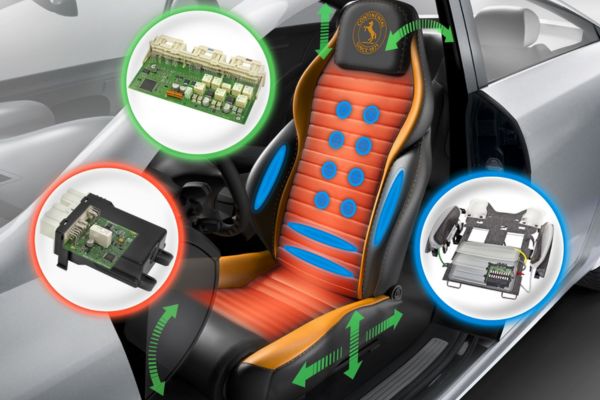
According to Precedence Research, the global Automotive Seat Control Modules Market is poised for robust expansion, projected to reach USD 12.49 billion by 2034, fueled by comfort innovation, smart integration, and cutting-edge automotive trends.
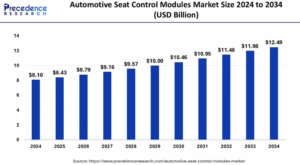
Driven by rising demand for advanced comfort features, tight government regulations, and the modernization of roads, the global automotive seat control modules market was valued at USD 8.10 billion in 2024 and is set to grow at a CAGR of 4.42% through 2034. Integration of smartphones and electronics into vehicle seat systems is revolutionizing driver experience, pushing manufacturers towards safer, smarter, and more comfortable car environments.
Automotive Seat Control Modules Market Key Highlights
- The market will expand from USD 8.10 billion in 2024 to USD 12.49 billion by 2034.
- North America accounted for 37% of market share in 2024, the region’s leadership owed to passenger vehicle demand and consumer affinity for luxury options.
- The U.S. market alone stood at USD 2.25 billion in 2024; expected to reach USD 3.54 billion by 2034, outpacing global CAGR at 4.63%.
- Asia Pacific, especially China, is the fastest-growing region due to EV adoption, urbanization, and rising disposable income.
- Passenger cars are the dominant segment thanks to OEM customization and surge in comfort-conscious buyers.
Revenue Breakdown: Global & U.S.
| Year | Global Market Value
(USD Billion) |
U.S. Market Value
(USD Billion) |
|---|---|---|
| 2024 | 8.10 | 2.25 |
| 2025 | 8.43 | 2.34 |
| 2034 | 12.49 | 3.54 |
The Role of AI in Market Evolution
Artificial Intelligence is reshaping the automotive seat control modules market. Manufacturers now leverage AI-powered software for smarter quality control automating seat wrinkle detection and material analysis with exceptional speed and accuracy. AI boosts profitability and operational excellence by streamlining employee training, improving defect identification, and continuously optimizing comfort solutions in high-end vehicles.
Companies deploying advanced AI can quickly fine-tune modules for various car models, promote seamless customization, and empower users to adjust seats for personalized comfort. As AI enables predictive seat maintenance and enhances user support, these innovations are vital drivers of future market competitiveness.
What Drives Growth? The Market Catalysts
Increasing consumer demand for comfort, safety, and convenience in vehicles globally.
Government regulations on automotive safety features demand new seat control solutions.
Customization and modularity from OEMs cater to evolving user preferences, elevating market penetration.
Opportunities & Trends: Where Is Future Growth Coming From?
Can rapid EV adoption and ADAS demand open new doors for automotive seat modules?
The shift to electric vehicles and advanced driver-assist systems (ADAS) creates lucrative opportunities for innovative seat modules designed for next-gen cars. Hybrid vehicles, lightweight material advancements, and premium seating in SUVs all present substantial growth avenues for market players.
Regional Analysis
North America
- Largest Market Share (37% in 2024): North America holds the leading position globally, propelled by high demand for premium passenger vehicles and the growing integration of IoT and AI in automotive seating systems.
- Innovation Hub: U.S. consumers’ preference for advanced features (e.g., lightweight designs, research-driven upgrades, IoT integration) fuels continuous innovation and regulatory compliance across brands.
- Government and Tech Influences: Favorable policies, technological advancements, and a strong presence of mature offshore oil and gas fields indirectly drive automotive technology demands, including seat control modules.
Asia Pacific
- Fastest Growth Globally: Asia Pacific is the fastest-growing region, notably China, thanks to surging electric vehicle (EV) production, aggressive urbanization, and higher disposable incomes.
- EV and Safety Trends: The region’s rapid adoption of EVs and advanced safety features spurs demand for technologically sophisticated seat modules, especially in urban markets.
- Government Support: Local governments actively promote domestic EV production and modernize transport infrastructure, directly stimulating market expansion for seat control modules.
Europe, Latin America, MEA
- Steady Gains: These regions observe consistent, moderate market growth as global trends in automotive technology and stricter regulatory standards diffuse across international markets.
- Regulatory Adoption: Europe, Latin America, and the Middle East & Africa (MEA) increase their uptake of next-gen seat modules as safety, comfort, and sustainability become crucial purchasing criteria.
China Highlight
- Fastest-Growing Country: China stands out for its exceptional market growth, owing to the escalating popularity of electric vehicles, adoption of lightweight materials, and a rising focus on advanced safety features.
- Disposable Income Boom: Increasing income and growing appetite for premium products, including advanced seat modules, amplify demand for comfort and luxury among Chinese consumers.
- Urbanization and Infrastructure: Significant investments in urban infrastructure and transportation create greater demand for modern automotive seating solutions, further accelerating market expansion in China.
Segmentation Analysis
By Type, End-User, Application
Passenger Cars Dominate: Passenger car vehicles contributed the largest share of revenue in 2020 and continue to lead segment growth, thanks to their widespread adoption of advanced seat control technology for comfort and safety.
OEM Customization: Original Equipment Manufacturers (OEMs) actively customize seat control modules for specific vehicle models, catering to diverse consumer preferences for adjustable, comfort-centric options.
User Demand for Comfort: The market expansion is driven by users’ enthusiasm for high-tech, customized seating, converting comfort and ergonomic concerns into major selling points in vehicle selection.
Automotive Seat Control Modules Market Companies
- Hella KGaAHueck& Co
- Delphi Automotive LLP
- Continental AG
- De Amertek Corporation
- Infineon Technologies AG
- Omron Corporation
- Pektron plc
- Advanced Micro Electronics CO., Ltd
- Leopold Kostal GmbH & Co. KG
Facing Challenges: Cost and Complexity
While innovation surges, rising product complexity and integration costs present obstacles for new entrants and existing manufacturers. The need for advanced electronics puts pressure on supply chains, while strict regulatory standards can slow product roll-outs and elevate compliance costs.
Case Study: Mahindra Bolero Neo Plus – Redefining Comfort
Mahindra’s Bolero Neo Plus SUV release in June 2024 showcases how extended seating and versatility can transform family and commercial driving experiences. By focusing on passenger capacity, comfort, and flexible use, Mahindra has set a new benchmark for seat module application in mainstream vehicles.