
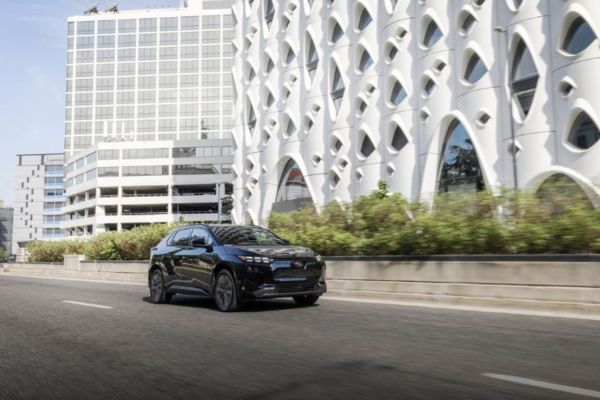
Subaru has announced that its 2026 Solterra electric vehicle (EV) will come with a native North American Charging Standard (NACS) port. This allows owners to access Tesla’s Supercharger network, which includes over 25,000 charging stations across North America. The move enhances interoperability among EVs, following a similar step taken by Toyota for its 2026 bZ models.
The 2026 Solterra comes with significant upgrades compared to previous models. It now offers an extended driving range of up to 288 miles per full charge, increased power and performance for a more dynamic drive, and a refreshed exterior and interior. Key updates include Subaru’s new EV lightning signature, redesigned headlights and tail lamps, a new rear spoiler, and a 14-inch touchscreen infotainment system with Apple CarPlay and Android Auto.
The Solterra also features Plug & Charge functionality, allowing seamless charging at compatible stations without the need for additional authentication. This makes EV ownership simpler and more convenient for daily use.
Subaru will provide existing 2023–2025 Solterra owners the option to access Tesla Superchargers via a Genuine Subaru Accessory Fast Charging Adapter (NACS) starting this fall. Unlike some competitors, such as Toyota, Ford, Hyundai, and Kia, which provide adapters for free, Subaru may require owners to purchase the adapter, though exact pricing details have not been announced.
The 2026 Solterra lineup offers several trims: Solterra Premium ($38,495), Solterra Limited ($41,395), Solterra Limited XT ($42,895), and Solterra Touring XT ($45,555). The new Touring XT trim adds premium features such as a panoramic sunroof, ventilated front seats, and radiant leg heaters for front passengers. Lease options start at $339 per month, providing flexible ownership opportunities.
Built on the Toyota e-TNGA platform, shared with Toyota’s bZ series, the Solterra retains Subaru’s all-wheel-drive system and unique styling cues. Including the NACS port positions the Solterra as one of the few EVs compatible with Tesla’s Supercharger network, offering drivers greater convenience. However, charging for adapters for older models may impact customer satisfaction. These compatibility initiatives are vital as the EV market grows, enhancing infrastructure utilization and consumer confidence.
 will come with a native North American Charging Standard (NACS) port.)