Market Summary
According to our Growth Market Report, the global Power Electronics for Electric Vehicles market size reached USD 6.9 billion in 2024, demonstrating robust expansion driven by the accelerating adoption of electric vehicles worldwide. The market is projected to grow at a compelling CAGR of 19.7% during the forecast period, reaching an estimated USD 24.2 billion by 2033. This remarkable growth is primarily fueled by advancements in power electronic components, increasing investments in electric vehicle (EV) infrastructure, and stringent emission regulations globally.
Understanding Power Electronics in Electric Vehicles
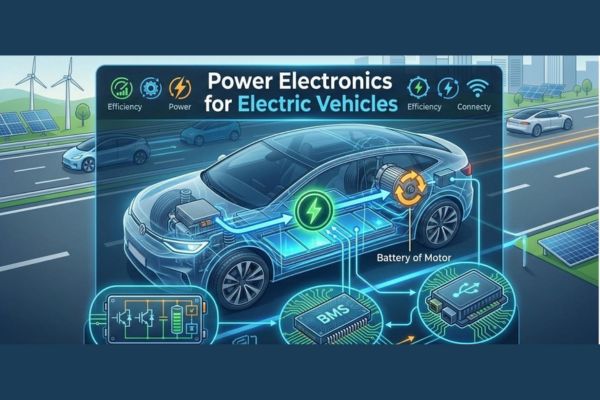
Power electronics refers to the electronic systems responsible for controlling and converting electrical power efficiently. In electric vehicles, these components regulate how electricity flows from the battery to the motor and other vehicle systems.
Unlike traditional vehicles that rely on mechanical processes, EVs depend heavily on electronic systems to manage energy. Power electronics ensure that electricity is delivered at the correct voltage, frequency, and timing for optimal vehicle performance.
Without efficient power electronics, even the most advanced batteries would struggle to deliver smooth acceleration, longer driving range, and reliable performance.
Key Components of Power Electronics in EVs
Power electronics in electric vehicles consist of several essential components that work together to optimize performance.
Inverters
The inverter converts direct current (DC) from the battery into alternating current (AC) used by the electric motor. This conversion is critical because most EV motors operate on AC power.
Inverters also regulate motor speed and torque, allowing drivers to experience smooth acceleration and efficient energy use.
DC-DC Converters
DC-DC converters adjust voltage levels within the vehicle. They step down high battery voltage to lower levels required by auxiliary systems such as lighting, infotainment, and climate control.
These converters ensure that all electrical systems operate efficiently without draining excessive battery power.
Onboard Chargers
Onboard chargers convert AC electricity from charging stations into DC power that the battery can store. Faster and more efficient chargers help reduce charging time and improve user convenience.
Advanced onboard chargers also enable smart charging and grid communication.
Power Control Units (PCU)
The power control unit integrates various electronic components to manage overall power distribution in the vehicle. It optimizes energy flow to maximize performance, efficiency, and safety.
Why Power Electronics Are Critical for EV Performance
Power electronics directly influence the efficiency, driving range, and reliability of electric vehicles.
Efficient power conversion minimizes energy losses, ensuring that more power from the battery reaches the motor. This results in longer driving ranges and improved vehicle performance.
Additionally, advanced power electronics allow regenerative braking systems to capture energy during deceleration and feed it back into the battery. This feature significantly enhances energy efficiency.
For Indian consumers, where charging infrastructure is still expanding, maximizing driving range through efficient electronics is especially important.
India’s Growing Electric Vehicle Ecosystem
India is witnessing rapid growth in its EV ecosystem. Government initiatives, environmental concerns, and rising fuel prices are encouraging the adoption of electric mobility.
Programs such as the Faster Adoption and Manufacturing of Electric Vehicles (FAME) scheme have played a major role in accelerating EV adoption in India.
As more electric vehicles enter the market, the demand for high-performance power electronics is expanding across multiple segments, including:
- Electric two-wheelers
- Electric three-wheelers
- Electric passenger cars
- Electric buses
- Commercial electric vehicles
Technological Innovations Driving the Market
Innovation in semiconductor technology is transforming the power electronics landscape.
Silicon Carbide (SiC) and Gallium Nitride (GaN)
Traditional silicon-based power electronics are gradually being replaced by advanced materials such as silicon carbide (SiC) and gallium nitride (GaN).
These materials offer higher efficiency, faster switching speeds, and better thermal performance. As a result, EV systems can operate more efficiently while generating less heat.
For Indian EV manufacturers, adopting these technologies can help produce vehicles with longer driving ranges and faster charging capabilities.
Local Manufacturing and the “Make in India” Opportunity
India is actively promoting domestic manufacturing of EV components, including power electronics.
Government initiatives such as the Production Linked Incentive (PLI) scheme aim to strengthen local supply chains and reduce dependence on imports.
By building a robust domestic ecosystem for power electronics manufacturing, India can achieve several advantages:
- Lower EV production costs
- Increased technological self-reliance
- Job creation in the electronics sector
- Stronger export opportunities
Indian startups and established electronics companies are already exploring opportunities in EV power modules, controllers, and semiconductor design.
Challenges Facing the Power Electronics Market
Despite strong growth potential, the power electronics market in EVs faces several challenges in India.
High Component Costs
Advanced semiconductor materials such as SiC are still expensive compared to traditional silicon. This increases the overall cost of EV powertrains.
Thermal Management Issues
Power electronics generate heat during operation. Effective cooling systems are required to maintain performance and reliability.
Supply Chain Dependencies
India still depends on imports for many semiconductor components. Global chip shortages can impact EV production timelines.
Addressing these challenges will require investment in domestic semiconductor fabrication and research capabilities.
The Role of Power Electronics in Fast Charging Infrastructure
As EV adoption grows, the need for fast and efficient charging infrastructure is becoming critical.
Power electronics play a major role in high-power charging stations by controlling voltage levels and ensuring safe power delivery.
Ultra-fast chargers rely on advanced power conversion technologies to deliver high currents without damaging vehicle batteries.
For India, where long-distance travel is common, improving charging speeds through advanced electronics will significantly enhance EV adoption.
Competitive Landscape
- Infineon Technologies AG
- Texas Instruments Incorporated
- STMicroelectronics N.V.
- NXP Semiconductors N.V.
- ON Semiconductor Corporation
- Mitsubishi Electric Corporation
- Fuji Electric Co., Ltd.
- Renesas Electronics Corporation
- ROHM Semiconductor
- Toshiba Corporation
- Vishay Intertechnology, Inc.
- Analog Devices, Inc.
- ABB Ltd.
- Delta Electronics, Inc.
- Danfoss Group
- Semikron Danfoss
- Hitachi, Ltd.
- Microchip Technology Inc.
- Littelfuse, Inc.
- Eaton Corporation plc
Future Outlook
The future of power electronics in the EV market looks extremely promising, particularly in India.
Several trends are expected to shape the market in the coming years:
- Increasing adoption of electric two-wheelers and buses
- Growth in fast-charging infrastructure
- Expansion of domestic semiconductor manufacturing
- Integration of AI and smart energy management systems
Power electronics will also play a crucial role in vehicle-to-grid (V2G) systems, where EVs can supply electricity back to the power grid during peak demand.