
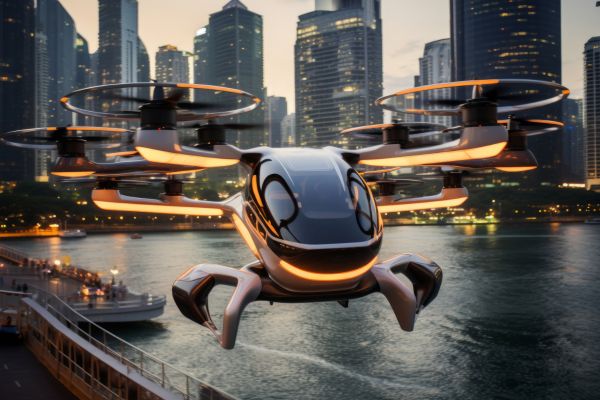
The Global Autonomous Aircraft Actuation System Market is emerging as a vital segment within the aerospace and defense industry. As aviation moves toward automation, unmanned systems, and intelligent flight control, actuation systems are becoming essential for ensuring precise, reliable, and efficient aircraft operations.
Understanding Autonomous Aircraft Actuation Systems
Actuation systems in aircraft are responsible for converting electrical, hydraulic, or mechanical energy into motion. In autonomous aircraft, these systems play a critical role in executing flight commands without human intervention.
Key functions include:
- Control of flight surfaces (ailerons, rudders, elevators)
- Landing gear operation
- Thrust vectoring and engine control
- Cargo and payload handling systems
Advanced actuation systems are integrated with sensors, control software, and onboard computing to enable real-time decision-making and precise movement.
Market Outlook and Growth Trajectory
The global autonomous aircraft actuation system market is expected to witness strong growth:
- Projected CAGR of ~9%–12% through 2035
- Growth driven by increasing adoption of unmanned aerial vehicles (UAVs) and autonomous aviation technologies
The shift toward electric and more-electric aircraft (MEA) is further accelerating demand for advanced actuation systems.
Key Growth Drivers
Rising Adoption of Unmanned Aerial Vehicles (UAVs)
The growing use of drones in defense, surveillance, logistics, and commercial applications is significantly boosting demand for autonomous actuation systems.
Advancements in Autonomous Aviation
Autonomous and semi-autonomous aircraft require highly responsive and reliable actuation systems to execute flight operations without pilot input.
Transition to More-Electric Aircraft (MEA)
The aviation industry is moving away from traditional hydraulic systems toward electric actuation, improving efficiency, reducing weight, and lowering maintenance costs.
Increasing Defense Investments
Military modernization programs and demand for advanced aerial systems are driving investments in high-performance actuation technologies.
Emerging Industry Trends
Shift Toward Electromechanical Actuation (EMA)
Electromechanical actuators are replacing hydraulic systems due to benefits such as:
- Lower maintenance requirements
- Improved energy efficiency
- Reduced system complexity
Integration with AI and Flight Control Systems
Actuation systems are increasingly integrated with AI-driven flight control systems, enabling real-time adjustments and enhanced precision.
Lightweight and Compact Designs
Manufacturers are focusing on reducing weight and size to improve aircraft efficiency and payload capacity.
Redundancy and Safety Enhancements
Advanced actuation systems are being designed with redundancy and fail-safe mechanisms to ensure operational reliability.
Market Segmentation Insights
By System Type
- Electromechanical actuation systems (fastest-growing segment)
- Electrohydraulic systems
- Hydraulic systems
By Aircraft Type
- Unmanned aerial vehicles (dominant segment)
- Commercial aircraft
- Military aircraft
By Application
- Flight control systems
- Landing gear systems
- Engine control systems
- Utility and cargo systems
Regional Insights
- North America leads the market due to strong aerospace industry presence and defense investments
- Europe is driven by innovation in aircraft design and sustainability initiatives
- Asia-Pacific is the fastest-growing region, supported by increasing defense spending and UAV adoption
Market Challenges
Despite strong growth prospects, the market faces several challenges:
- High development and certification costs
- Complex integration with aircraft systems
- Stringent safety and regulatory requirements
- Reliability concerns in fully autonomous operations
Competitive Landscape
The market includes major aerospace and defense companies focusing on advanced actuation technologies, such as:
- Honeywell International
- Moog Inc.
- Parker Hannifin
- Safran
- Collins Aerospace
These players are investing in electric actuation systems, digital control technologies, and next-generation aircraft platforms.
Future Outlook
The future of the autonomous aircraft actuation system market is closely tied to the evolution of autonomous aviation and unmanned systems. As the industry moves toward more-electric and fully autonomous aircraft, actuation systems will serve as a foundational technology enabling precise control and operational safety.
With continued innovation in materials, electronics, and control systems, the market is expected to grow steadily—playing a key role in shaping the future of intelligent and autonomous aviation.