
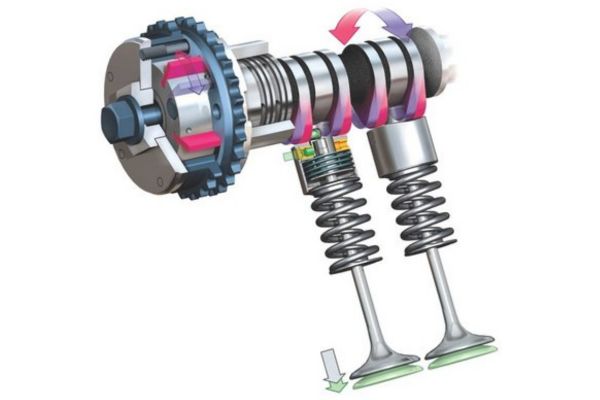
The Global Automotive Variable Valve Timing (VVT) System Market is a crucial segment within the automotive powertrain industry. As automakers strive to improve fuel efficiency, reduce emissions, and enhance engine performance, VVT systems have become a standard feature in modern internal combustion engines.
Understanding Automotive VVT Systems
Variable Valve Timing (VVT) systems optimize the timing of valve opening and closing in an engine. By adjusting valve operation based on engine speed and load conditions, VVT systems improve overall engine efficiency and performance.
Key benefits include:
- Improved fuel efficiency
- Reduced exhaust emissions
- Enhanced engine power and torque
- Smoother engine operation
VVT systems are widely used in:
- Passenger vehicles
- Commercial vehicles
- Hybrid vehicles
Market Outlook and Growth Trajectory
The global automotive VVT system market is witnessing steady growth:
- Estimated market size of USD 65–70 billion by 2025
- Expected to reach USD 95–110 billion by 2035
- Growing at a CAGR of ~4%–6%
Growth is supported by continued demand for internal combustion engine vehicles and hybrid powertrains.
Key Growth Drivers
Stringent Emission Regulations
Governments worldwide are enforcing strict emission norms, encouraging automakers to adopt technologies like VVT to reduce pollutants.
Demand for Fuel Efficiency
Consumers are increasingly prioritizing fuel-efficient vehicles, driving the adoption of advanced engine technologies.
Growth of Hybrid Vehicles
Hybrid vehicles combine internal combustion engines with electric systems, where VVT plays a key role in optimizing engine performance.
Advancements in Engine Technology
Continuous innovations in engine design are enhancing the capabilities and efficiency of VVT systems.
Emerging Industry Trends
Adoption of Dual and Continuous VVT Systems
Modern engines are increasingly using advanced VVT technologies such as:
- Dual VVT (intake and exhaust control)
- Continuous VVT (precise real-time adjustment)
Integration with Turbocharging and Downsizing
VVT systems are being combined with turbocharged engines to improve power output while maintaining efficiency.
Shift Toward Electrification-Compatible Systems
VVT technologies are evolving to support hybrid and low-emission engine architectures.
Development of Camless Valve Technologies
Emerging camless systems use electronic actuators for valve control, representing the next evolution beyond traditional VVT.
Market Segmentation Insights
By Type
- Cam phasing VVT (most common)
- Cam changing VVT
- Variable valve lift (VVL) systems
By Vehicle Type
- Passenger vehicles (dominant segment)
- Commercial vehicles
By Fuel Type
- Gasoline engines (largest share)
- Diesel engines
- Hybrid systems
Regional Insights
- Asia-Pacific dominates the market due to high vehicle production in countries like China, India, and Japan
- Europe is driven by stringent emission standards and advanced automotive technologies
- North America shows steady demand supported by strong automotive industry presence
Market Challenges
Despite steady growth, the market faces certain challenges:
- Increasing shift toward fully electric vehicles (EVs)
- High development and integration costs
- Complexity in advanced engine systems
- Regulatory uncertainties in different regions
Competitive Landscape
The market is highly competitive, with key automotive component manufacturers focusing on innovation and efficiency. Major players include:
- Robert Bosch GmbH
- Denso Corporation
- Aisin Seiki Co., Ltd.
- Schaeffler AG
- Eaton Corporation
These companies are investing in advanced valve control technologies and hybrid-compatible solutions.
Future Outlook
The future of the automotive VVT system market will be shaped by the balance between traditional internal combustion engines and the transition toward electrification. While fully electric vehicles may reduce long-term demand, VVT systems will remain essential in hybrid and efficient ICE vehicles.
With continuous advancements in engine technologies and stricter emission norms, the market is expected to grow steadily—positioning VVT systems as a key technology in improving automotive efficiency and sustainability during the transition to cleaner mobility.



 System Market is a crucial segment within the automotive powertrain industry.)