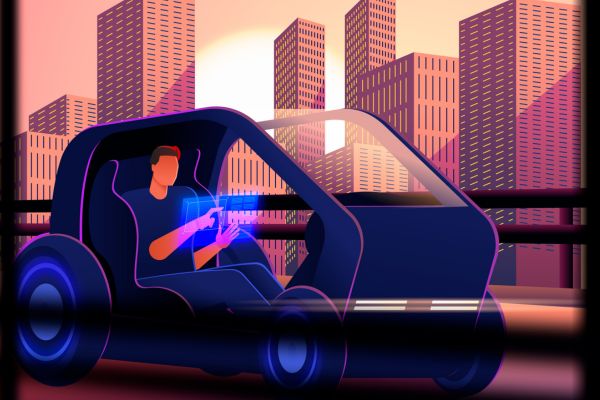
There was a time when vehicles operated in isolation each car relying solely on the driver’s instincts and limited onboard systems to navigate roads. Today, that paradigm is rapidly changing. Vehicles are no longer just machines; they are becoming intelligent, connected entities capable of communicating with the world around them. At the center of this transformation lies Vehicle-to-Everything (V2X) communication, a breakthrough technology that is redefining how mobility ecosystems function.
From preventing accidents before they occur to enabling seamless traffic flow and accelerating the adoption of autonomous driving, V2X is emerging as the digital nervous system of modern transportation. It is not just an upgrade—it is a fundamental reimagination of how vehicles interact with their environment.
From Isolated Machines to Connected Intelligence
The evolution of the automotive industry has always been driven by innovation—from mechanical engineering to electronics, and now to software-defined vehicles. V2X represents the next leap, where vehicles are no longer passive participants but active communicators within a dynamic network.
At its core, V2X enables vehicles to exchange real-time information with:
- Other vehicles (V2V)
- Road infrastructure (V2I)
- Pedestrians and cyclists (V2P)
- Cloud networks and services (V2N)
This interconnected ecosystem allows vehicles to “see beyond sight.” For instance, a car approaching a blind curve can receive alerts about an oncoming vehicle or road hazard well in advance. Such predictive awareness significantly enhances safety and decision-making[6].
Unlike traditional systems that depend solely on onboard sensors, V2X introduces cooperative intelligence—where every participant contributes to a shared understanding of the environment.
Why V2X Matters in the Age of Autonomy
Autonomous vehicles are often described as the future of transportation, but their success hinges on one critical factor: information. While cameras, radar, and LiDAR provide valuable data, they are inherently limited by range, weather conditions, and line-of-sight constraints.
This is where V2X becomes indispensable.
By enabling vehicles to communicate with each other and their surroundings, V2X creates a collective intelligence network. Autonomous systems can leverage this network to:
- Detect hazards beyond sensor range
- Coordinate lane changes and merging
- Navigate complex urban environments
- Optimize routes in real time
Studies suggest that connected vehicle technologies can significantly reduce road accidents, particularly those caused by human error, which accounts for a majority of traffic incidents worldwide[5].
In essence, V2X transforms autonomous driving from an individual capability into a collaborative ecosystem, where vehicles work together rather than independently.
The Technology Backbone: DSRC vs C-V2X
The effectiveness of V2X depends on the communication technologies that enable it. Currently, two primary approaches are shaping the landscape:
Dedicated Short-Range Communication (DSRC)
DSRC is a Wi-Fi-based protocol specifically designed for automotive communication. It offers low latency and high reliability, making it suitable for safety-critical applications such as collision avoidance.
Cellular V2X (C-V2X)
C-V2X, on the other hand, leverages cellular networks, including 4G LTE and increasingly 5G, to enable broader and more scalable communication.
With the rollout of 5G, C-V2X is gaining significant momentum. It offers:
- Ultra-low latency
- High data throughput
- Enhanced reliability
- Support for edge computing
These capabilities are crucial for real-time decision-making in autonomous vehicles, where even milliseconds can make a difference[1].
As the industry evolves, many experts believe that 5G-enabled C-V2X will become the dominant standard, particularly for large-scale deployments.
Real-World Applications: Beyond the Hype
While V2X is often associated with futuristic autonomous cars, its real-world applications are already taking shape—and they extend far beyond self-driving vehicles.
Safer Roads through Predictive Alerts
Imagine a scenario where two vehicles are approaching an intersection from different directions. Even if one driver fails to stop at a red light, V2X-enabled systems can alert the other vehicle in advance, preventing a potential collision.
Such predictive capabilities make roads significantly safer by addressing risks before they escalate.
Smarter Traffic Management
Traffic congestion is a persistent challenge in urban environments. V2X enables dynamic traffic signal control, where signals adapt in real time based on vehicle density and flow.
Vehicles can also receive speed recommendations to pass through green lights efficiently, reducing stop-and-go traffic and improving overall mobility.
Emergency Response Optimization
Emergency vehicles like ambulances and fire trucks can communicate with traffic infrastructure to secure priority passage. Traffic signals can automatically turn green along their route, reducing response times and potentially saving lives.
Pedestrian and Cyclist Protection
Through V2P communication, vehicles can detect pedestrians and cyclists carrying connected devices. This is particularly useful in low-visibility conditions, such as at night or during adverse weather.
Smart Parking and Urban Efficiency
V2X can guide drivers to available parking spaces in real time, reducing the time spent searching for parking—a major contributor to urban congestion and emissions.
These applications highlight how V2X is not just about vehicles—it is about creating a holistic mobility ecosystem that benefits everyone on the road[3].
Sustainability: Driving a Greener Future
In addition to safety and efficiency, V2X plays a crucial role in advancing sustainability.
By optimizing traffic flow and reducing congestion, V2X helps lower fuel consumption and greenhouse gas emissions. Vehicles spend less time idling and can take more efficient routes, contributing to cleaner air and reduced environmental impact[2].
Furthermore, V2X is instrumental in supporting the growth of electric vehicles (EVs). Through Vehicle-to-Grid (V2G) communication, EVs can interact with the power grid to:
- Optimize charging schedules
- Balance energy demand
- Support renewable energy integration
This synergy between transportation and energy systems is key to building sustainable smart cities.
Challenges on the Road to Adoption
Despite its transformative potential, V2X adoption is not without challenges.
Infrastructure Investment
Deploying V2X requires significant infrastructure, including roadside units, communication networks, and cloud platforms. For many regions, especially developing economies, this represents a substantial financial commitment.
Standardization and Interoperability
Different regions and manufacturers may adopt varying standards, leading to compatibility issues. Ensuring seamless communication across systems is critical for V2X to function effectively on a global scale.
Cybersecurity Risks
As vehicles become more connected, they also become potential targets for cyberattacks. Protecting V2X systems from unauthorized access and ensuring data integrity is a top priority.
Data Privacy Concerns
The continuous exchange of data raises questions about user privacy. Establishing robust data governance frameworks is essential to build public trust.
Regulatory Landscape
Governments and regulatory bodies must develop clear policies and standards to guide V2X deployment. Without a unified framework, large-scale adoption may face delays.
Addressing these challenges requires collaboration across industries, including automakers, telecom providers, technology firms, and policymakers.
India’s Opportunity in the V2X Ecosystem
India, with its rapidly growing automotive market and ambitious smart city initiatives, stands at a pivotal moment in its mobility journey.
While V2X deployment in India is still in its early stages, the potential is immense. The country’s focus on digital infrastructure, 5G rollout, and intelligent transportation systems creates a strong foundation for V2X adoption.
Pilot projects and research initiatives are already exploring use cases tailored to India’s unique traffic conditions, such as mixed traffic environments and high population density.
If implemented effectively, V2X could play a transformative role in addressing some of India’s most pressing mobility challenges, including road safety and congestion.
The Road Ahead: A Connected Mobility Revolution
The future of V2X is closely intertwined with advancements in 5G, artificial intelligence, and edge computing. As these technologies mature, V2X systems will become more intelligent, responsive, and scalable.
Looking ahead, we can expect:
- Integration of V2X with autonomous driving platforms
- Expansion of smart city ecosystems
- Increased adoption in commercial fleets and logistics
- Greater collaboration between global stakeholders
Countries around the world are investing heavily in V2X infrastructure, recognizing its potential to transform transportation. As adoption grows, the vision of fully connected, autonomous mobility systems will move closer to reality.
Conclusion: A New Era of Intelligent Mobility
Vehicle-to-Everything (V2X) communication represents a paradigm shift in the automotive industry. It transforms vehicles from isolated machines into connected, intelligent participants in a broader ecosystem.
By enabling real-time communication, V2X enhances safety, improves efficiency, and supports sustainability. It is a critical enabler of autonomous driving and a cornerstone of future smart cities.
While challenges remain, the momentum behind V2X is undeniable. As technology continues to evolve and infrastructure expands, V2X will play a defining role in shaping the future of mobility.
In the years to come, the roads we travel will no longer be just pathways—they will be intelligent networks, where every vehicle, signal, and pedestrian is part of a seamlessly connected system.
References
- ScienceDirect (2023). V2X Communication Systems and Applications.
- ScienceDirect (2025). Energy Efficiency and Sustainability in Connected Vehicles.
- ResearchGate (2024). Vehicle-to-Everything Communication in Intelligent Connected Vehicles: A Survey and Taxonomy.
- ResearchGate (2023). Literature Review on the Future of V2X Communication.
- PMC (2020). Connected Vehicle Technologies and Safety Implications.
- MDPI Sensors (2022). Advancements in V2X Communication for Autonomous Vehicles.
- Springer (2024). Emerging Trends in V2X Technologies.
- Mechanical Journals (2023). Applications of V2X in Modern Transportation Systems.
- JSJU Journal (2023). Role of V2X in Smart Mobility Ecosystems.