
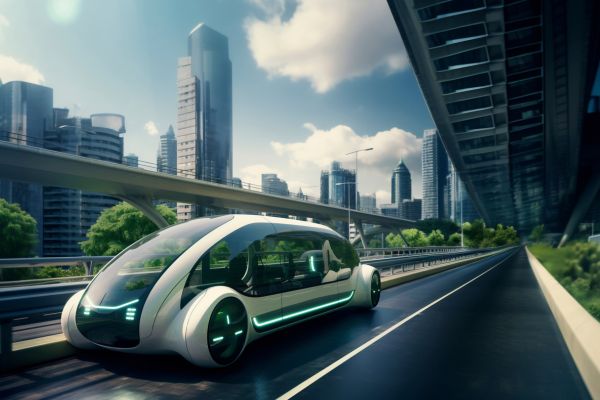
India’s mobility story is moving beyond vehicle ownership and into a service-led future shaped by insurance, leasing and Mobility-as-a-Service (MaaS). Together, these three layers are helping the market become more flexible, more digital and better suited to the realities of crowded cities, EV adoption and shared transport demand.
For decades, mobility in India was built around buying a vehicle, insuring it, maintaining it and using it for as long as possible. That model is now being challenged by urban congestion, rising ownership costs, tighter fleet economics and the growth of app-based transport, corporate commuting and electric fleets. The result is a market that increasingly values access over ownership and uptime over asset possession.
A New Market Shift
Through MaaS, there is expected to be a significant market shift. It brings together multiple transport modes in one platform so users can plan, book and pay for journeys more seamlessly. In India, this matters because most daily trips still depend on a mix of metro, bus, auto, shared cab and last-mile mobility.
Viability of MaaS in the Indian Market
India’s MaaS journey is still early, but the direction is clear. Kochi became a notable pioneer by linking metro, buses, ferries and auto-rickshaws into a more integrated mobility framework, showing how a city can move toward multimodal transport coordination. Bengaluru has also taken visible steps, with MaaS apps developed through open-data partnerships aimed at making public transport easier to use end to end.
This matters because Indian cities do not suffer only from a lack of transport; they suffer from a lack of coordination between transport layers. Common ticketing, route visibility, digital payments and real-time journey planning are the practical building blocks that can make public transport and shared mobility feel dependable. As more cities adopt open data and platform-based governance, MaaS can become a tool for reducing private car dependence and improving the first-mile, last-mile experience.
Insurance Becomes Dynamic
Insurance is no longer just a back-end compliance product in mobility; it is becoming part of the user experience. In India, IRDAI has already allowed technology-enabled motor cover concepts such as Pay-As-You-Drive and Pay-How-You-Drive for own-damage motor insurance, opening the door to usage-based pricing. That is an important shift because it lets premiums reflect actual usage and driving behaviour rather than only static vehicle attributes.
For mobility platforms, this creates room for embedded protection. A ride booked through a platform could be covered by short-duration insurance, trip-based protection, passenger coverage or fleet-level risk products, depending on the service model. For insurers, the opportunity is equally large: mobility is becoming a journey-based business, not just an asset-based one.
Insurers Need To Adopt The Transition
Insurers will increasingly need to price risk by context. A car used for a corporate commute, weekend rentals and a ride-hailing gig may need very different cover logic from a privately owned car parked most of the week. That pushes the industry toward telematics, data partnerships, claims automation and more modular policy design.
India is particularly suited to this evolution because the market is already digitally active and highly mobile-first.
Consumer interest in connected vehicles, alternative energy vehicles and autonomous mobility has been highlighted in industry research, suggesting that users are willing to engage with new protection models if the value is clear. The challenge for insurers is to make these products simple enough to trust and quick enough to use.
Leasing Changes Fleet Economics
Leasing is the bridge between ownership-heavy mobility and service-led fleet operations. For EV fleets in particular, leasing reduces upfront capital burden, spreads risk and allows operators to focus on uptime instead of depreciation. This is especially valuable in India, where fleet operators often face uncertain utilisation, battery concerns and fast-changing route economics.
The leasing model also fits corporate mobility, delivery fleets and shared transport operators. Rather than buying vehicles outright, companies can subscribe to usage, maintenance, replacement cycles and asset management as a service. That makes fleet expansion faster and more predictable, while also helping operators adapt to new routes, seasonal demand and vehicle technology changes.
EV leasing is especially relevant because India’s electrification push depends on practical business models, not just vehicle availability. Fleet leasing can help scale adoption by lowering the friction around procurement and lifecycle management. In a market where uptime and total cost of ownership matter more than badge value, leasing is becoming a serious operational tool.
Leasing, Insurance And MaaS Becomes Formidable
The overlap between leasing, insurance and MaaS becomes strongest in electric mobility. Shared EV fleets need asset financing, predictive maintenance, charging access, telematics and risk cover in one integrated ecosystem. If any one of these links breaks, utilisation suffers and the economics weaken.
That is why the industry is moving toward bundled models. A fleet operator may lease the vehicle, insure it through a usage-linked policy, track it through telematics and connect it to a MaaS platform that routes demand efficiently. This is not just convenience; it is operational design.
For India, this is strategically important because electrification is happening fastest where vehicle utilisation is high. Shared mobility, corporate transport and last-mile logistics create the kind of consistent mileage that improves EV economics, especially when paired with managed leasing and data-driven maintenance. In other words, the more the industry treats mobility as a service, the easier it becomes to scale electric fleets.
Policy and Platforms
India’s government-backed digital mobility work is helping make this transition possible. The Ministry of Housing and Urban Affairs has promoted data-driven urban governance through the DataSmart Cities strategy, which supports a more structured approach to data, platforms and public service delivery. That matters because MaaS needs data sharing, route integration and payment interoperability to work at scale.
On the transport side, initiatives around integrated public systems, open transit data and smart city platforms are creating the conditions for multimodal mobility. The long-term prize is a mobility ecosystem where public agencies, private operators, fintech players and insurers can collaborate through common standards rather than operate in silos. India’s challenge is less about invention and more about coordination.
A city like Kochi shows what becomes possible when transport is planned as a connected service rather than a collection of assets. Bengaluru’s early MaaS deployments show how open data and app-based journeys can improve public transport adoption. These are still early steps, but they point in the right direction.
Opportunities For Business
For business leaders, the opportunity lies in designing around the customer journey rather than the vehicle alone. Insurers can create embedded products for shared rides, fleets and subscriptions, while lessors can bundle service, maintenance and replacement into predictable contracts. MaaS platforms, meanwhile, can become the transaction layer that connects demand, payments, routes and protection.
This opens a broader set of revenue pools. There is room for fleet insurance, trip-level insurance, passenger protection, driver protection, leasing fees, maintenance contracts, telematics services and even usage-based loyalty programs. The winners will be the players that can simplify the stack for the customer while managing complexity in the background.
It also creates a stronger role for partnerships. Automakers, insurers, fleet operators, fintechs and mobility apps will need to work together if they want to build a trusted ecosystem. In India, where price sensitivity is high and service reliability matters, the best models will be the ones that reduce friction at every step.
The next phase of India’s mobility market will likely be defined by integration, not isolation. Insurance will become more usage-based, leasing will become more operationally important, and MaaS will become the digital layer that brings journeys together. That shift is already visible in smart city projects, EV fleet models and public transport digitisation.



.)