

Printing the Future, One Layer at a Time
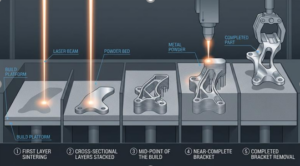
The automotive industry has always been defined by precision engineering, but a quiet revolution is rewriting how cars are built. 3D printing, also called additive manufacturing (AM), is the process of fabricating physical components directly from a digital design by depositing material layer by layer, whether plastic, metal, composite, or resin, until the final part takes shape. Unlike traditional subtractive manufacturing, which cuts away from a solid block, additive manufacturing builds up only what is needed, eliminating material waste and enabling geometries that conventional tooling simply cannot produce.
For the automotive sector, this translates into a compelling set of advantages: dramatically shorter prototyping cycles, on-demand spare parts, lighter structural components, and the ability to customize at scale.
As the global auto industry pivots toward electrification, AM’s value proposition becomes more sharpened.
Electric vehicles demand a lighter chassis for an extended range. There are thermally efficient battery housings and compact cooling systems, all of which are precisely the kinds of complex, high-performance components where additive manufacturing excels over traditional casting or machining. 3D printing technologies can reduce the weight of chassis and powertrain components by as much as 30–40%, directly improving battery range in the case of electric vehicles (EVs).
A Market on the Move: Global Overview & Automotive Use Cases
The global Automotive 3D Printing Market was valued at approximately USD 3.5 billion in 2025 and is projected to exceed USD 18 billion by 2033, expanding at a CAGR of around 20% between 2026 and 2033. Asia Pacific dominated the global automotive 3D printing with a 40% market share in 2025, while North America remains the technology leader in deployment maturity.
The use cases of 3D printing in the automotive sector span the entire vehicle lifecycle:
- Rapid Prototyping: Compress design iteration from weeks to days, enabling concurrent engineering and faster time-to-market
- Tooling & Fixtures: 3D-printed jigs, assembly fixtures, and molds replace expensive hard tooling for low-volume runs
- End-Use Production Parts: Lightweight structural brackets, interior components, ducts, and housing printed at production scale
- On-Demand Spare Parts: Eliminate warehouse inventory by printing legacy and low-demand spare parts as orders arise
- EV-Specific Components: Battery enclosures, motor housing, thermal management channels, and copper windings, all optimized through AM
Case Studies:
BMW is among the most aggressive adopters globally. The company opened its dedicated Additive Manufacturing Campus in Oberschleissheim, Munich, in 2020, operating over 50 AM systems on-site. BMW prints over 300,000 components worldwide annually, using laser beam melting for metal parts and HP Multi Jet Fusion for polymer components. Since then, the campus has become a model for integrated, scalable AM in automotive production.
Volkswagen integrated binder jetting technology into its main Wolfsburg plant in 2021 for metal part production. The company has gone a step further by training its apprentices at the Volkswagen Academy in Emden on AM systems, a direct signal that VW treats additive manufacturing as a foundational production competency, not a niche experiment.
Ford purchased one of the world’s first 3D printing systems as far back as 1988 to validate its potential. Today, the company uses AM to produce spare parts on demand for current and legacy models, cutting lead times significantly, while also using printed fixtures and tooling in assembly operations to streamline production.
Technology Toolkit: Preferred 3D Printing Techniques in Automotive
Not all 3D printing is equal. Automotive applications demand carefully matched technology-material pairing based on the component’s function, precision requirements, and volume. The four dominant technologies are:
| Technology | Material | Best Automotive Use |
| Fused Deposition Modeling (FDM) | Thermoplastics (ABS, PLA, PETG) | Concept models, jigs, fixtures, and interior trim prototyping |
| Selective Laser Sintering (SLS) | Nylon/polyamide powders | Functional prototypes, ducts, complex housings, no support structures needed |
| Selective Laser Melting (SLM) | Metal alloys (Ti, Al, steel) | Load-bearing structural parts, brackets, EV motor/battery components |
| Multi Jet Fusion (MJF) | Nylon PA 12 | High-throughput production of complex polymer parts (used by BMW for i8 components) |
Fused Deposition Modeling is the most accessible and widely used for prototyping, valued for its low cost and ease of use. Selective Laser Sintering is the preferred choice for functional polymer parts due to its ability to produce strong, complex geometries without support structures.
Selective Laser Melting is the gold standard for metal automotive components, particularly critical for EV applications where aluminum alloys like AlSi10Mg enable lightweight, thermally superior battery housings.
Multi Jet Fusion, championed by HP, is gaining rapid traction for production-scale polymer parts, combining speed with dimensional accuracy.
Supply Chain Reimagined and Its Challenges
Key Stakeholders in the Global 3D Printing Supply Chain
The 3D printing supply chain in automotive involves a layered set of players:
- 3D Printing Equipment Manufacturers: Stratasys, 3D Systems, EOS, HP, SLM Solutions, Desktop Metal, provide printing hardware
- Material Suppliers: Providers of certified metal powders, polymer filaments, and resins (BASF, Evonik, Carpenter Additive)
- OEMs & Tier-1 Suppliers: Integrate 3D printing in-house (BMW, Volkswagen, Ford, Tesla) or source from AM service bureaus
- 3D Printing Service Bureaus: Third-party print-on-demand manufacturers handling low volume, specialty, and aftermarket needs
- Software & Design Enablers: CAD, topology optimization, and simulation platforms (Autodesk, Siemens, Altair)
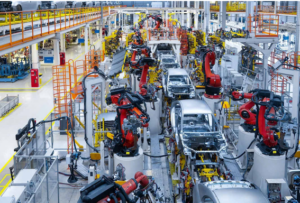
Traditional automotive supply chains operate on a push-based model, mass production fed by long-horizon demand forecasts, global supplier networks, and centralized warehousing. 3D printing introduces the possibility of a pull-based, on-demand model where parts are produced at the point of need, closer to the point of use, fundamentally compressing both lead times and inventory costs.
Current Challenges
Despite the promise, several structural barriers slow full-scale adoption:
- Scalability Gap: 3D printing remains cost-efficient for low-to-medium volume production but cannot yet match the unit economics of injection molding or die casting at mass-production volumes
- Material Certification: Automotive safety-critical components require certified, tested materials. Metal powder availability and quality consistency remain a bottleneck, particularly outside North America and Europe
- Quality Consistency: Variations in printer calibration, ambient conditions, and powder lot characteristics can affect part uniformity, a significant concern for structural components
- Skilled Workforce Deficit: Operating advanced 3D printing systems requires expertise in CAD, topology optimization, and process parameter control, skills that remain scarce globally
- IP & Digital Security: As manufacturing shifts to digital design files distributed across global networks, protecting proprietary design data becomes a new and pressing challenge
India’s Current Scenario: A Market Finding Its Footing
India’s 3D printing market is likely to be valued at around ₹ 6,000 crores in 2026 and is forecast to surpass ₹30,000 crores by 2033 at a CAGR of over 20%. Automotive, aerospace, and healthcare are the primary demand drivers.
India’s auto component industry contributes 2.3% of national GDP and employs over 1.5 million people, making it a strategic sector for AM adoption.
Current use cases in India’s automotive sector include:
- Prototype Development: Maruti Suzuki, Tata Motors, and Mahindra use AM bureaus to compress product development timelines
- Jigs, Fixtures & Tooling: Tier-1 suppliers use AM to reduce hard tooling costs for low-volume component runs
- Spare Parts on Demand: Tata Motors has adopted AM to produce slow-moving spare parts on demand, reducing inventory carrying costs
- EV Component Development: Indian EV OEMs are leveraging AM for rapid iteration of battery enclosures, motor mounts, and thermal management components, critical as brands such as Ola Electric and Tata’s EV division aggressively launch new platforms
A landmark institutional move: Toyota Kirloskar Motor signed a MoU with Wipro 3D in April 2026 to establish an Additive Manufacturing Centre of Excellence at the Toyota Technical Training Institute (TTTI) in Karnataka, India. The initiative will drive rapid prototyping, develop production aids, create lightweight and optimized components, and enable on-demand manufacturing of parts by fully leveraging Wipro 3D’s capabilities. This approach is likely to accelerate new product development (NPD), enhance assembly line efficiency, cut lead times, and boost operational flexibility.
India’s Future: Growth Engines, Players, and Challenges
Market Players Building the Ecosystem
India’s domestic AM ecosystem is nascent but expanding.
A few of the key stakeholders include:
- Wipro 3D: India’s leading metal AM specialist, offering aluminum, titanium, and stainless-steel printing, now actively partnering with automotive OEMs
- Think3D, Objectify Technologies, Imaginarium, Tvasta Manufacturing: leading AM service bureaus catering to automotive prototyping and small-batch production
- Stratasys India: A global leader’s India arm providing industrial-grade polymer AM for automotive clients
Growth Opportunities
The confluence of three mega-trends makes India’s 3D printing automotive opportunity particularly compelling:
- EV Transition: India has set targets – 30% EV penetration for passenger cars and 80% for two- and three-wheelers by 2030. Every new EV platform is a greenfield opportunity for 3D printing, from lightweight battery housing using AlSi10Mg alloys to conformal cooling channels and integrated motor housings that simply cannot be made via traditional casting.
- Make in India & AtmaNirbhar Bharat: The government’s National Strategy on Additive Manufacturing (NSAM) targeted a 5% global 3D printing market share by 2025-2026, backed by MeitY investment and PLI incentives, directly incentivizing domestic 3D printing capacity building.
- Decentralized Manufacturing Hubs: India’s geography and infrastructure disparities make the concept of distributed, digital 3D printing hubs highly attractive. Certified 3D printing bureaus in Tier-2 and Tier-3 cities can produce validated parts on demand for local vehicle fleets, reducing logistics costs and enabling faster aftermarket service.
Challenges to Navigate
- High Capital Cost of Industrial 3D printing Systems: SME-dominated supply chains struggle to justify capital expenditure on industrial metal AM without OEM demand guarantees
- Limited Domestic Material Supply: India relies heavily on imported metal powders and specialty polymers, a supply chain vulnerability that needs domestic resolution
- Regulatory & Certification Gaps: BIS and ARAI need to develop clear testing and approval frameworks for 3D-printed safety-critical auto components before mainstream production adoption
- Skilled Manpower Deficit: Institutes such as IITs and NITs are beginning to offer 3D printing curricula, but industry-ready 3D printing engineers remain scarce relative to the sectoral demand
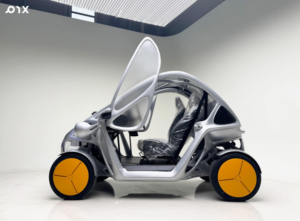
Image: PIX Beastie, a two-seater modern 3D printed car
Conclusion: Building Tomorrow’s Cars, One Layer at a Time
3D printing is no longer a prototyping curiosity; it is a production-grade technology reshaping how the world’s automakers design, build, and supply vehicles. Globally, the market is on a steep growth trajectory, driven by lightweighting imperatives, EV proliferation, and the urgent need for more resilient, localized supply chains.
For India, the opportunity is well-timed: a booming domestic auto market, an aggressive EV agenda, strong government policy backing, and a large engineering talent base that can be upskilled for the additive manufacturing era. The companies and policymakers that invest now in 3D printing capability, technology, materials, talent, and certification frameworks will write the next chapter of India’s automotive manufacturing story, one precisely deposited layer at a time.