The global transition toward electric mobility is no longer a question of if, but how quickly it can be achieved and at the core of this transformation lies robust charging infrastructure. As electric vehicles (EVs) move from early adoption to mass-market penetration, their scalability is increasingly dependent on the availability, accessibility, and reliability of charging networks across both urban centers and long-distance highway corridors. Without a well-developed infrastructure backbone, widespread EV adoption remains constrained.
According to the International Energy Agency, public charging infrastructure is projected to expand nearly sixfold by 2035, highlighting the scale of investment and coordination required among governments, utilities, and private stakeholders. This rapid expansion reflects a broader shift in mobility and energy ecosystems, where infrastructure is no longer a supporting element but a central enabler of electrification.
From a market perspective, this momentum is further reinforced by strong growth projections. According to Persistence Market Research, the global EV charging infrastructure market is set to expand from US$31.1 billion in 2025 to US$113.4 billion by 2032, at a CAGR of 20.3%, highlighting its critical role in enabling scalable, efficient, and decarbonized mobility systems.
The Global Outlook: Scaling Charging Infrastructure for Mass Adoption
The expansion of charging infrastructure reflects a fundamental shift in mobility patterns. Historically, EV adoption has been concentrated among consumers with access to private home charging typically those residing in single-family homes. However, as EV adoption broadens to include urban populations, apartment dwellers, and commercial fleet operators, the reliance on public and semi-public charging infrastructure is intensifying. The IEA estimates that global public charging points will exceed 15 million by 2030, rising sharply from nearly 4 million in 2023. By 2035, this number is projected to approach 25 million under announced policy scenarios, signaling a structural transformation in global energy and mobility systems.
Regionally, leadership in charging infrastructure deployment remains uneven. China dominates the global landscape, accounting for approximately 70% of public light-duty vehicle charging infrastructure in 2023, driven by limited home-charging access and strong government-led deployment strategies. The country’s emphasis on high-density, fast-charging networks has positioned it as a global benchmark, with nearly 45% of its public chargers classified as fast chargers. By 2035, China is expected to maintain its leadership, supported by continued policy alignment and infrastructure investments.

In contrast, Europe is advancing through regulatory frameworks such as the Alternative Fuels Infrastructure Regulation (AFIR), which mandates minimum charging capacity per EV and requires fast chargers of at least 150 kW every 60 km along major transport corridors. This regulatory clarity is driving uniform infrastructure expansion across the European Union, where public chargers are expected to reach approximately 2.7 million by 2035.
The United States is pursuing a hybrid approach, combining federal funding with private investment. With a target of 500,000 public charging ports by 2030 and projections reaching 1.7 million by 2035, the U.S. is focusing on both highway corridors and urban charging ecosystems. Similarly, Japan’s Green Growth Strategy aims to deploy 150,000 chargers by 2030, emphasizing convenience parity with conventional refueling systems.
Highways vs Cities: Dual Infrastructure Strategies for Seamless Mobility
The development of EV charging infrastructure requires a dual strategy one that simultaneously addresses the distinct needs of urban mobility and long-distance travel. In cities, charging infrastructure must prioritize accessibility, density, and integration with daily routines. Urban charging solutions are typically characterized by slower AC chargers installed in residential complexes, workplaces, and public parking facilities. These chargers support overnight or extended-duration charging, aligning with predictable usage patterns.
However, urban environments also require a growing network of fast chargers to support ride-hailing fleets, commercial vehicles, and users without access to home charging. In markets like India and the United Kingdom, limited home-charging access 55% and 90% respectively highlights the importance of public infrastructure in driving adoption.
Highway infrastructure, by contrast, is defined by speed, reliability, and coverage. Long-distance EV travel depends on high-power DC fast chargers capable of delivering rapid energy replenishment, often exceeding 150 kW. Governments worldwide are establishing corridor-based deployment strategies to ensure uninterrupted travel. For instance, India mandates the installation of charging stations every 25 km along major highways, while Europe’s TEN-T network requires fast chargers every 60 km.
This bifurcation between urban and highway charging is critical. Urban networks enable daily usability, while highway infrastructure eliminates range anxiety and unlocks intercity mobility. Together, they form a cohesive ecosystem that supports the full spectrum of EV use cases.
India’s Charging Revolution: Opportunities, Gaps, and the Road to 2030
India represents one of the most dynamic and high-growth EV markets globally, driven by rising fuel costs, supportive policies, and rapid urbanization. As of March 2026, the country has deployed over 29,000 public EV charging stations a significant increase from just 5,000 in 2022. This rapid expansion reflects strong policy support under initiatives such as FAME-II and PM E-Drive, as well as growing private sector participation.
Despite this progress, the scale of infrastructure required to meet India’s electrification targets remains substantial. By 2030, the country aims to achieve 30% EV penetration, which could translate to nearly 80 million electric vehicles on the road. To support this transition, India will require approximately 1.32 million public charging stations, with total charging points including private installations reaching between 2.5 and 3 million units. This necessitates an annual deployment rate of around 400,000 chargers, highlighting the urgency of infrastructure development.
Currently, charging infrastructure in India is highly concentrated in a few states. Karnataka leads with over 5,700 stations, followed by Maharashtra with more than 3,700, and Delhi with approximately 1,900. Other key states include Tamil Nadu, Gujarat, Uttar Pradesh, and Rajasthan. Major urban hubs such as Bengaluru, Mumbai, and Delhi NCR dominate deployment, accounting for nearly 60% of the country’s charging infrastructure.
From a technology perspective, India’s charging ecosystem is expected to be dominated by AC chargers, which will account for 70–80% of installations, particularly for two- and three-wheelers. DC fast chargers, though representing only 10–15% of installations, will play a critical role in highway and commercial fleet applications.
The opportunity landscape is equally compelling. High-growth segments include highway fast charging, fleet charging hubs, urban public charging, and residential infrastructure for multi-unit dwellings. For investors and operators, India offers a multi-billion-dollar opportunity across hardware, software, and energy services.
Wireless EV Charging: Advancing Toward Scalable, Autonomous, and In-Motion Infrastructure
The electric vehicle (EV) charging ecosystem is undergoing a profound technological transformation, driven by the dual imperatives of efficiency optimization, seamless grid integration, and enhanced user convenience. Among the most notable advancements is the emergence of ultra-fast charging solutions, enabling EVs to recharge from 10% to 80% in under 20 minutes using high-capacity chargers rated at 150 kW or above. This capability is redefining consumer expectations and positioning EV charging as a viable alternative to the speed and convenience of conventional fuel refueling.
In parallel, Vehicle-to-Grid (V2G) technology is reshaping the role of EVs within the broader energy ecosystem by enabling bidirectional power flow between vehicles and the grid. Industry leaders such as Nuvve and Nissan, with models like the Nissan LEAF, are at the forefront of this innovation, while infrastructure providers including ABB and Siemens are developing compatible systems. This evolution is transforming EVs into distributed energy assets capable of supporting peak demand, enhancing grid stability, and accelerating renewable energy integration.
Wireless charging is emerging as a key enabler in addressing interoperability challenges associated with fragmented charging standards and diverse connector configurations. Based on inductive power transfer, this technology facilitates seamless energy delivery without the need for physical plug-in interfaces, improving user convenience and operational efficiency across both private and commercial applications.
Building on this foundation, deployment is rapidly progressing across use cases. Static wireless charging is being integrated into residential, workplace, and public parking environments, while dynamic charging solutions are being tested to enable in-motion energy transfer on electrified roadways. Pilot initiatives such as the Dynacov project in Coventry, supported by Cenex, along with large-scale trials in France, demonstrate strong scalability potential. Leading OEMs, including Tesla, Inc., Toyota, Volkswagen, Stellantis, and Geely, are actively investing in advancing these capabilities.
Recent developments further validate commercial viability. In October 2025, Electreon achieved a major milestone by demonstrating in-motion charging on France’s A10 Highway, delivering twice the power required to sustain a fully loaded electric truck at highway speeds. Additionally, in March 2026, Beam Global partnered with HEVO to introduce an integrated, solar-powered, off-grid wireless charging platform tailored for autonomous EV fleets. In the United Kingdom, deployment is advancing through initiatives such as the WiCET program in Nottingham, supported by £3.4 million in funding under the government’s Road to Net Zero strategy, reinforcing the growing role of coordinated public and private investment in accelerating next-generation EV infrastructure.
Why Do EV Connector Standards Matter?
In the early phase of electric mobility, automakers adopted different charging plugs, creating a fragmented ecosystem similar to historic format rivalries. This lack of uniformity led to confusion among users, as vehicles were not always compatible with available charging infrastructure, resulting in limited accessibility and inconvenience. Standardization of EV connectors addresses this challenge by ensuring interoperability across vehicles and charging stations while defining key parameters such as plug design, power capacity, and communication protocols. This enables seamless interaction, improves safety, and enhances charging efficiency. For users, it reduces range anxiety, and for infrastructure providers, it enables broader service coverage, making connectors a critical interface between EVs and the power grid.
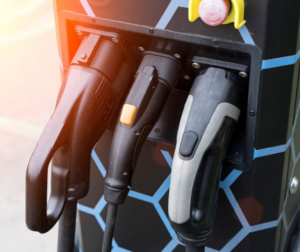
Across global markets, a combination of AC and DC connector standards has emerged to support this standardization. The SAE J1772 (Type 1) connector is widely used in North America and Japan, offering single-phase AC charging up to 19.2 kW, while the Mennekes connector (Type 2) connector dominates Europe and India with a seven-pin design, three-phase capability, and up to 22 kW output, along with integrated safety locking. China follows its own GB/T EV charging standard framework, which requires separate AC and DC interfaces tailored to its domestic ecosystem.
For DC fast charging, advanced standards such as Combined Charging System CCS1 and Combined Charging System CCS2 enable unified AC/DC charging with power outputs up to 360 kW, with CCS2 becoming the backbone of fast-charging infrastructure in India and Europe. Legacy systems like CHAdeMO are gradually declining, while GB/T DC charging standard continues to dominate in China. Meanwhile, North American Charging Standard (NACS) is rapidly emerging as the preferred standard in North America. India is also progressing toward a universal charging ecosystem, where multi-standard charging stations and emerging solutions such as LECCS for light EVs ensure compatibility across vehicle categories and support large-scale electrification.
| Sr. No | Region | AC Charging Standard | DC Fast Charging Standard | Current / Future Trend | Key Notes |
| 1 | North America (USA, Canada) | SAE J1772
(Type 1) |
Combined Charging System CCS1 | North American Charging Standard (NACS) (J3400) is becoming dominant by 2025+ | Transition toward NACS led by Tesla, Inc.; adapters enable backward compatibility |
| 2 | Europe (EU, UK, Norway) | Mennekes connector
(Type 2) |
Combined Charging System CCS2 | CCS2 remains a long-term standard | Strong regulatory push ensures uniform adoption across countries |
| 3 | China | GB/T EV charging standard | GB/T DC charging standard | ChaoJi charging standard (future ultra-fast) |
Dual-port system (separate AC & DC); highly localized ecosystem |
| 4 | Japan | SAE J1772
(Type 1) |
CHAdeMO | Gradual shift toward next-gen standards (ChaoJi collaboration) | Early EV leader; CHAdeMO still widely deployed |
| 5 | India | Mennekes connector
(Type 2) |
1. Combined Charging System CCS2 2. LECCS Type 7 3. Bharat DC-001 |
Transition toward a unified multi-standard ecosystem | CCS2 dominates passenger vehicles; LECCS targets 2W/3W segment; Bharat DC-001 used in early/low-voltage applications |
Challenges, Standardization, and the Path Forward:
Despite significant progress, the expansion of EV charging infrastructure faces several critical challenges. Foremost among these is the lack of global standardization. The presence of multiple connector types, charging protocols, and power ratings creates compatibility issues, undermining user confidence and network reliability. Standardization efforts such as CCS2 in Europe and India, GB/T in China, and emerging standards like NACS in North America are essential for creating a unified ecosystem.
Infrastructure gaps also remain a major concern, particularly in rural and underserved regions. High capital costs associated with fast-charging deployment, coupled with grid constraints, limit the pace of expansion. The growing demand for electricity from EVs is placing increasing pressure on power grids, necessitating upgrades in grid capacity, smart energy management systems, and renewable integration.
Battery-related challenges, including thermal management and degradation during fast charging, further complicate infrastructure planning. Additionally, the economic viability of charging networks depends on utilization rates, which remain low in early-stage markets.
For heavy-duty vehicles, the challenge is even more complex. While depot charging can support short-haul operations, long-haul electrification requires high-capacity, megawatt-scale charging infrastructure along highways. By 2035, global charging capacity for heavy-duty vehicles is expected to reach 2,000 GW, reflecting a twenty-fold increase. Initiatives such as the U.S. National Zero-Emission Freight Corridor Strategy and Europe’s TEN-T regulations are critical in addressing these requirements.
Building the Energy Highways of the Future
The transition to electric mobility is fundamentally an infrastructure challenge. While vehicle technology continues to advance, the success of EV adoption will ultimately depend on the ability to build a comprehensive, reliable, and scalable charging network that spans cities and highways alike. The next decade will be defined by unprecedented investments, policy alignment, and technological innovation in charging infrastructure.
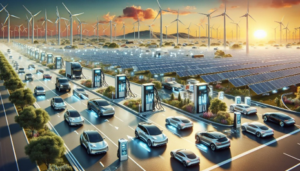
From ultra-fast charging corridors to wireless in-motion systems and intelligent grid integration through V2G, the future of EV infrastructure is both complex and transformative. Markets like India highlight the scale of opportunity and the urgency of deployment, while global leaders set benchmarks for innovation and execution.
As governments, utilities, automakers, and technology providers converge, charging infrastructure will evolve from a supporting system into a strategic asset one that not only powers vehicles but also reshapes energy systems, urban planning, and economic growth. The road ahead is electrified, and the infrastructure built today will determine the speed and success of that journey.