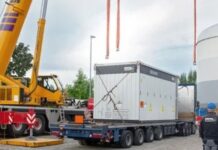
Ford has started shipping its first lithium iron phosphate (LFP) prismatic battery cells from BlueOval Battery Park Michigan to its Louisville Assembly Plant in Kentucky. The cells will be used to power prototypes of the upcoming Ford Fathom electric pickup truck. The shipment marks Ford’s entry into battery cell manufacturing at a facility it owns and operates.
The BlueOval Battery Park Michigan facility uses manufacturing technology licensed from Chinese battery manufacturer Contemporary Amperex Technology Co. Limited (CATL). Ford selected CATL’s technology after evaluating battery solutions from companies worldwide. The automaker wanted a proven technology that was ready for large-scale manufacturing and could support its objective of developing more affordable electric vehicles.
Ford selected LFP battery chemistry because it does not require nickel or cobalt, helping reduce battery costs. The chemistry also offers durability over years of charging and use. Additionally, it supports bidirectional power applications, allowing compatible vehicles to receive electricity from an appropriately equipped home and supply power back to it.
For the Fathom electric pickup, Ford has designed the battery pack to serve as a structural component of the vehicle. The company selected rectangular prismatic cells because they fit directly into the chassis and help reduce structural costs. Ford has also combined electrical and sensing connections into a flexible circuit board and integrated compact power electronics into the battery pack. This design helps reduce the number of components, vehicle weight and manufacturing complexity.
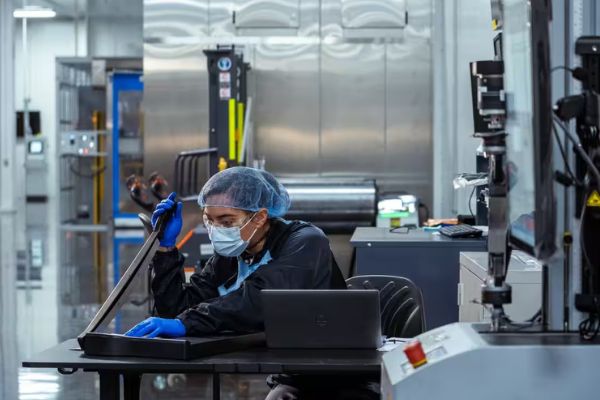
According to Ford, the assembly lines at BlueOval Battery Park Michigan can produce 40 battery cells per minute, making them among the fastest LFP prismatic battery assembly lines outside China. The facility uses AI-powered image recognition and other inspection tools to identify defects during production. Ford aims to achieve quality levels at which defective cells are measured in parts per billion rather than parts per million.
The first battery cells shipped to Louisville will support Fathom prototypes and ongoing vehicle development. Ford plans to bring its battery pack plant in Marshall, Michigan, into operation in 2027 ahead of the vehicle’s launch. The manufacturing knowledge, engineering expertise and production capabilities developed at the Michigan facility will also support Ford Energy’s preparations for battery energy storage production in Glendale, Kentucky.