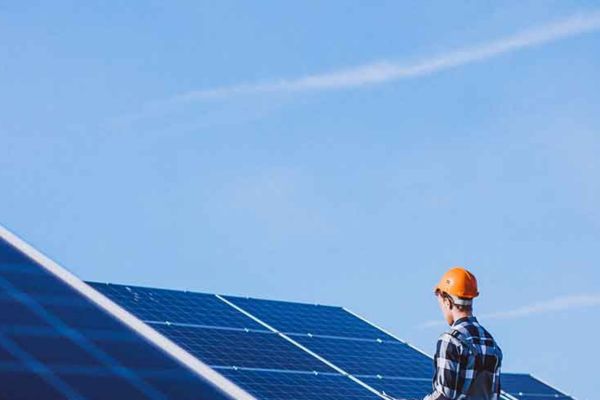
The Tamil Nadu government has announced a new Rooftop Solar Subsidy Scheme that offers financial assistance of up to ₹1 lakh for eligible domestic consumers installing rooftop solar systems. The initiative has been introduced in convergence with the Centre’s Pradhan Mantri Surya Ghar Muft Bijli Yojana, aiming to accelerate the adoption of clean energy while helping households reduce electricity expenses.
Under the new scheme, homeowners installing a 3 kW rooftop solar system can receive a combined subsidy of up to ₹1 lakh. This includes the existing central government subsidy of ₹78,000, with the Tamil Nadu government providing additional financial support to bridge the gap. The state has allocated ₹50 crore for implementing the programme as part of its latest budget announcements.
The initiative is designed to encourage wider residential adoption of solar energy by reducing the upfront installation cost. By making rooftop solar systems more affordable, the government expects to lower household electricity bills while supporting Tamil Nadu’s long-term renewable energy and sustainability objectives.
The subsidy programme complements the Central Government’s PM Surya Ghar Muft Bijli Yojana, which promotes rooftop solar installations across the country. The combined financial assistance is expected to improve participation among homeowners and contribute to India’s clean energy transition through increased distributed solar generation.
Alongside the rooftop solar subsidy, the Tamil Nadu government has announced several energy sector initiatives in its budget, including the expansion of electric vehicle charging infrastructure and investments in power and renewable energy projects. These measures reflect the state’s broader strategy to strengthen energy security while promoting low-carbon technologies.
With the launch of the enhanced rooftop solar subsidy, Tamil Nadu aims to make residential solar adoption more accessible and financially attractive. The scheme is expected to boost clean energy deployment, reduce dependence on conventional power sources, and support the state’s commitment to a more sustainable and energy-efficient future.