
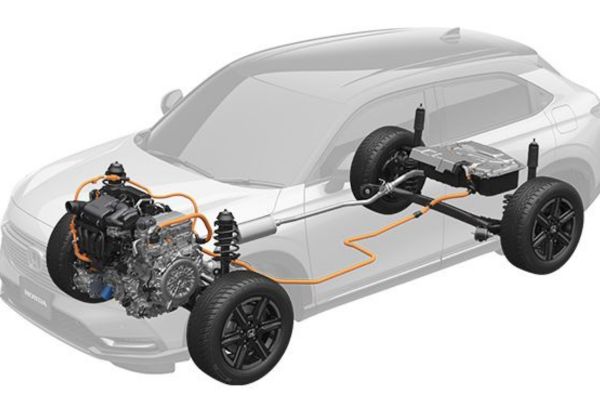
The global Hybrid Electric Vehicle (HEV) Market is projected to grow from USD 15.70 billion in 2023 to USD 25.02 billion by 2032, registering a compound annual growth rate (CAGR) of 5.31% during the forecast period. According to Introspective Market Research (IMR), this growth is primarily driven by increasing environmental awareness, stringent emission regulations, and advancements in hybrid propulsion technologies.
Hybrid electric vehicles combining internal combustion engines with electric propulsion are emerging as a practical transition solution toward full electrification. Their ability to deliver improved fuel efficiency, reduced emissions, and enhanced driving performance makes them highly attractive across both developed and emerging markets.
Quick Insights
- Market Size (2023): USD 15.70 Billion
- Forecast Size (2032): USD 25.02 Billion
- CAGR (2024–2032): 5.31%
- Leading Segment: Full Hybrid Vehicles
- Fastest-Growing Region: Asia-Pacific
- Key Players: Toyota Motor Corporation, Honda Motor Co., Ford Motor Company, Hyundai Motor Company, Nissan Motor Co.
- Core Driver: Stringent emission norms and fuel efficiency demand
- Key Opportunity: Transition technology between ICE and EVs
- Primary Challenge: Competition from fully electric vehicles
Revenue Breakdown & Market Segmentation
| Segment Category | Key Insights |
|---|---|
| Base Year | 2023 – USD 15.70 Billion |
| Forecast Year | 2032 – USD 25.02 Billion |
| CAGR | 5.31% |
| By Type | Full Hybrid, Mild Hybrid, Plug-in Hybrid, Others |
| By Application | Battery, Electric Motor, Transmission |
| By Power Source | Stored Electricity HEVs, On-board Generator HEVs |
| By Powertrain | Series, Parallel, Combined Hybrid |
| By Vehicle Type | Passenger Cars, Commercial Vehicles, Two-Wheelers |
| By Region | North America, Europe, Asia-Pacific, MEA, South America |
The full hybrid segment dominates the market due to its ability to seamlessly switch between electric and combustion power, offering optimal efficiency and flexibility.
What’s Driving Growth? What Trends Are Reshaping the Market?
Why is the hybrid electric vehicle market gaining sustained momentum?
- Stringent emission regulations: Governments globally are enforcing stricter CO₂ and NOx standards, accelerating hybrid adoption.
- Fuel efficiency demand: Rising fuel costs are pushing consumers toward energy-efficient alternatives.
- Technological advancements: Improvements in lithium-ion batteries, regenerative braking, and energy management systems are enhancing HEV performance.
- Urban mobility trends: Increasing urbanization and traffic congestion favor hybrid vehicles due to better mileage in stop-and-go conditions.
- Bridging technology: HEVs serve as a transitional solution for consumers hesitant to fully switch to EVs.
Regional & Segment Analysis
- Asia-Pacific leads the market, driven by strong adoption in countries such as Japan, China, and South Korea, supported by government incentives and environmental awareness.
- North America shows steady growth due to increasing fuel efficiency regulations and consumer demand for cost-effective alternatives.
- Europe is driven by aggressive emission targets and sustainability initiatives.
Segment Insights:
- Passenger vehicles dominate due to high consumer adoption.
- Battery segment holds the largest share, as it serves as the primary power source for hybrid systems.
- Full hybrids lead, while plug-in hybrids are gaining traction due to extended electric-only driving capabilities.
Latest Industry Developments
- Toyota continues to expand its hybrid lineup, maintaining leadership in full hybrid technology.
- Honda and Hyundai are investing in next-generation hybrid systems with improved battery efficiency and performance.
- Ford is integrating hybrid powertrains into SUVs and trucks, expanding hybrid adoption beyond passenger cars.
- Automakers are increasingly combining hybrid systems with advanced driver-assistance technologies (ADAS) for enhanced vehicle intelligence.
Challenges & Cost Pressures
- Higher upfront costs compared to conventional vehicles.
- Competition from EVs: Rapid advancements in battery electric vehicles may limit long-term hybrid growth.
- Complex system integration: Hybrid systems require sophisticated engineering and maintenance.
- Supply chain constraints: Battery and electronic component availability impacts production.
Case Study: Hybrid Adoption in Urban Fleets
A metropolitan taxi fleet in Japan transitioned to hybrid electric vehicles to reduce fuel costs and emissions. The shift resulted in fuel savings of over 25% and significantly reduced carbon emissions, demonstrating the economic and environmental advantages of hybrid technology in high-usage urban environments.



 Market is projected to grow from USD 15.70 billion in 2023 to USD 25.02 billion by 2032.)