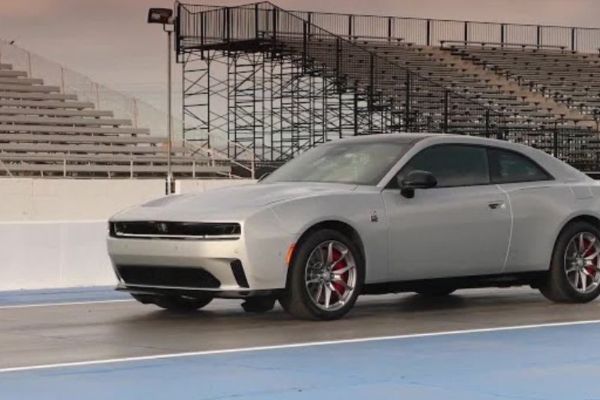
Stellantis and Factorial have reached a major milestone in electric vehicle battery development by launching real-world road testing of advanced solid-state battery technology. The companies have successfully integrated Factorial’s FEST (Factorial Electrolyte System Technology) solid-state battery cells into a Dodge Charger Daytona development vehicle, marking the first automotive application of the technology in North America.
The road-testing program has been designed to evaluate battery performance, safety, durability, and reliability under everyday driving and charging conditions. This important phase will allow engineers to gather real-world data and further refine the technology before it moves closer to commercial deployment.
The development vehicle uses Factorial’s advanced FEST solid-state battery cells, which were previously validated at an energy density of 375 Wh/kg. The batteries have also demonstrated rapid charging capability, allowing charging from 15% to 90% in approximately 18 minutes, while maintaining reliable operation across a wide temperature range.
To support the integration of the new battery technology, Stellantis developed a patented mechanical battery-pack architecture and updated control systems. These engineering improvements are designed to maximize battery performance while maintaining vehicle safety, reliability, and durability standards.
The road-testing initiative represents the first vehicle in a previously announced multi-stage development program between Stellantis and Factorial. The collaboration aims to accelerate the commercialization of solid-state batteries, which are expected to offer higher energy density, faster charging, improved safety, and lower costs compared to conventional lithium-ion batteries.
With testing now underway, Stellantis and Factorial are taking a significant step toward bringing next-generation battery technology to future electric vehicles. The results from this program could help pave the way for longer-range EVs with faster charging capabilities, supporting the broader transition toward advanced electric mobility solutions.