
Introduction: The Missing Link in the Electric Vehicle Revolution
Electric cars are not a futuristic concept, but a current reality on our roads today, altering the way we travel, commute and consider energy. From two-wheelers in cities to electric buses on highways, the transition is evident everywhere. It’s got governments behind it; it’s got companies chucking money at it and consumers are slowly getting used to it.
But there is a truth that is too often forgotten in the excitement.
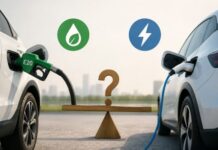
An electric car is only as dirty as the electricity that powers it.
If that electricity is generated by grids that rely heavily on coal, then EVs’ environmental benefit is somewhat compromised. The tailpipe emissions may be eliminated, but emissions are still created elsewhere in the system. That’s why charging stations fuelled by renewables have become one of the most critical components of the entire EV ecosystem.
Not only are they supporting electric mobility they’re defining the true clean mobility.
What are renewable energy powered charging stations?
A renewable-powered charging station is an electric vehicle (EV) charging station that uses renewable energy sources like solar, wind, or hybrid renewable systems, instead of just relying on traditional electricity grids.
The main element is most frequently a solar photovoltaic panel. The panels turn sunlight into electricity. This is used to either charge the cars right away or it is stored in batteries to be used later.
Some advanced stations use energy from multiple sources. solar power by day, wind power at night and grid electricity as backup when needed. This hybrid structure means charging never stops, but it prioritises clean energy use.
Many modern stations also have Battery Energy Storage Systems (BESS). These systems store surplus renewable electricity and release it when demand increases or renewable generation decreases.
So these stations aren’t just charging points they’re like little decentralised power stations.
Why Clean Energy Matters More Than Just Electric Cars
Discussion around EVs often focuses on the vehicles themselves. But the real change is in the energy system that is behind them.
Electric vehicles take direct emissions out of transport which is a big win. However, if they are powered by electricity generated from fossil fuels, the net reduction in carbon is limited.
Renewable-powered charging stations tackle this problem at its root.
For every kilometre driven, they run on clean electricity, directly using solar or wind power. This results in a full-cycle sustainability model for both transportation and energy generation.
It also relieves the pressure on national electricity grids, especially in countries with already high demand This is increasingly critical as adoption of EVs grows.
Solar Energy: The Backbone of the Modern Charging Infrastructure
Out of all the renewable energy sources, solar power has been the most feasible and common method for EV charging stations.
The reason is simple solar energy is available almost everywhere and can be deployed at different scales. Solar is flexible, from small residential systems to large highway charging centers.
Solar canopies are increasingly appearing over parking lots. These structures provide shade and generate electricity at the same time. This dual-purpose design makes the solar charging infrastructure very efficient in commercial spaces.
Another key benefit is timing. Most electric vehicles sit parked during the day offices, malls or institutions. This just so happens to be peak solar generation time.
Solar powered charging stations help reduce operational electricity costs over time. The initial cost can be high, but they are economically attractive to businesses because of their long-term savings and dependability.
Renewable charging is founded on battery storage.
Renewable energy is intrinsically variable. The sun changes from hour to hour, the wind conditions are different. Such variability is one of the main challenges for clean energy systems.
This challenge is solved by Battery Energy Storage Systems (BESS).
They store the energy that is produced in excess during the peak hours. When renewable generation takes a hit, stored energy kicks in to continue powering charging stations.
For instance, a solar charging station might produce more electricity than needed at noon when demand is low. That energy is instead stored in batteries. The stored energy is used later in the evening when vehicles come for charging and solar generation is stopped.
This creates a continuous and stable energy flow.
Battery systems also reduce reliance on the grid during peak hours, helping to balance the overall demand for electricity. Storage is becoming more efficient, smaller and cheaper as battery technology continues to improve.
Smart charging and digital energy management
Today’s renewable-powered charging stations are not a passive infrastructure. These are smart systems, run on data and automation.
Smart energy management platforms monitor real-time multiple factors including:
- Generation of wind or solar energy
- Storage levels (battery)
- Vehicle demand for electricity
- Weather forecasts.
- Pricing of grid electricity
This data is used by the system to decide automatically how to distribute energy.
When solar production is high, vehicles are prioritised for direct renewable charging. If demand unexpectedly rises, stored energy or power from the grid can be used as a backup. If the weather conditions predict a low solar output later in the day, the system will adjust the charging schedules accordingly.
Artificial intelligence is feeding into this process by anticipating demand patterns and optimising energy flow before they happen, rather than reacting in real time.
That means charging stations are becoming more efficient, reliable and cheaper.
Business Value: Moving beyond sustainability
Renewable-powered charging stations are not only good for the environment, they are good business too.
Companies across sectors are rapidly embracing them for a variety of reasons. Retail centres use them to attract customers with EVs. Hotels provide them as a premium service. They are installed on corporate campuses for employees. They are used by logistics companies to power electric fleets.
The business benefit is many-sided.
Initially, they cut long-term electricity costs by producing energy on site. Secondly, they pull in a growing population of EV owners who prefer destinations that offer charging. Third, they demonstrate their commitment to sustainability, which adds to the brand value.
In many industries environmental responsibility is no longer optional it is becoming a competitive advantage.
Government Push and Policy Backing
Governments around the world are promoting the development of renewable charging infrastructure.
Installation costs are being reduced by financial incentives such as subsidies, tax breaks and grants. In much of the country, policies now encourage or require charging infrastructure for EVs in new buildings.
Clean energy charging systems are also being incorporated into public infrastructure like highways, parking zones and transport hubs in urban development plans.
The long-term goal is clear: Develop a transportation ecosystem in which clean energy and electric mobility grow together and not apart.
Challenges in Real world implementation
Despite the rapid progress there are still several challenges.
The biggest stumbling block is still the high initial installation cost. There is a big cost to solar panels, battery systems and charging hardware. In dense urban areas, space constraints also limit the possibility of large-scale installations.
Another fact is that it’s weather dependent. Renewable energy generation can vary due to environmental conditions. Battery systems and hybrid systems can help to overcome this problem, but still require careful planning.
Grid integration can be tricky too, especially when trying to balance renewable energy, storage systems, and fast-charging demand all at once.
But these challenges are shrinking as the technology gets better and the costs keep coming down.
The Future: Energy, Mobility, Intelligence
The future of renewable-powered charging stations is tightly coupled with the development of smart energy systems.
Technologies like Vehicle-to-Grid (V2G) will enable electric vehicles to send energy back to the grid when needed. AI-powered systems will automatically distribute electricity across entire cities. Ultra-fast charging corridors will enable long-distance EV travel seamlessly.
In the long run, energy systems will be distributed. Instead of just large power plants, electricity will be generated, stored and used locally at thousands of small renewable hubs.
Charging stations will become energy hubs, offering not just vehicle power but community support.
Conclusion: Developing a Cleaner System, Not Just Cleaner Cars
Infrastructure upgrade is a far more profound shift than charging stations powered by renewable energy. They alter the relationship between energy and transportation.
EVs alone are not going to get us to real sustainability. It is not only what vehicles they are, but what is their source of energy .
The integration of renewables, intelligent charging systems, and advanced storage technologies is opening the road to end-to-end clean transportation.
This is more than just a technology change. It is a tectonic shift in the way modern society produces and consumes energy.
And that future is already coming, slowly but surely, one charging station at a time.