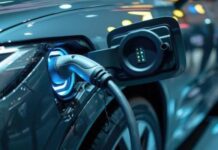

The mobility shift happening in India now presents a decision that was not really possible for the consumers just a couple of years back. With E20 petrol now becoming a part of the regular fuel chain and the rapid rise of electric vehicles, there is one very important question being asked now: should consumers go for their regular petrol car running on E20 or simply buy an EV?
There is no definitive answer to this question. What makes financial sense will depend on the use case of the vehicle, distance traveled, location of charging stations, and the holding period of the consumer. As someone who has interacted with a lot of enterprises and fleet managers, it is clear that focusing just on the purchase cost may give you the wrong answer.
How E20 Transforms Petrol Mobility Economics
India has reached the goal of achieving 20% ethanol blending five years earlier than scheduled, that is in 2025. This initiative was targeted to reach by 2030. In addition, ethanol blending has been increased from 1.5% in 2014 to 20% in 2025. This programme has been beneficial in reducing crude oil dependence and also helping to produce ethanol locally.
However, when it comes to consumers, the economic calculation becomes more real and practical. By using E20, existing petrol vehicles can be run in the changing fuel environment, and new vehicles being launched are increasingly capable of using higher ethanol blend fuels.
However, the efficiency of fuel usage is a factor. Since ethanol has lesser energy content per litre as compared to petrol, it would result in a certain decrease in fuel efficiency. Consumers therefore need to calculate their actual cost per kilometer.
Where an EV Can Make Financial Sense
An EV makes more sense when the usage per year is high. An electric car is much more cost-efficient per kilometre compared to a petrol-fuelled one, while an electric drive has fewer movable components that could mean less maintenance.
The case gets especially clear when talking about those who make a lot of miles each day. When it comes to fleet management, with cars spending hours and thousands of kilometres each month on the road, savings in fuel and maintenance become crucial for economic performance.
It goes differently if you consider your home vehicle, which you use not more than a few kilometres per day. With low usage per year, the high initial cost of EVs would take too long to be paid off through cost efficiency.
Here is the question that every consumer needs to ask themselves: how many kilometres do I make per year?
The Charging Question Is Part of the Financial Calculation
The economics of the EV will also be influenced by the location at which the car is charged. A person who has convenient home or workplace charging facilities can enjoy the complete advantage of low-cost electric mobility. However, a person who uses public charging stations must include the cost of charging and availability in his calculations.
This is the critical lesson that comes from fleet management, where economics of energy cannot be separated from the convenience of its usage.
Battery Cost Should Be Viewed Over the Vehicle’s Life
One of the biggest worries for the potential purchaser of an electric vehicle is the costs associated with battery replacement. However, one must remember to separate the fear of the need for future replacement from the reality of battery ownership costs.
Today’s electric vehicles come with batteries that are meant to last for many years, with the car manufacturer giving a warranty on battery performance. Simultaneously, battery technology is developing.
Instead of asking the question, “What will the costs of my battery replacement be?” one should ask the question, “How much will owning the car cost me during its lifespan?”
There Is No Single Winner
If you have low kilometres and no convenient charging point, an E20-compatible petrol vehicle might be a more sensible economic decision for you. If you have high kilometres and reliable charging points, an EV might prove to be more economically rewarding.
This decision needs to be made keeping in mind four criteria; purchase price, annual kilometres driven, cost of energy per kilometre and duration of ownership. Maintenance, insurance, financing and resale value of your car should then be included in the equation.
India doesn’t need its consumers to make a specific decision. It needs consumers to make an informed decision.
While India is using E20 in order to reduce dependency on foreign fossil fuel imports and developing its own electric vehicles, these are not contradictory routes. Rather, they are steps along the way to the bigger goal of more efficient transportation for the consumer.