
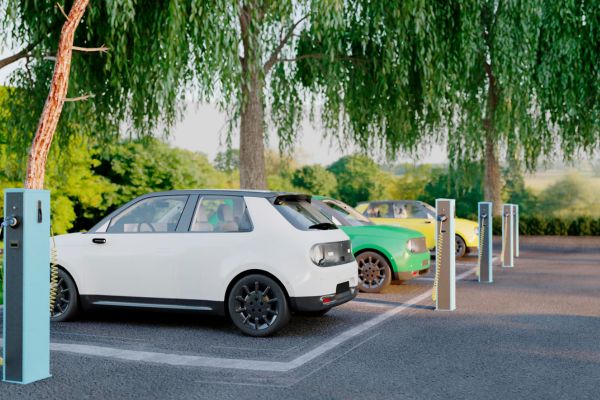
India’s electric mobility journey is often measured in visible milestones such as charging stations installed, vehicles deployed, policies announced, and investments committed. Beneath this physical layer lies a quieter system that will ultimately determine whether the ecosystem scales sustainably or struggles under its own complexity.
That system is artificial intelligence.
As electric vehicle adoption accelerates across private vehicles, fleets, and last mile delivery, the challenge facing India is no longer limited to infrastructure creation. The real test is orchestration. Vehicles, chargers, grids, users, and operators must function cohesively across fragmented environments. This is where artificial intelligence moves from being an enhancement to becoming essential infrastructure.
From Deployment to Utilisation
Much of India’s electric vehicle infrastructure discourse focuses on deployment targets. How many chargers are installed, where they are placed, and by when. While this framing is necessary, it overlooks a critical reality. Infrastructure only delivers value when it is used efficiently, reliably, and predictably.
Early indicators already point to uneven charger utilisation, congestion at specific locations, idle capacity elsewhere, and inconsistent user experiences across networks. These are not hardware failures. They are coordination failures.
Artificial intelligence enables a shift from static deployment models to adaptive utilisation models. By analysing real time data from vehicles, chargers, traffic patterns, and user behaviour, intelligent systems can forecast demand, balance loads, and guide decisions dynamically. These decisions range from charger placement and capacity planning to pricing and routing strategies. At India’s scale, such intelligence is foundational to long term economic viability.
Grid Intelligence as a Core Constraint
Grid readiness is frequently cited as a major concern in India’s electric vehicle transition. However, this challenge is often framed as a capacity issue rather than a predictability issue.
Local distribution networks are rarely stressed uniformly. Demand peaks vary by time and location. Artificial intelligence driven forecasting allows utilities and charging operators to anticipate demand surges, align charging with renewable energy availability, and smooth loads before stress materialises. When combined with time of use pricing and smart charging protocols, intelligent coordination can unlock latent grid capacity without requiring extensive upfront upgrades.
Achieving this level of coordination requires close collaboration between utilities, charging providers, and policymakers. Artificial intelligence serves as the operational layer that makes such collaboration actionable rather than aspirational.
Intelligence Over Speed in Charging Design
Discussions around charging infrastructure often centre on speed. Faster chargers and shorter dwell times dominate industry narratives. While speed matters, intelligence matters more.
For users, charging anxiety is rarely about absolute time. It is about uncertainty. Will the charger be available, functional, compatible, and fairly priced. Intelligent systems that surface reliability insights, predict wait times, and personalise recommendations based on vehicle type, route, and context can significantly improve user confidence, even without increasing charging speeds.
In this context, intelligence becomes a trust layer. Trust, more than technical specifications, is what converts first time users into long term electric vehicle adopters.
Fragmentation and the Need for an Intelligence Layer
India’s electric vehicle ecosystem is inherently fragmented. Multiple charger operators, divergent standards, siloed applications, and inconsistent data flows coexist across regions. This fragmentation is unlikely to disappear in the near term, nor should it. Diversity of operators drives innovation and competition.
What must emerge instead is an intelligence layer that operates above this fragmentation. Such a layer integrates data across networks and translates complexity into clarity for users, fleet operators, and policymakers. Artificial intelligence is uniquely positioned to perform this role without enforcing uniformity.
Across complex digital ecosystems with multiple stakeholders, a recurring pattern is evident. Competitive advantage rarely lies in individual model sophistication. It lies in the ability to integrate systems that were never designed to work together.
A Platform Perspective on Electric Vehicle Intelligence
Electric vehicle charging does not exist in isolation. It intersects with payments, discovery, routing, energy markets, fleet operations, and human behaviour. Addressing it as a standalone problem limits its potential impact.
From a platform perspective, electric vehicle infrastructure should be viewed not as a collection of physical assets, but as a living network that learns and adapts over time. At FoundrFuse, working alongside startups and platform builders across emerging infrastructure categories, a consistent insight emerges. Artificial intelligence delivers its greatest value when treated as connective tissue between hardware, policy, and human decision making.
This approach reframes intelligence as a system level capability rather than a discrete feature.
The Road Ahead
India’s electric vehicle transition will not be defined by those who deploy the most chargers in the shortest time. It will be shaped by those who make the system intelligible, predictable, and trustworthy at scale.
Artificial intelligence may remain invisible to end users, but its impact will be felt in every successful charging session, every avoided grid disruption, and every confident decision to choose electric mobility. In this sense, artificial intelligence is not merely supporting India’s electric vehicle infrastructure. It is becoming its backbone.