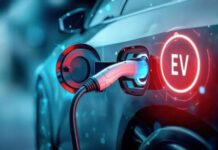

The global Automotive Battery Market continues its dynamic growth trajectory as electrification, vehicle energy requirements, and stringent emissions mandates reshape automotive powertrain strategies. According to a new market report from Introspective Market Research, the automotive battery market was valued at USD 49,929.03 million in 2023 and is projected to reach USD 86,527.17 million by 2032, expanding at a compound annual growth rate (CAGR) of 6.3% from 2024 to 2032.
Market growth is underpinned by the persistent shift toward electric vehicles (EVs), hybrid powertrains, and stop-start internal combustion systems that require increasingly sophisticated battery technologies. The convergence of battery management systems, higher energy density chemistries, and global regulatory pressure for lower fleet emissions is catalyzing investment and innovation across the automotive ecosystem.
Quick Insights: Automotive Battery Market
- Market Size (2023): USD 49,929.03 Million
- Forecast Market Size (2032): USD 86,527.17 Million
- Forecast CAGR (2024–2032): 6.3%
- Leading Regional Market: Asia Pacific
- Fastest-Growing Region: North America
- Top Battery Chemistry: Lithium-ion (Li-ion)
- Dominant Vehicle Segment: Electric Vehicles (Passenger & Commercial)
- Key Players: CATL, LG Energy Solution, Panasonic, Samsung SDI, BYD, SK On, Tesla, Hitachi, AESC
Market Revenue Breakdown & Segment Highlights
| Segment | 2023 Share | 2032 Outlook |
|---|---|---|
| By Battery Type | Lead-Acid / NiMH / Li-ion | Li-ion dominance with rapid EV share expansion |
| By Vehicle Type | ICE & HEV, PHEV, BEV | BEV segment drives highest energy battery demand |
| By Voltage Class | ≤48 V, ≥48 V | High-voltage systems dominate EV & PHEV installations |
| By Region | APAC > Europe > North America | APAC leads due to manufacturing and EV adoption |
Note: Figures are based on Introspective Market Research’s proprietary forecasting model.
Why Is the Automotive Battery Market Entering a New Growth Chapter?
Can battery innovation unlock the next wave of electric mobility and operational efficiency?
Several synergistic trends are shaping the market’s long-term outlook:
- Accelerating EV Penetration: Automakers are dramatically scaling EV lineups in response to emissions regulations and consumer demand — requiring higher battery capacity and longevity.
- Emergence of Next-Gen Chemistries: Advanced lithium-ion variants, solid-state concepts, and silicon-enhanced anode formulations are gaining R&D and commercialization momentum.
- Battery Cost Declines & Scale: Manufacturing scale efficiencies and cell cost reductions are improving EV affordability and total cost of ownership (TCO).
- Integrated Energy Management: Battery packs, thermal systems, and smart controls are converging into comprehensive energy ecosystems for vehicles and grid interaction.
Regional & Segmentation Analysis
Asia Pacific continues to lead the automotive battery market, supported by large-scale EV production in China, robust battery manufacturing ecosystems in Japan and South Korea, and rapidly expanding adoption across Southeast Asia.
Europe accounts for a significant share due to aggressive carbon reduction policies, robust EV adoption incentives, and strong OEM electrification strategies in Germany, France, and Scandinavia. Meanwhile, North America is the fastest-growing region, buoyed by incentives for EV manufacturing, expanded charging infrastructure, and increasing electrification of commercial fleets.
By vehicle type, battery electric vehicles (BEVs) exhibit the fastest growth, followed by plug-in hybrid electric vehicles (PHEVs) and hybrid electric vehicles (HEVs). The growing diversity of use cases from passenger cars and SUVs to electric heavy-duty trucks and buses is broadening the market scope for high-performance battery solutions.
Industry Breakthroughs & Competitive Developments
Leading battery manufacturers and automotive OEMs are making notable advances:
- CATL has unveiled a series of ultra-long-range Li-ion cells that optimize energy density and cycle life for high-end EV applications.
- LG Energy Solution is scaling production of next-generation high-nickel cathode batteries designed for performance EVs and fast charging.
- Panasonic continues to supply proprietary cylindrical cells for strategic EV alliances, including automated battery management integration.
- Tesla is enhancing its 4680 cell architecture to improve power delivery and thermal stability on high-voltage platforms.
These innovations underscore the growing emphasis on energy density, thermal performance, and lifecycle sustainability in the market.
Challenges & Cost Pressures
Despite strong momentum, the automotive battery market faces key challenges:
- Supply Chain Constraints: Volatility in critical materials such as lithium, cobalt, and nickel can impact pricing and availability.
- Recycling & Sustainability: End-of-life battery management and recycling infrastructure remain nascent in many regions.
- Capital-Intensive Manufacturing: Gigafactory-scale production requires substantial investment and long-term strategic planning.
- Battery Safety & Standardization: Meeting diverse global standards for safety, performance, and interoperability adds complexity for suppliers and OEMs.
Addressing these issues through material innovation, circular economy frameworks, and modular manufacturing strategies will be crucial for sustainable market expansion.
Case Study: Electrifying Fleet Operations with Battery Optimization
A national delivery fleet implemented a battery standardization program across its electric van fleet, resulting in:
- 15% reduction in energy cost per mile through optimized charging cycles
- 20% improvement in fleet utilization due to reduced downtime
- Lower maintenance expenses linked to standardized pack configurations
This case highlights how strategic battery selection and energy management can deliver measurable operational efficiencies beyond baseline cost savings.