In India’s EV conversations, we often obsess over the vehicles how many are sold, how long they run. But on the ground, where real livelihoods depend on these machines, a very different question matters more:
Can this vehicle stay on the road and earn today?
For a delivery rider, a gig worker, or a fleet operator, electric mobility is not about range on a brochure. It’s about uptime. Every minute an EV is plugged in is a minute it’s not earning. And in India’s dense, power-constrained cities, that is where the economics of EVs are won or lost.
That’s why battery swapping isn’t just an alternative to charging, it’s becoming the operating system for India’s urban EV economy.
Why charging alone can’t carry India’s scale
Fast charging has its place. It works well for personal vehicles and highway travel. But commercial urban mobility plays by very different rules.
High-capacity chargers need expensive grid upgrades, scarce real estate, and long dwell times. They also push batteries through intense charge cycles that reduce lifespan and increase safety risks. For a scooter or three-wheeler that runs 120–150 kilometres a day, those costs add up quickly.
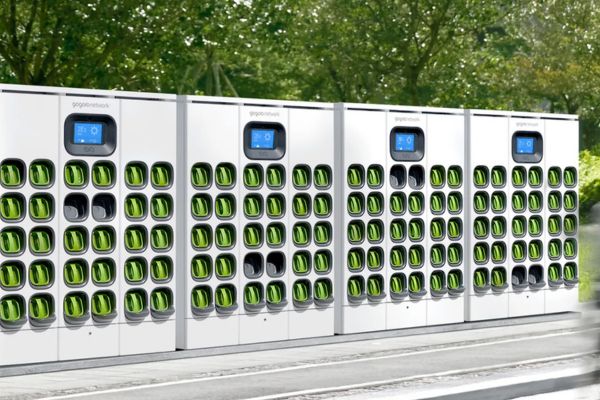
Swapping flips that model, with brands like Yuma building themselves around delivering sub-minute swaps with 99.9% uptime. The rider doesn’t wait for energy. A drained battery is exchanged for a fully charged, safety-checked one in minutes. The vehicle is back on the road. The battery goes into a controlled environment where it can be charged, cooled, and monitored properly.
This separation of vehicle and battery changes everything. It allows each to be optimised for what it does best.
From stations to an intelligent energy network
At Yuma, we don’t see swapping as a collection of kiosks. We see it as a living energy network.
Every battery is a connected asset. Every swap is a data point. Software decides how fast a battery should charge, where it should go next, when it needs servicing, and when it should be retired or repurposed.
A battery running in a hilly area doesn’t age the same way as one in flat urban traffic. A battery used in peak-hour delivery behaves differently from one in a night-shift fleet. When you can see that in real time, you can make smarter decisions, extending life, improving safety, and keeping energy available exactly where it’s needed.
This is how swapping becomes more than convenience. It becomes infrastructure.
Making EVs affordable and trustworthy
For most Indian riders, the battery is the biggest cost and the biggest worry.
What if it degrades early?
What if it catches fire?
What if it needs replacement?
Battery swapping removes that anxiety. When the battery is owned and managed by a professional network, riders pay for energy and uptime, not hardware. They don’t carry the risk of degradation or replacement. That makes EVs dramatically more affordable, especially for delivery partners and small fleet operators who power India’s mobility every day.
Just as importantly, it builds trust. In a market where safety concerns have slowed adoption, a centrally monitored, standards-driven battery network gives riders, OEMs, and regulators confidence that electric mobility can scale safely.
Supporting India’s industrial and energy ambitions
Swapping also fits neatly into India’s long-term goals.
Because batteries are centrally managed, they can be designed, assembled, refurbished, and recycled within India. This creates a natural pathway for localisation, from pack manufacturing to second-life storage, reducing import dependence while building domestic capability.
On the energy side, swap batteries can be charged when renewable power is abundant and demand is low, and deployed when cities need it most. That helps stabilise the grid as India adds more solar and wind to its energy mix.
The road ahead
India’s EV future won’t be powered by a single solution. Home charging, fast charging, and swapping will all have their place.
But for urban commercial mobility, the riders, fleets, and businesses that will bring tens of millions of EVs onto our roads, battery swapping offers something uniquely powerful: speed, reliability, affordability, and intelligence working together.
The future of electric mobility isn’t just about vehicles that plug in.
It’s about energy networks that think, learn, and move with the country.