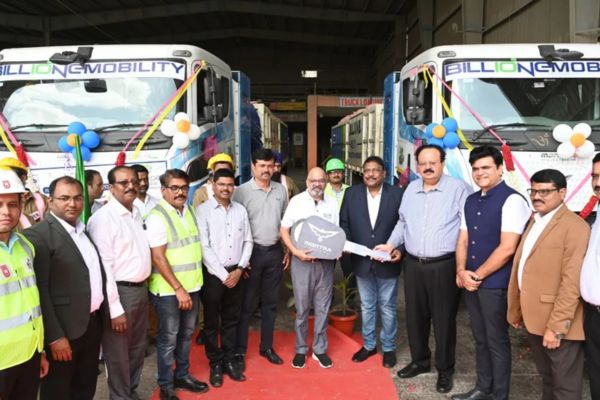
Billion Electric Mobility (BillionE) has partnered with JK Cement to deploy 150 heavy-duty electric trucks as part of a major initiative to support sustainable freight transportation in India. The collaboration is aimed at accelerating the adoption of electric commercial vehicles while helping reduce emissions from heavy-duty logistics operations.
Under the partnership, the electric trucks will be deployed across JK Cement’s logistics network for the transportation of cement and related materials. BillionE will provide its integrated e-Mobility-as-a-Service (eMaaS) platform, which includes electric trucks, charging infrastructure, fleet management technology and operational support to ensure efficient freight movement.
The deployment forms part of JK Cement’s ongoing sustainability efforts and reflects the company’s focus on adopting cleaner transportation solutions for its supply chain. By integrating electric trucks into its freight operations, the company aims to strengthen environmentally responsible logistics while supporting India’s clean mobility transition.
For Billion Electric Mobility, the agreement further expands its presence in the heavy-duty electric trucking segment. The company continues to build an integrated ecosystem for commercial EV adoption by combining electric vehicles with charging infrastructure and digital fleet management solutions for industrial customers.
The partnership highlights the growing momentum of electric freight mobility in India, particularly among industries looking to improve operational efficiency while reducing their environmental footprint. As demand for sustainable logistics increases, heavy-duty electric trucks are expected to play a larger role in commercial transportation across the country.
With the planned deployment of 150 heavy-duty electric trucks, Billion Electric Mobility and JK Cement are taking another step toward expanding zero-emission freight transportation in India. The collaboration is expected to support the wider adoption of electric commercial vehicles and contribute to the development of a more sustainable logistics ecosystem.