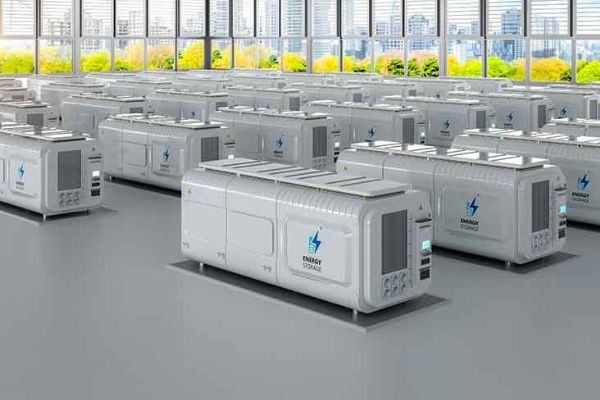
China’s planned energy storage system (ESS) battery manufacturing capacity is approaching 2,000 GWh annually, nearly twice the projected global battery cell shipments of 1,043.5 GWh for 2026. The growing manufacturing capacity is raising concerns about potential oversupply and increasing competition in the global energy storage market.
According to Chinese media reports and battery industry sources cited on November 22, Chinese battery manufacturers are rapidly expanding production facilities to meet growing demand for energy storage solutions. However, the estimated 2,000 GWh capacity includes both operational and unfinished projects, rather than actual production or shipments. Factories expected to be completed by the end of 2026 are projected to add a combined annual manufacturing capacity of approximately 1,200–1,500 GWh. Despite this expansion, certain high-performance and large-format battery cells continue to face supply shortages due to increasing demand.
Chinese battery companies are also expanding their presence in international markets as domestic manufacturing capacity increases. According to the China Energy Storage Alliance (CNESA), Chinese energy storage companies secured 366 GWh of new overseas orders in 2025, representing a 144% year-on-year increase. The growth continued during the first half of 2026, with overseas orders reaching 298 GWh, up 83% compared with the corresponding period last year. Europe remains a major destination, while demand is also increasing across the Middle East, India and Chile. The growing overseas presence is providing Chinese companies with additional markets for their expanding manufacturing capacity.
The rapid expansion of battery manufacturing capacity is increasing competition among battery and energy storage system suppliers, putting pressure on global prices. According to BloombergNEF, the global average turnkey price of energy storage systems declined by 31% in 2025 to $117 per kWh. The price reduction was more significant in Europe than in China, reflecting increasing competition in international markets. Further pricing pressure could affect the profitability of battery suppliers competing for overseas projects and orders.
Meanwhile, the Chinese government has taken steps to address aggressive price competition in the battery industry. In April 2026, China reduced the value-added tax (VAT) rebate rate on battery exports from 9% to 6%, with plans to eliminate the rebate entirely from January 2027. The policy change is expected to affect the export economics of Chinese battery manufacturers as they continue expanding their international operations.
The immediate impact on South Korean battery manufacturers remains limited, as their ESS businesses primarily focus on North American and domestic markets. However, growing competition from Chinese manufacturers could create challenges over the medium and long term, particularly in Europe and other international markets. Industry sources have also highlighted concerns about excessive investment in China’s battery manufacturing sector, with companies increasingly exploring overseas markets, including Europe and Southeast Asia, as well as potential manufacturing locations such as Mongolia. The expansion highlights concerns about global battery supply-demand balance, pricing sustainability and the competitive position of battery manufacturers in international energy storage markets.