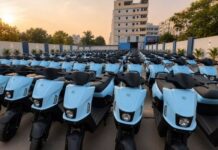

EKA Mobility has used the stage of the International Electric Convention & Green Mobility 2025 to underline its ambitions in clean transport. The company presented what it calls the most comprehensive line-up of electric vehicles yet from an Indian manufacturer, spanning everything from heavy trucks to small passenger movers.
At the centre of the launch was the EKA 55T, a powerful electric truck designed for large cargo operations. It was joined by the EKA 12M electric bus aimed at urban transport networks, the EKA 3W Cargo built for last-mile delivery, and the EKA 6S, a passenger three-wheeler with seating for a full family group. The idea is to cover multiple use-cases under a single “born-electric” umbrella.
To support these vehicles, EKA unveiled EKA Connect, a digital platform that uses artificial intelligence to manage fleets more efficiently. Features like predictive maintenance alerts, flexible battery modules, and real-time performance data are meant to help operators lower running costs while keeping vehicles on the road longer.
The company is not just showing concepts. It has already booked over 3,300 confirmed orders, including a large allocation of electric buses through the government’s PM e-Bus Sewa programme. In addition, deals have been struck with buyers in overseas markets such as South Africa, signalling global ambitions beyond India.
Chairman Dr. Sudhir Mehta positioned the brand as the only homegrown player with such a broad EV portfolio under one roof. He highlighted that all of EKA’s products are conceived, designed, and manufactured domestically, keeping in line with the Atmanirbhar Bharat push, while also being competitive for exports.
With more than 500 engineers driving its R&D efforts — many of them women — EKA Mobility is betting big on electric as the future of transport. By rolling out vehicles across multiple categories at once, the company is sending a clear message: it wants to set the pace for India’s transition to sustainable, cost-effective mobility.