
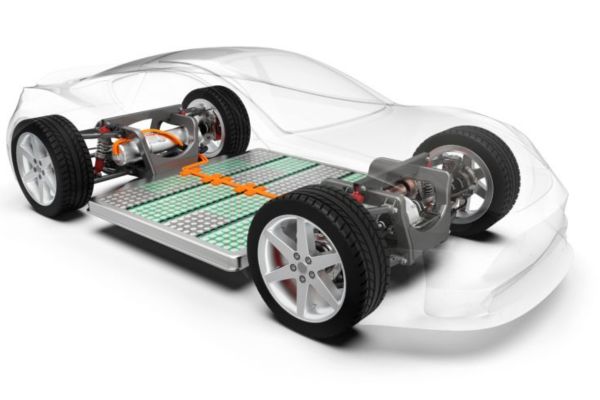
The global Electric Vehicle (EV) Adhesives Market is projected to grow from approximately USD 4.60 billion in 2024 to USD 11.55 billion by 2032, expanding at a compound annual growth rate (CAGR) of around 12.2%. According to insights aligned with Introspective Market Research (IMR), this growth is primarily driven by the rapid expansion of electric vehicle production, increasing demand for lightweight materials, and the critical role of adhesives in battery assembly and vehicle structural integrity.
As automakers accelerate electrification strategies, adhesives are emerging as essential materials enabling efficient bonding, thermal management, vibration resistance, and enhanced safety in EV architectures.
Quick Insights
- Market Size (2024): USD 4.60 Billion
- Forecast Size (2032): USD 11.55 Billion
- CAGR (2025–2032): ~12.2%
- Fastest Growth Driver: EV battery manufacturing and lightweight vehicle design
- Leading Region: Asia-Pacific (China, Japan, South Korea EV hubs)
- Key Players: DuPont, Dow, Henkel AG, 3M, Sika AG
- Core Applications: Battery bonding, powertrain systems, interior & exterior assembly
- Key Opportunity: Replacement of mechanical fasteners with structural adhesives
Revenue Breakdown & Market Segmentation
| Segment Category | Key Insights |
|---|---|
| Base Year | 2024 – USD 4.60 Billion |
| Forecast Year | 2032 – USD 11.55 Billion |
| CAGR | ~12.2% |
| By Type | Epoxy, Polyurethane, Acrylic, Silicone adhesives |
| By Form | Liquid, Film & Tape |
| By Application | Powertrain, Battery systems, Interior, Exterior |
| By Region | APAC leads; North America & Europe driven by EV regulations |
Adhesives are increasingly used in battery cell encapsulation, pack sealing, and module bonding, enabling improved thermal conductivity and structural stability in EVs.
What’s Driving Growth? What Trends Are Reshaping the Market?
Why is the EV adhesives market witnessing such strong momentum?
- EV production boom: Government incentives and decarbonization goals are accelerating global EV adoption.
- Lightweight vehicle design: Adhesives replace welding and mechanical fasteners, reducing vehicle weight and improving efficiency.
- Battery innovation: Advanced adhesives enhance thermal management, durability, and safety of battery packs.
- Material compatibility: Adhesives enable bonding of dissimilar materials like composites, plastics, and metals.
- Automation & manufacturing efficiency: Adhesives simplify assembly processes, reducing production time and cost.
Regional & Segment Analysis
- Asia-Pacific dominates the market due to strong EV production in China, Japan, and South Korea, along with government-backed electrification initiatives.
- Europe is driven by stringent emission regulations and aggressive EV adoption targets.
- North America is witnessing steady growth supported by investments in EV infrastructure and battery manufacturing.
Segment Insights:
- Battery applications represent the fastest-growing segment due to increasing demand for thermal management and safety.
- Epoxy and polyurethane adhesives dominate due to their superior bonding strength and resistance properties.
- Liquid adhesives hold the largest share owing to ease of application in automated production lines.
Latest Industry Developments
- Henkel AG is advancing high-performance EV battery adhesives with improved thermal conductivity and fire resistance.
- 3M is focusing on lightweight bonding solutions for EV structural components.
- Sika AG is expanding its EV adhesive portfolio to support battery pack sealing and crash-resistant bonding systems.
- Dow and DuPont are investing in next-generation polymer-based adhesives tailored for EV architectures.
These developments highlight the shift toward high-performance, multifunctional adhesives that support both structural and thermal requirements.
Challenges & Cost Pressures
- Raw material volatility: Fluctuations in polymer and chemical prices impact production costs.
- High R&D investment: Development of specialized EV adhesives requires significant capital.
- Regulatory compliance: Adhesives must meet strict safety, fire resistance, and environmental standards.
- Manufacturing complexity: Integration with automated EV production lines requires precision and compatibility.
Case Study: Battery Pack Optimization Using Advanced Adhesives
An EV manufacturer in Asia integrated high-performance epoxy adhesives into its battery pack assembly process. The result was a 15% reduction in overall battery weight, improved thermal stability, and enhanced structural durability. Additionally, assembly time decreased by 20%, demonstrating how adhesives contribute directly to manufacturing efficiency and vehicle performance.



 Adhesives Market is projected to grow from approximately USD 4.60 billion in 2024 to USD 11.55 billion by 2032.)