
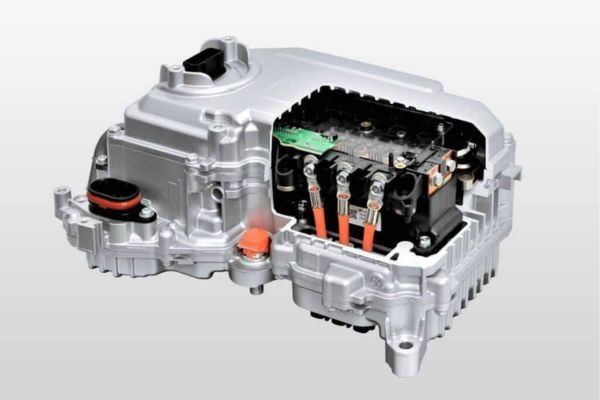
The electric vehicle Power control unit (EPCU) market size was evaluated at USD 14.76 Billion in 2024 and is projected to hit around USD 193.0 Billion by 2032, driven by soaring demand for energy-efficient EVs, tighter regulations, and semiconductor advances.
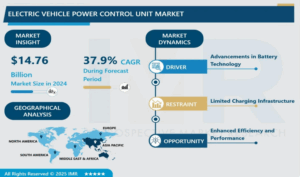
Electric Vehicle Power Control Unit Market Quick Insights
- 2024 Market Size: USD 14.76 Billion
- Forecast (2032): USD 193.0 Billion
- Implied CAGR (2025–2032): 39.9%
- Key Components: Inverter, Low-Voltage DC–DC Converter, Vehicle Control Unit (VCU)
- Top Vehicle Type Segment: Plug-in Hybrid Vehicles (PHEV) per IMR segmentation
- Leading Application Segment: Inverter is expected to dominate over the forecast period
- Leading Region: Asia-Pacific is forecast to lead in both growth and absolute market share
- Major Players: Denso, Bosch, Infineon, Delphi, Continental, Hitachi, Mitsubishi Electric, Hella, Panasonic, Tesla, Toyota Industries, and others
Exploring the Opportunity: Why Is the EPCU Market Booming?
What’s Fueling the Growth?
- EV Proliferation: As governments ramp up EV adoption targets and automakers accelerate electrification, demand for efficient power electronics systems is exploding. EPCUs are central to converting battery energy into usable power and controlling drive behavior.
- Efficiency Imperative: Efficiency losses in power conversion create both energy waste and thermal stress. Innovations in wide-bandgap materials like silicon carbide (SiC) and gallium nitride (GaN) are enabling more efficient, compact EPCUs that reduce losses, improve thermal management, and support high-voltage architectures.
- Regulatory & Policy Tailwinds: Stringent emissions norms, incentives for EV adoption, and sustainability goals are encouraging investments into next-gen power electronics. OEMs are prioritizing integrated and modular EPCU solutions to optimize cost and performance.
Regional & Segmentation Landscape
Geographic Insight: Where the Growth Is Coming From
- Asia-Pacific: The fastest-growing and largest regional segment. China’s EV market dominance, Japan’s mature electronics sector, and India’s fast-growing EV adoption converge to make this region a powerhouse for EPCU demand. According to IMR, Asia-Pacific OEMs are investing heavily in R&D for compact VCUs with advanced functionality.
- North America: Historically strong in automotive electronics, the U.S. and Canada are poised to remain key markets, driven by EV OEMs, innovation in powertrains, and local content mandates.
- Europe: European automakers are leveraging EPCU sophistication for energy-efficient designs, especially for premium EVs and performance segments.
Segmenting the Market: By Vehicle Type & Application
- Vehicle Type: IMR’s segmentation identifies Plug-in Hybrid Vehicles (PHEV) as the dominant category in the EPCU market over the forecast, benefiting from demand in both combustion and electric powertrains.
- Application / Component: Among the EPCU components, the Inverter segment holds the lion’s share, as it’s pivotal in converting battery DC to AC for motor control. Low-voltage DC–DC converters and VCUs also present compelling growth opportunities, particularly as vehicles incorporate more functionality (thermal management, bidirectional charging, V2G).
Trend Spotlight: Innovation Driving Next-Gen EPCUs
What’s New on the Technology Horizon
- Wide-Bandgap Semiconductors: SiC and GaN devices are being integrated into EPCUs, enabling higher voltage operation, reduced switching losses, and improved thermal efficiency. These advances support 800 V architectures, which in turn facilitate faster charging and higher power density.
- Integrated Control Units: OEMs are increasingly combining inverter, VCU, and DC–DC converter functionalities into a single hardware module. This integration reduces system complexity, saves space, and improves reliability.
- Software-Defined Control: VCUs are evolving from hardware-only units to intelligent, software-driven platforms that can orchestrate torque control, regenerative braking, thermal management, and even V2G operations via over-the-air updates.
- Autonomous & Smart Cockpit Features: Integrated EPCUs are being designed to support advanced driver-assistance systems, power management for autonomous sensors, and smart cockpit electrification.
Challenges & Cost Pressures
- High CapEx: Developing EPCUs with wide-bandgap semiconductors and integrated modules demands significant upfront investment. For newer entrants, the high cost of prototyping and validation remains a barrier.
- Thermal Management: Higher voltage and switching frequency designs generate more heat; designing compact yet robust thermal systems is non-trivial and adds cost.
- Supply Chain Risk: Critical components like SiC wafers and advanced control chips are concentrated among a few suppliers, increasing exposure to shortages or geopolitical risks.
- Complex Certification: Integrated EPCUs must meet automotive safety (e.g., ISO 26262), electromagnetic compatibility (EMC), and functional safety standards—not to mention grid compliance in V2G scenarios.
Expert Perspective
“The EPCU market is the unsung hero behind EV innovation,” says Dr. Alisha Mehra, Principal Consultant, Introspective Market Research. “As more OEMs adopt high-voltage architectures and software-defined control, power control units will increasingly become the backbone of next-generation EVs. Our latest forecast underscores both the opportunity and the technical complexity — companies that can offer efficient, compact, and highly integrated EPCUs will lead the pack.”
Company Overviews – Electric Vehicle Power Control Unit (EPCU) Market
Denso Corporation: Denso is a global leader in automotive electronics, offering high-efficiency inverters and control units optimized for next-generation EV platforms. The company focuses heavily on thermal performance, semiconductor integration, and compact EPCU architectures.
Robert Bosch GmbH: Bosch develops advanced EPCU solutions built on SiC-based power electronics, enabling higher voltage systems and improved energy efficiency. Its EPCU portfolio is widely adopted by major global automakers.
Infineon Technologies AG: Infineon is a key semiconductor provider powering the EPCU market with SiC MOSFETs, IGBTs, and power modules. Its devices enable lighter, more efficient EPCUs with high switching capabilities.
Delphi Technologies: Delphi Technologies delivers power electronics and inverter systems designed for both hybrid and fully electric vehicles. The company emphasizes high-density designs and integrated control strategies.
Continental AG: Continental manufactures intelligent powertrain controllers and inverter systems that boost EV range and energy efficiency. Its EPCU products support modular and scalable electric architectures.
Hitachi Automotive Systems Ltd.: Hitachi provides highly efficient EPCU modules integrating inverter, DC–DC, and control electronics, making it a preferred partner for EV OEMs seeking compact and reliable systems.
Valeo: Valeo specializes in advanced thermal management and electrical systems that complement EPCU platforms. It plays a growing role in enabling efficient power conversion within EV powertrains.
Mitsubishi Electric Corporation: Mitsubishi is a pioneer in power semiconductor technology, supplying SiC-based EPCUs that enhance power density and temperature stability. Their systems are widely deployed in Asian EV platforms.
Hella: Hella contributes to the EPCU market through its expertise in sensors, power distribution, and electronic control units. Its solutions support the safety and reliability of electric powertrains.
Panasonic Corporation: Panasonic provides essential power electronics and battery management technologies used in EPCUs. The company focuses on miniaturization and improved conversion efficiency for EV applications.
Tesla Inc.: Tesla develops its own vertically integrated EPCUs designed for high-voltage, high-efficiency electric platforms. The company leverages custom silicon and proprietary control software to optimize vehicle performance.
Toyota Industries Corporation: Toyota Industries supplies advanced drive control units and high-efficiency inverters that support Toyota’s hybrid and EV lineup. Its EPCU products are recognized for reliability and long service life.
Hangzhou Tiecheng Information Technology: Hangzhou Tiecheng develops EV control software and power electronics solutions tailored for Chinese EV manufacturers, contributing to smarter and more integrated EPCU functions.
Aptiv: Aptiv delivers advanced electrical architectures and control units essential for EV power management. Its EPCU-related technologies focus on connectivity, safety, and next-gen energy optimization.
BOLAB Systems GmbH: BOLAB provides testing and simulation systems for EPCU development, supporting OEMs and Tier-1 suppliers in validating high-voltage and high-current EV components.
EHFCV: EHFCV specializes in electric and hydrogen fuel cell vehicle components, including controllers that interface with EPCU systems for efficient power distribution and motor control.
Electrodrive Powertrain Solutions: The company develops modular EV powertrain components, including inverter and control technologies that integrate seamlessly into EPCUs for small and mid-range EVs.
HYUNDAI KEFICO: HYUNDAI KEFICO manufactures EV control systems including VCUs, drive controllers, and DC–DC converters, supporting Hyundai’s rapidly expanding electrified vehicle lineup.
Marelli: Marelli provides high-performance power electronics, including inverters and control units tailored for premium EV architectures. The company focuses on compact designs and enhanced energy efficiency.
Pektron Group: Pektron designs custom electronic control units that contribute to EPCU integration in EVs, offering flexible solutions for torque control, battery interfaces, and thermal regulation.
TE Connectivity: TE Connectivity supplies connectors, sensors, and high-voltage distribution systems essential to EPCU reliability. Their components ensure safe and efficient EV power management.
Vitesco Technologies: Vitesco offers advanced inverter and power electronics solutions that enhance drivetrain efficiency and reduce CO₂ emissions. The company is a key innovator in integrated EPCU platforms.
Wacker Chemie AG: Wacker supplies high-grade silicone materials used in EPCU insulation, thermal management, and protection. These materials improve durability and heat resistance in EV power electronics.


 market size was evaluated at USD 14.76 Billion in 2024 and is projected to hit around USD 193.0 Billion.)