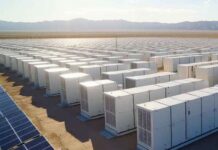

GEON has successfully completed the Battery Energy Storage System (BESS) integration for a 2.88 GWh project at Khavda, Gujarat, marking a significant achievement in India’s rapidly expanding renewable energy sector. The milestone highlights the company’s growing expertise in delivering large-scale energy storage solutions designed to support grid stability and clean energy integration.
The project forms part of the massive renewable energy development taking place in the Khavda region, which is emerging as one of the world’s largest clean energy hubs. By integrating advanced battery storage technology, the project aims to improve the reliability and efficiency of renewable power generation while addressing intermittency challenges associated with solar and wind energy.
GEON was responsible for the complete system integration process, ensuring seamless coordination between battery storage components, power conversion systems, and grid infrastructure. The successful execution demonstrates the company’s technical capabilities in handling complex utility-scale energy storage deployments.
Battery Energy Storage Systems are increasingly becoming a critical component of modern power networks. They help store excess renewable energy generated during peak production periods and release it when demand rises, enabling a more balanced and resilient electricity grid. Projects of this scale are expected to play a key role in accelerating India’s transition toward sustainable energy.
The completion of the 2.88 GWh BESS integration further strengthens the country’s energy storage ecosystem and supports national objectives related to renewable energy expansion. As India continues to add significant solar and wind capacity, large-scale storage projects will become essential for maintaining grid reliability and energy security.
With the successful delivery of the Khavda project, GEON reinforces its position in the growing energy storage market. The company remains focused on advancing innovative storage technologies that can support the next phase of India’s clean energy transformation and contribute to a more sustainable power infrastructure.