
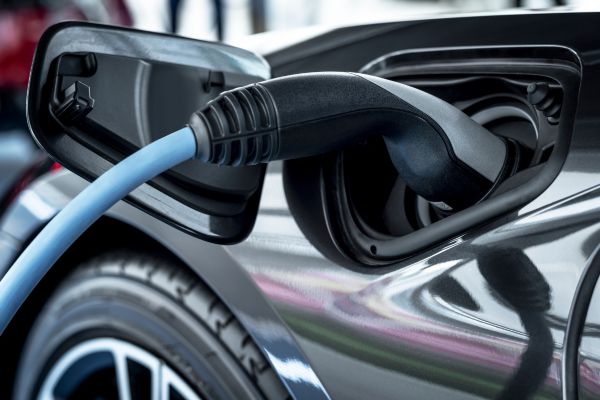
India’s green finance story and its electric vehicle (EV) story are increasingly the same story told in two different languages, one in the language of capital, the other in the language of technology and mobility. For industry, the real opportunity now lies at this intersection, like the structuring capital so that India’s EV transition becomes both investible and scalable, not just aspirational.
From Climate Ambition To Capital Allocation
Over the past few years, India has moved from climate “intent” to climate “investment” with surprising speed. Net zero by 2070 and 500 GW of non-fossil power by 2030 are no longer just headline targets; they are shaping credit policies, bond frameworks, and boardroom conversations.
A big part of this shift is the deliberate push to build a domestic green capital market rather than rely only on multilateral or philanthropic money. Green finance has moved from being a niche ESG topic to a mainstream risk-return theme for banks, NBFCs, insurers, and even corporate treasuries looking at long-dated, asset-backed cash flows.
India’s Green Finance Architecture Is Taking Shape
India issued its first green bond only in 2015; less than a decade later, cumulative green, social and sustainability-linked bond issuance has crossed about USD 55-56 billion, with green bonds making up the bulk. Sovereign green bonds roughly USD 5.7 billion so far have added something the market badly needed: a domestic green yield curve and a reference framework around eligible projects.
This architecture is now being reinforced in three ways:
- Public-sector financiers like PFC and REC are increasingly tapping international markets with themed green issuances, then on-lending into renewables, grids, and e‑mobility infrastructure.
- Budget statements have started talking explicitly about blended finance and thematic climate funds, signalling that concessional public capital will be used to crowd in private capital, not replace it.
- New platforms such as the Asian Development Bank–led India Green Finance Facility (IGFF), approved in 2025, are being designed as multi-partner structures that combine multilateral, sovereign and private money with risk-sharing mechanisms.
For the EV ecosystem, this matters because the underlying problem is not a lack of interest, but a mismatch between risk perceptions and the maturity of financing products.
EV Investments: Strong Momentum, Stubborn Gaps
Between 2020 and 2025, India’s EV sector attracted about INR 2.23 lakh crore roughly USD 25.6 billion across manufacturing, charging infrastructure and vehicle deployment. That sounds impressive until you realise it is only around 18% of the estimated total capital required to hit India’s 2030 EV goals.
The demand side is not the issue. EV sales crossed 2 million units in 2025, about 8% of total vehicle sales, with especially strong traction in two-wheelers and three-wheelers. Policy support through FAME I and II, and now the emerging PM e‑DRIVE framework, has played a key role in reducing upfront price barriers and signalling long-term commitment.
The bottleneck is in financing conditions at the last mile. Commercial EV borrowers from three-wheeler drivers to small fleet operators still face interest rates that can range from the mid-teens to well above 20%, driven by perceived risks around battery life, secondary market value, and operational performance. These risk perceptions translate into higher collateral demands, shorter tenures, and, in many cases, outright credit denials.
Moving From Subsidies To De-Risking
FAME II, launched in 2019 with a budget outlay of INR 10,000 crore (later increased to INR 11,500 crore), did exactly what it was supposed to do, pull forward demand, especially for public and shared mobility.
It lowered total cost of ownership, created scale for OEMs and battery suppliers, and legitimised EVs in the eyes of financiers who previously viewed them as experimental.
But as FAME II concluded in March 2024, the conversation has shifted. The emerging consensus in policy and industry is that India cannot subsidise its way to 2030; it has to de-risk its way there.
That Means:
- More credit guarantees and risk-sharing facilities to lower effective lending rates for end-users.
- Standardised residual value frameworks for batteries and vehicles, enabling better securitisation and secondary markets.
- Support for new ownership models such as battery-as-a-service and fleet leasing, which spread technology risk away from individual drivers.
Recent budgets have picked up some of these threads by talking about credit enhancement for MSMEs in the auto and components space, and by signalling continuity in clean tech and EV manufacturing incentives under PLI schemes.
Green Finance Tools Lining Up Behind EVs
On the supply side of capital, several instruments are now well suited to the EV transition if stakeholders use them smartly:
- Green bonds: With India now the fourth-largest emerging market issuer of green bonds, EV manufacturing plants, battery gigafactories, and even charging networks can be financed via labelled debt that taps global ESG pools.
- Sustainability-linked loans and bonds: For diversified corporates where EVs are part of a broader decarbonisation strategy, linking loan pricing to KPIs such as share of electric fleet or grams of CO₂/km can align cost of capital with transition performance.
- Blended finance platforms: The IGFF, backed by a USD 200 million Green Climate Fund commitment and aiming to mobilise over USD 2.5 billion, is a template for how concessional capital can sit beneath commercial tranches to absorb first-loss risk.
Crucially for India, these structures can be routed through domestic DFIs and specialised NBFCs that already understand transport credit, rather than reinventing the wheel.
India-Focused EV Financing Models Emerging
India’s EV financing challenge is not just about cheap money; it is about the right structures. An integrated EV financing platform proposed by analysts brings together partial credit guarantees, residual value protection, battery-as-a-service arrangements, and co-lending, coordinated at the point of lending.
In this model, DFIs such as SIDBI could anchor financing for MSMEs, three-wheelers and small fleets, while institutions like IIFCL could handle larger buses and institutional buyers.
Banks and NBFCs would still originate and hold loans, but with a risk cushion that lowers effective rates and lengthens tenors. For OEMs and fleet operators, this is the difference between incremental adoption and truly scalable deployment.
The Key Opportunities
For OEMs, Tier‑1 Suppliers And Fleet Operators In India, Three Immediate Opportunities Stand Out:
- Embedding finance at the point of sale through tie-ups with banks, fintechs, and OEM-captive NBFCs that can leverage guarantees and blended structures.
- Packaging portfolios of EV loans or leases for securitisation, especially once residual value norms mature, freeing up balance sheets for fresh deployment.
- Using green or sustainability-linked debt at the corporate level to lock in competitive long-term capital, then on-lending internally to EV projects.
These are not theoretical possibilities; they are already visible in early form across India’s leading EV two-wheeler and fleet players, even if not yet at full scale.
Why 2026–2030 Will Be A Defining Window?
Several trends suggest that the next four to five years will be a decisive window for aligning green finance with EV investments in India. On one side, global green bond markets are deepening, with issuance growing to nearly USD 500 billion in 2023 and expected to expand further as interest rates soften. On the other, India’s own EV and renewable push is approaching what many observers describe as an inflection point around 2026.
By 2030, India aims for 30% of new vehicle sales to be electric and for 500 GW of non-fossil generation capacity. To get there, charging infrastructure, grid upgrades, storage, and digital layers for smart charging will all demand capital at a very different scale from today. If India gets the financing models right now with clear taxonomies, predictable policies and credible risk-sharing it can lock in cheaper, longer tenor capital exactly when the build-out accelerates.
What Needs To Happen Next
For India Inc. and its financial ecosystem, the to‑do list is clear and action-oriented:
- Define EV and charging as distinct sub-sectors within green taxonomies so that bond frameworks and loan books can track exposure and performance more clearly.
- Standardise data and reporting on EV asset performance, especially battery health and resale values, to reduce information asymmetry for lenders and investors.
- Scale up blended facilities and guarantees, ensuring that DFIs play the role of risk anchors rather than passive lenders.
- Align policy continuity from FAME’s next avatar to state-level EV policies with capital market instruments, so that investors see a coherent pipeline rather than isolated schemes.
OEMs, fleet operators, infrastructure developers, banks, NBFCs, and investors the message is clear, green finance is no longer a separate conversation happening in sustainability departments.
It is fast becoming the core language in which India’s EV transformation will either be funded at scale, or fall short of its 2030 ambitions.



 story are increasingly the same story told in two different languages.)