
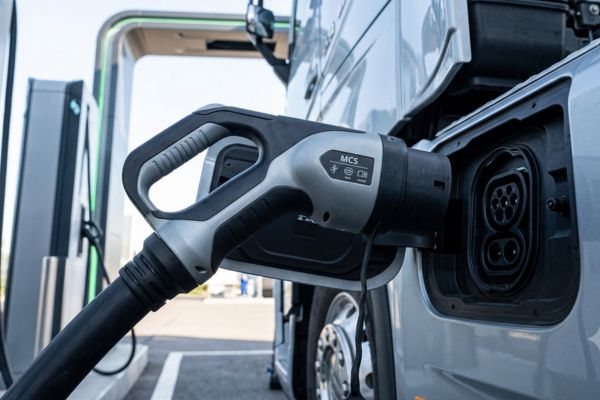
According to Growth Market Reports, the global megawatt charging connector market size reached USD 420 million in 2025, propelled by rapidly expanding electrification of commercial transport and logistics fleets. The market is projected to advance at a robust CAGR of 34.2% during the forecast period, reaching an estimated USD 5,100 million by 2034. This exponential growth is primarily driven by surging demand for high-capacity charging infrastructure to support heavy-duty electric vehicles (EVs) such as trucks, buses, and industrial vehicles, as well as increasing regulatory pressure to decarbonize the transportation sector worldwide.
The Megawatt Charging Connector Market is emerging as one of the most transformative segments within the global electric vehicle (EV) charging ecosystem. As commercial transportation undergoes rapid electrification, the demand for charging solutions capable of delivering extremely high-power levels has become increasingly important. Megawatt charging connectors are specifically engineered to support charging capacities exceeding one megawatt, making them ideal for heavy-duty electric trucks, long-distance buses, mining vehicles, construction equipment, and marine applications.
Key Market Drivers
Rapid Electrification of Heavy-Duty Transportation
Governments worldwide are encouraging the adoption of zero-emission commercial vehicles through financial incentives, emissions regulations, and infrastructure investments. Electric trucks, buses, and industrial vehicles require ultra-fast charging capabilities, creating strong demand for megawatt charging connectors.
Large logistics providers are transitioning toward electric fleets to reduce fuel costs and achieve sustainability objectives. These fleet modernization initiatives directly contribute to connector market expansion.
Expansion of Commercial EV Fleets
Fleet operators prioritize vehicle utilization rates. Every minute spent charging represents potential operational losses. Megawatt charging connectors help minimize idle time by delivering exceptionally high charging speeds.
Distribution companies, public transportation agencies, mining operations, ports, and airport ground support services increasingly require reliable high-power charging infrastructure to support continuous operations.
Government Support for Charging Infrastructure
Many countries have introduced funding programs to accelerate high-power charging station deployment along freight corridors and logistics hubs. Public-private partnerships are supporting installation of megawatt-capable charging stations to facilitate commercial EV adoption.
Infrastructure investments strengthen market demand for advanced charging connectors and associated electrical components.
Technological Advancements
Next-generation battery technologies are capable of accepting significantly higher charging currents without compromising lifespan. These innovations complement megawatt charging systems by enabling faster energy transfer while maintaining battery health.
As battery chemistry continues improving, charging connector technologies are evolving to accommodate increasing power requirements.
Market Challenges
Developing megawatt charging infrastructure requires substantial capital investment. High-power electrical equipment, transformer upgrades, cooling systems, and grid reinforcement contribute to elevated installation costs.
Grid capacity constraints present another significant challenge. Delivering multiple megawatt charging sessions simultaneously requires considerable electrical infrastructure modernization in many regions.
Connector durability under frequent high-current operation remains an ongoing engineering focus. Manufacturers must ensure long service life while maintaining user safety and minimizing maintenance requirements.
Cybersecurity also becomes increasingly important as charging infrastructure adopts connected digital technologies. Protecting communication networks and charging systems from cyber threats will remain a critical priority.
Future Outlook
The future of the Megawatt Charging Connector Market appears exceptionally promising. Growing investments in electric commercial transportation, rapid advancements in battery technology, expanding charging infrastructure, and supportive government policies are creating favorable conditions for sustained market expansion.
Standardized charging ecosystems will improve interoperability across manufacturers, simplifying infrastructure deployment and encouraging broader industry participation. Continuous innovation in cooling systems, connector materials, digital monitoring, and automated charging technologies will further enhance performance and user experience.
As logistics, public transportation, industrial operations, marine transportation, and heavy construction increasingly embrace electrification, demand for reliable ultra-high-power charging connectors will continue rising. Companies capable of delivering safe, intelligent, efficient, and durable megawatt charging solutions will be well positioned to capitalize on this rapidly evolving market.
In the coming decade, megawatt charging connectors are expected to become a cornerstone of global electric mobility infrastructure, enabling faster charging, greater operational efficiency, and a cleaner, more sustainable transportation ecosystem.
Competitive Landscape
Prominent companies operating in the market are:
- ABB Ltd.
- Siemens AG
- Tesla, Inc.
- Phoenix Contact GmbH & Co. KG
- Alpitronic GmbH
- Heliox Energy
- Eaton Corporation plc
- Delta Electronics, Inc.
- Schneider Electric SE
- Webasto Group
- Signet EV Inc.