
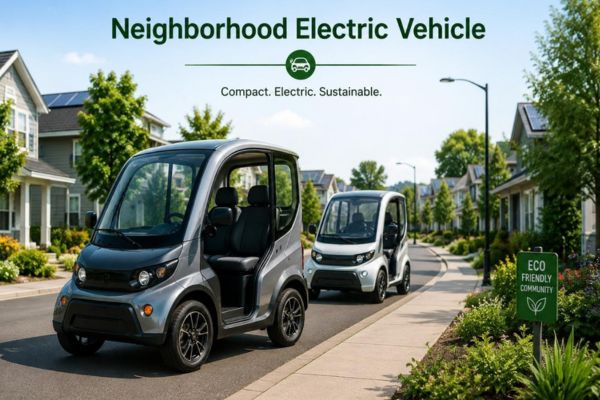
According to Research intelo, the global Neighborhood Electric Vehicle (NEV) market size reached USD 7.8 billion in 2024 and is expected to grow at a robust CAGR of 9.6% from 2025 to 2033. By the end of the forecast period, the market is projected to attain a value of USD 17.7 billion by 2033. This strong growth is primarily driven by increasing urbanization, the need for eco-friendly transport solutions, and supportive government policies promoting electric mobility. The NEV market is experiencing a significant transformation as technological advancements and evolving consumer preferences reshape the landscape of urban and suburban transportation.
The Neighborhood Electric Vehicle (NEV) Market is emerging as an important segment of the global electric mobility industry, positioned between conventional automobiles, electric two-wheelers, golf carts, and micro-mobility solutions. NEVs are designed for short-distance transportation, controlled environments, residential communities, campuses, resorts, industrial facilities, and increasingly, urban mobility applications.
Unlike conventional electric cars that are engineered for highways and long-distance travel, NEVs focus on a simpler proposition: move people and goods efficiently over relatively short distances with less energy, lower operating complexity, and a smaller physical footprint.
What Is a Neighborhood Electric Vehicle?
A Neighborhood Electric Vehicle is a compact, battery-powered vehicle designed primarily for low-speed transportation. In the United States, the federal low-speed vehicle category generally covers four-wheeled vehicles capable of traveling more than 20 mph but no more than 25 mph, with a gross vehicle weight rating below 3,000 pounds.
The terminology varies internationally. Depending on the country, similar vehicles may be classified as low-speed vehicles, community electric vehicles, microcars, electric utility vehicles, or other forms of compact electric transportation.
This distinction is important because an NEV is not simply a smaller electric car. Its value proposition comes from matching the vehicle’s capabilities to the journey rather than designing every vehicle for the longest possible trip.
Why Is the Neighborhood Electric Vehicle Market Growing?
The fundamental opportunity for NEVs comes from a mismatch in conventional transportation: many daily journeys are short, yet consumers often use vehicles designed for much longer and faster journeys.
An NEV can address this inefficiency by combining a relatively small battery, compact dimensions, low energy consumption, and straightforward charging requirements. This makes the category particularly relevant where average trip distances are limited and road speeds are controlled.
The broader electric-vehicle ecosystem is also becoming more accessible. The International Energy Agency reported that electric-car sales outside China, Europe, and the United States approached 2 million units in 2025, while lower-cost electric models helped accelerate adoption in emerging markets.
For NEVs, this creates an interesting strategic environment: as consumers become familiar with electric propulsion, manufacturers can introduce more specialized vehicles designed around specific mobility requirements.
NEVs Are Moving Beyond the Golf-Cart Image
One of the most important changes in this industry is the evolution of the NEV from a recreational vehicle into a purpose-built mobility platform.
Traditional golf-cart-style vehicles remain important, but modern NEV applications increasingly include:
- Gated residential communities
- University and corporate campuses
- Resorts and hospitality properties
- Airports
- Hospitals and healthcare campuses
- Industrial facilities
- Warehouses and logistics operations
- Tourism districts
- Retirement communities
- Municipal services
- Last-mile transportation
- Urban neighborhood transportation
This expansion changes the market’s economics. Instead of asking whether an NEV can replace a conventional automobile everywhere, businesses and communities can ask a more practical question: Where does a conventional automobile provide more capability than the journey actually requires?
That question opens a much larger application landscape.
The Biggest Market Driver: Short-Distance Mobility
The strongest underlying driver for the Neighborhood Electric Vehicle Market is the demand for efficient short-distance transportation.
A person traveling two or three kilometers does not necessarily require a vehicle capable of traveling hundreds of kilometers at highway speeds. Similarly, a hotel transporting guests across a large property does not need a conventional passenger car for every movement.
NEVs can therefore operate as right-sized transportation.
Their smaller batteries can reduce vehicle weight, while compact dimensions can improve maneuverability. For fleet operators, these characteristics can potentially reduce energy consumption and simplify maintenance compared with larger vehicles.
The economic advantage becomes particularly interesting when an organization operates dozens or hundreds of vehicles.
Fleet Electrification Creates a Major Opportunity
Fleet operators are likely to become an important customer group because their vehicles often follow predictable routes.
Consider a resort fleet. Vehicles may travel between reception areas, restaurants, parking zones, guest accommodations, and recreational facilities throughout the day. Their operating territory is relatively predictable, and charging can be scheduled around usage.
The same principle applies to airports, hospitals, factories, universities, and large commercial campuses.
This creates a different purchasing logic from consumer automobiles. Fleet buyers may evaluate an NEV based on total cost of ownership, uptime, charging infrastructure, maintenance requirements, payload, passenger capacity, and route suitability rather than acceleration or highway range.
Battery Technology Is Changing the NEV Proposition
Battery technology remains one of the most important areas of innovation.
Earlier low-speed electric vehicles commonly relied on lead-acid battery systems because of their relatively low upfront cost and established supply chains. Modern designs increasingly incorporate lithium-ion technologies because of their potential advantages in energy density, weight, charging performance, and lifecycle characteristics.
The battery decision, however, is not simply about maximizing range.
For an NEV traveling predictable short routes, excessive battery capacity can add unnecessary cost and weight. This creates an important design philosophy for the industry:
The best NEV battery is not necessarily the largest battery; it is the battery appropriately sized for the vehicle’s mission.
Charging Infrastructure Will Influence Market Adoption
Charging is another critical component of NEV deployment.
Residential users may prefer simple overnight charging, while commercial fleets may require centralized charging infrastructure. Large campuses could potentially use scheduled charging to ensure vehicles are ready during peak operating periods.
This makes the NEV market closely connected with developments in smart charging, energy management, renewable electricity, battery monitoring, and fleet-management software.
The future NEV may therefore be more than an electric vehicle. It can become a connected energy-consuming asset within a larger mobility system.
Connected NEVs Could Create a New Data Layer
Connectivity is gradually changing the way fleet vehicles are managed.
An intelligent NEV can potentially provide information about:
- Battery state of charge
- Vehicle location
- Energy consumption
- Route patterns
- Driver behavior
- Maintenance requirements
- Charging cycles
- Vehicle utilization
- Operating hours
For fleet operators, this information can transform vehicle management from reactive maintenance into predictive management.
For example, if a vehicle repeatedly consumes more energy than comparable vehicles on the same route, the fleet manager may investigate battery health, tire pressure, driving patterns, payload, or mechanical issues.
The vehicle therefore becomes part of an information system, not merely a transportation machine.
Autonomous and Assisted Driving Could Become Relevant
Autonomous driving is often associated with passenger cars, but controlled environments could provide an attractive testing ground for lower-speed automated mobility.
Campuses, resorts, industrial parks, airports, and private communities have relatively defined routes and operating conditions. This can make them potentially suitable environments for driver-assistance and autonomous mobility experiments.
Future NEVs could support automated movement of passengers, supplies, luggage, food, medical equipment, or industrial materials.
However, regulatory requirements, safety validation, cybersecurity, infrastructure readiness, and public acceptance will determine how quickly these concepts move from pilots to mainstream deployments.
Safety Remains a Defining Challenge
The low-speed nature of NEVs creates both an advantage and a limitation.
Lower operating speeds can be appropriate for controlled environments, but NEVs can become vulnerable when they interact with substantially faster and heavier vehicles.
The U.S. National Highway Traffic Safety Administration has historically emphasized that low-speed vehicles have a more limited set of safety requirements than conventional passenger vehicles and are intended for controlled, low-speed environments.
Therefore, market expansion cannot depend solely on vehicle technology. Road design, speed restrictions, vehicle classification, infrastructure, driver awareness, and local regulations are equally important.
Regulation Is a Major Market Variable
Unlike conventional passenger cars, NEVs can encounter significantly different rules depending on jurisdiction.
Governments may determine:
- Where NEVs can operate
- Maximum permitted road speeds
- Registration requirements
- Licensing requirements
- Safety equipment
- Insurance requirements
- Vehicle dimensions
- Passenger limits
- Commercial-use restrictions
This creates a fragmented regulatory landscape.
A vehicle that is legally suitable for neighborhood roads in one jurisdiction may face restrictions in another. Manufacturers therefore need regulatory strategies alongside engineering strategies.
Who Buys Neighborhood Electric Vehicles?
The customer base can broadly be divided into several groups.
Residential users may purchase NEVs for local transportation, particularly in communities where low-speed vehicles are permitted.
Commercial fleets can use them for employee transportation, facility operations, maintenance, security, and internal logistics.
Hospitality companies can deploy them for guest transportation and property operations.
Educational institutions can use them for campus mobility.
Healthcare organizations can use specialized vehicles for personnel, equipment, and internal transportation.
Municipal and public-sector organizations may use NEVs for maintenance, inspection, parks, and localized services.
This diversity gives the industry a broader foundation than a market focused exclusively on private consumers.
The Market Is Also Becoming More Specialized
A major future trend is likely to be application-specific NEV design.
Instead of producing one generic vehicle, manufacturers can develop different platforms for different missions.
A passenger-focused NEV might prioritize seating comfort and accessibility. A resort vehicle could emphasize passenger capacity and luggage space. A logistics model might prioritize payload. A maintenance vehicle could incorporate specialized equipment.
This specialization can increase the addressable market because the vehicle becomes a tool designed around a particular workflow.
What Are the Major Challenges?
Despite its potential, the NEV industry faces several challenges.
The first is limited speed and operating range. These characteristics are advantages in controlled environments but restrictions for broader transportation.
The second is regulatory fragmentation. Different regions can establish different operating rules.
The third is safety perception. Consumers may compare NEVs with full-size vehicles even though they are designed for fundamentally different environments.
The fourth is charging infrastructure. Fleet deployments require appropriate charging capacity and operational planning.
The fifth is residual value and battery lifecycle management. Buyers need confidence that vehicles will remain economically useful over their expected service lives.
The sixth is competition from other mobility solutions, including electric two-wheelers, bicycles, scooters, conventional EVs, shuttle buses, and increasingly sophisticated micro-mobility systems.
What Makes the NEV Market Different From the Conventional EV Market?
The conventional EV industry is largely focused on replacing internal-combustion passenger vehicles.
The NEV industry has a different opportunity.
Its strongest proposition is not necessarily:
“Replace your car with an electric car.”
Instead, it is:
“Use a vehicle specifically designed for the journey you actually make.”
That distinction could become increasingly valuable as cities and organizations rethink mobility.
A full-size electric SUV may be technologically impressive, but using one to transport a single person across a private campus can still be an inefficient allocation of vehicle size, energy, and infrastructure.
NEVs approach the problem from the opposite direction.
Future Opportunities: From Vehicles to Mobility Platforms
The long-term opportunity may extend beyond selling vehicles.
Manufacturers could develop integrated solutions combining:
Vehicle + Battery + Charging + Fleet Software + Connectivity + Maintenance + Financing
This model could generate recurring revenue while allowing customers to purchase mobility as a service rather than simply purchasing vehicles.
For example, a resort could contract for an entire electric mobility system rather than independently purchasing vehicles, chargers, software, and maintenance services.
Such models could fundamentally change competition within the industry.
tory compatibility therefore remain central to market expansion.



 market size reached USD 7.8 billion in 2024.)