
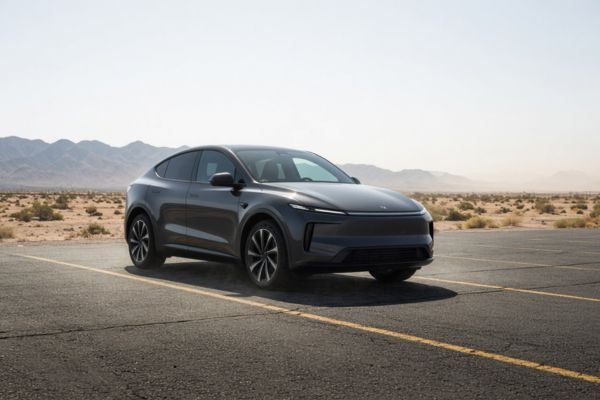
Extreme desert heat exceeding 110 °F (43 °C) places continuous thermal stress on electric vehicle (EV) traction battery packs. Lithium-ion cells achieve optimal performance and longevity within a relatively narrow 15–35 °C (59–95 °F) range. Once pack temperatures exceed this window, accelerated parasitic side reactions permanently reduce capacity, increase internal impedance, and prompt the battery management system (BMS) to derate available power. For powertrain engineers, battery thermal specialists, and charging infrastructure planners, the central challenge is not merely extracting heat from the pack, but doing so efficiently when high ambient temperatures reduce the available temperature differential (ΔT) required for heat rejection.
Active liquid cooling, now standard in modern EVs, circulates a glycol-water coolant through cold plates or microchannels positioned directly against the battery cells. In mild weather, these loops maintain pack temperatures near the 25–30 °C (77–86 °F) range with modest pump and chiller power. When ambient temperatures exceed 43 °C (110 °F), heat rejection becomes significantly more difficult: radiators and refrigerant chillers must reject heat across a much smaller temperature differential (ΔT).
As condenser and radiator efficiency declines, A/C compressors and coolant pumps operate at higher loads, drawing substantially more parasitic power. On vehicles with shared thermal loops, the battery pack also competes with the passenger cabin for limited cooling capacity at the same time drivers demand maximum air conditioning. Architectures that use dedicated battery cooling loops, high-surface-area mini-channels, and balanced flow paths more effectively limit peak temperatures and cell-to-cell thermal gradients in desert conditions. Even so, they incur an energy penalty and require adequately sized heat-rejection hardware from the outset.
While moderately elevated temperatures can temporarily reduce internal resistance by improving ionic conductivity, the long-term effect on a lithium-ion pack is negative. Heat accelerates solid-electrolyte interphase (SEI) growth on the anode, permanently consuming cyclable lithium, increasing internal impedance, and reducing usable capacity and range.
Calendar aging—the gradual degradation that occurs while a vehicle is parked—follows an Arrhenius relationship and roughly doubles for every 10 °C (18 °F) rise above reference temperatures. High state of charge (SOC) and high temperature compound one another: holding a pack near 100 percent SOC in extreme heat is among the fastest ways to accelerate aging. In desert regions, a vehicle parked for extended periods in an unshaded, sun-exposed lot absorbs both high ambient temperatures and radiant heat from the pavement, resulting in irreversible capacity loss even without any driving.
The same thermal limits significantly reduce DC fast-charging (DCFC) performance. High-power charging drives large currents through the pack, generating substantial Joule heating (I²R) in the cells, busbars, and connectors. Once pack temperatures approach upper safety thresholds—typically in the mid-40s to low-50s °C (113–125 °F)—the BMS aggressively limits charge current to protect the SEI layer, avoid electrolyte breakdown, and prevent lithium plating or thermal runaway. As a result, the ideal charging curve collapses: a vehicle rated for 150–250 kW in mild conditions can fall to a fraction of that rate within minutes.
The limitation is not confined to the vehicle. Field data from hot climates show that air-cooled DC fast chargers can lose 35–40 kW of output once their power electronics overheat, nearly doubling charging times. On multi-stop summer highway trips, residual heat accumulates in the pack faster than the vehicle’s cooling system can reject it between sessions, further compounding the slowdown.
Overcoming desert heat requires a coordinated approach that spans vehicle thermal management, advanced BMS software, and heat-hardened charging infrastructure.On the vehicle side, proactive thermal preconditioning is essential. Navigation-linked cooling that begins chilling the battery pack 20–30 minutes before arrival at a DC fast charger keeps cells within their peak power-acceptance window and preserves the fastest portion of the charging curve. When the vehicle is connected to Level 2 AC power at home or a depot, preconditioning both the cabin and battery draws energy from the grid, protecting range before the trip begins.
BMS software is equally important. Rather than relying on rigid single-variable temperature limits, modern controls should apply multi-dimensional power limits that account for instantaneous cell temperature, state of charge (SOC), recent thermal history, and cumulative aging. Maintaining idle storage targets in the 40–60 percent SOC range substantially slows calendar aging—a strategy some platforms now automate under extreme heat. Cell chemistry also contributes: lithium iron phosphate (LFP) provides greater thermal stability than high-nickel NMC formulations, although active liquid cooling remains necessary in environments above 110 °F. Charging infrastructure must complement these measures. Shaded solar canopies, liquid-cooled dispensers and cables, and power electronics rated for high ambient temperatures reduce both vehicle- and charger-side thermal throttling.
Extreme desert heat does not have to impose an automatic penalty on electric vehicles. By sizing liquid-cooling architectures for the limited temperature differentials typical of desert conditions, implementing predictive thermal preconditioning, and incorporating adaptive BMS logic that accounts for both temperature and state of charge, engineers can substantially slow battery degradation and preserve practical DC fast-charging speeds. The result is measurable for drivers and fleet operators: longer battery life, more consistent fast-charging performance in weather above 110 °F, and reliable year-round operation in the hottest climates.
By: Zach Smith is the founder of NevadaSolarGuide.com, a consumer guide to solar and storage for Nevada homeowners. He lives in North Las Vegas. Affiliations disclosed. This piece is exclusive to AutoEVTimes and is not an endorsement of any installer.



 places continuous thermal stress on electric vehicle (EV) traction battery packs. Lithium-ion cells achieve.)