
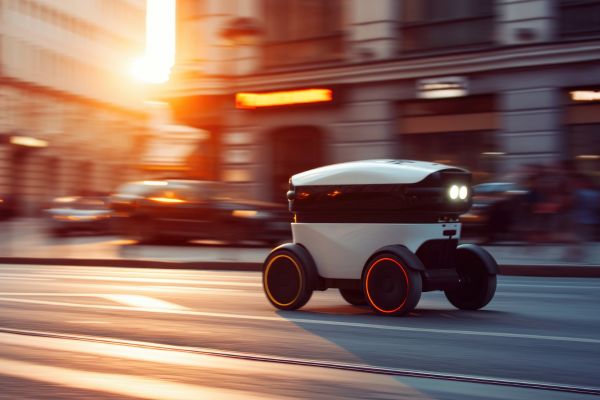
According to Cervicorn Consulting, the global robotaxi market is witnessing exponential expansion, driven by rapid advancements in autonomous vehicle technologies and large-scale commercialization initiatives.
According to Cervicorn Consulting, the global robotaxi market size was estimated at USD 2.68 billion in 2025 and is projected to reach approximately USD 283.47 billion by 2035, registering a remarkable CAGR of 59.4% from 2026 to 2035. The market is accelerating due to improvements in autonomous driving systems powered by artificial intelligence, machine learning, LiDAR, radar, and high-resolution sensor integration. These technologies significantly enhance vehicle perception, navigation accuracy, and operational safety—particularly in complex urban environments—thereby strengthening consumer trust and regulatory acceptance.
The transition from pilot testing to commercial-scale fleet deployment is a key growth catalyst. Leading players such as Waymo, Baidu Apollo Go, and Pony.ai are expanding their operational footprints globally. Waymo operates thousands of autonomous vehicles across multiple U.S. cities, while Baidu’s Apollo Go has completed millions of autonomous rides in China. Pony.ai continues expanding its commercial deployments across major metropolitan regions. Rising OEM collaborations, supportive regulatory frameworks, and declining hardware costs are collectively enabling scalable robotaxi production and deployment worldwide.
Report Highlights
- North America leads the global robotaxi market with 37% share, supported by early commercialization, regulatory clarity, and extensive fleet operations.
- Asia Pacific holds 34% share, driven by strong government-backed smart mobility initiatives and large-scale deployments in China.
- Electric Vehicles (EVs) dominate with 68% share, aligning with zero-emission goals and lower fleet operating costs.
- Passenger transport accounts for 82% share, reflecting the core commercial focus on urban ride-hailing.
- LiDAR technology contributes 34% share, remaining essential for high-precision 3D mapping and perception.
- Level 4 autonomy dominates with 91% share, as most commercial robotaxi services operate in geo-fenced urban environments.
Robotaxi Market Trends
- Expansion of Fully Driverless Operations: Fully driverless robotaxi services are operational in select urban zones in the U.S., China, and the Middle East, signaling maturity beyond supervised trials.
- High Urban Deployment Density: Over 70% of robotaxi deployments are concentrated in dense metropolitan areas with high ride frequency.
- Electrification Integration: Most robotaxi fleets are battery-electric, supporting urban sustainability targets.
- Data-Driven AI Optimization: Autonomous systems are trained using billions of real-world and simulated miles to enhance safety validation and AI performance.
- Strategic OEM Collaborations: Autonomous technology developers are partnering with global automakers to manufacture fleet-optimized vehicles designed for shared mobility.
Recent Major Milestones
- Waymo Introduces Sixth-Generation Robotaxi System (2026)
- Waymo unveiled its sixth-generation autonomous driving platform focused on high-volume production. The company aims to manufacture tens of thousands of vehicles annually and expand operations to more than 20 cities. This shift from pilot testing to mass production is expected to reduce per-unit costs and accelerate commercial scalability.
- Commercial Fully Driverless Services in Dubai (2026)
- Dubai’s Roads and Transport Authority (RTA), in collaboration with Baidu Apollo Go and Uber, launched fully autonomous ride-hailing services in selected districts. This marks one of the first commercial deployments outside China and the U.S., demonstrating strong regulatory support in the Middle East.
- Apollo Go Expands Through Global Partnerships (2025–2026)
- Baidu Apollo Go formed partnerships with Uber and Lyft to expand into Europe and the Middle East, strengthening its international distribution and commercialization strategy.
- Fully Driverless Commercial Launch in Abu Dhabi (2026)
- Baidu Apollo Go deployed one of the largest fully driverless Level 4 fleets in Abu Dhabi, demonstrating operational feasibility in new urban markets and reinforcing investor confidence.
Robotaxi Market Regional Analysis
North America Robotaxi Market Forecast
North America was valued at USD 0.99 billion in 2025 and is projected to reach USD 104.88 billion by 2035. The region benefits from strong venture capital funding, early regulatory approvals, and advanced EV infrastructure.
U.S. & Canada Insights
- Thousands of fully driverless rides delivered weekly.
- Over 10 U.S. states allow AV testing or commercial operations.
- Canadian provinces such as Ontario are advancing smart mobility pilot programs.
Asia-Pacific (APAC) Robotaxi Market Outlook
Asia-Pacific reached USD 0.91 billion in 2025 and is forecast to hit USD 96.38 billion by 2035, driven by dense urban populations and proactive AI strategies.
- China as a Global Innovation Hub: China accounts for a significant share of global robotaxi deployments, supported by large testing zones and strong EV manufacturing capabilities.
- Japan & South Korea: Both nations are strengthening structured pilot programs supported by 5G infrastructure and smart city initiatives.
Europe Robotaxi Market Insights
Europe was valued at USD 0.56 billion in 2025 and is expected to reach USD 59.53 billion by 2035. The region emphasizes structured regulatory rollouts and sustainability alignment.
- United Kingdom: The Automated Vehicles Act (2024) enables commercial driverless deployments starting 2026, positioning the UK as a regulatory leader.
- Germany: Germany legalized Level 4 autonomous operations within defined domains and is actively conducting municipal robotaxi pilots in cities such as Munich and Hamburg.
LAMEA Robotaxi Market Analysis
The LAMEA region was valued at USD 0.99 billion in 2025 and is projected to reach USD 22.68 billion by 2035. The Middle East, particularly the UAE, is emerging as a fast-commercialization hub through government-backed partnerships and smart mobility strategies.
Dubai aims to achieve 25% autonomous transport integration by 2030, while Abu Dhabi has already launched fully driverless commercial services in designated areas.