
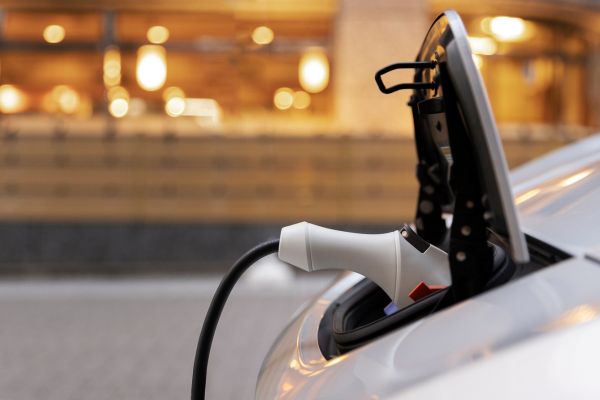
The global transition to Electric Vehicles (EVs) is no longer a futuristic projection; it is a present-day industrial overhaul. As internal combustion engines make way for battery-powered drivetrains, the focus of “refuelling” has shifted from chemical energy stored in tanks to digital energy managed through silicon and software.
At the heart of this revolution lies the EV charging station. However, these are not merely “plugs in the wall.” In the modern mobility landscape, a charging station is a sophisticated IoT (Internet of Things) node. For Network Operators (NOs) and Charge Point Operators (CPOs), managing these stations presents a complex tapestry of technical, operational, and security challenges that must be solved to ensure the viability of green mobility.
1. The Burden of Interoperability
The most immediate challenge for network operations is the lack of a universal “language.” The EV ecosystem involves a fragmented array of hardware manufacturers, software providers, and vehicle OEMs.
Network operators must manage diverse communication protocols, most notably the Open Charge Point Protocol (OCPP). While OCPP has become the industry standard, different versions (1.6 vs. 2.0.1) and proprietary “extensions” by manufacturers often lead to integration headaches. If a charging station cannot communicate its status, energy consumption, or fault codes to the central management system accurately, the network becomes a black hole of unmanageable assets. Ensuring that a driver with a specific RFID card or mobile app can seamlessly initiate a charge across different brands of hardware remains a primary operational hurdle.
2. Grid Stability and Load Management
Unlike traditional gas stations, EV charging stations pull immense power directly from the local electrical grid. A single DC Fast Charger (DCFC) can draw upwards of 350kW—equivalent to the peak demand of an entire apartment complex.6
For network operators, the challenge is Dynamic Load Management (DLM). If ten EVs plug in simultaneously at a highway hub, the local transformer could be overwhelmed. Network operations must now include sophisticated “Smart Charging” algorithms that throttle power based on real-time grid capacity, electricity pricing (time-of-use rates), and vehicle requirements. Moving from a “dumb” plug-and-play model to an active, grid-aware balancing act requires high-speed data telemetry and ultra-low latency in network communications.
3. Connectivity Reliability in “Dead Zones”
Digital mobility depends entirely on uptime. A charging station without an internet connection is, in many cases, a useless piece of hardware. It cannot authorize payments, update firmware, or report its availability to navigation apps like Google Maps or PlugShare.
Network operators often struggle with the physical placement of chargers. Many are located in underground parking garages or remote highway stretches where cellular signals (4G/5G) are weak or non-existent. Operations teams must deploy signal boosters, mesh networks, or satellite links to ensure 99.9% “heartbeat” connectivity. A “Station Offline” notification is the quickest way to erode consumer trust in EV technology.
4. Cybersecurity: The New Frontier of Risk
In the digital era, every charging point is a potential entry point for cyberattacks. Because these stations are connected to both the public internet and the sensitive electrical grid, they represent a significant security risk.
Challenges include:
Data Privacy: Protecting user payment information and location data.
Grid Sabotage: A coordinated “fake” demand spike triggered by hacking thousands of chargers could theoretically destabilize a city’s power grid.
Firmware Integrity: Ensuring that over-the-air (OTA) updates are not intercepted or replaced with malicious code.
Network operations must now incorporate “Security by Design,” utilizing end-to-end encryption (TLS), secure boot protocols, and constant intrusion monitoring.
5. Maintenance and “Ghost” Stations
Maintaining a sprawling network of chargers is an expensive logistical feat. “Ghost stations”—chargers that appear “Available” on an app but are physically broken or iced (blocked by an internal combustion vehicle)—are the bane of the EV driver’s existence.
The operational challenge is moving from reactive to predictive maintenance. Modern network operations use AI to analyze voltage fluctuations and temperature data from the chargers to predict a component failure before it happens. However, coordinating field technicians to repair hardware across vast geographies remains a bottleneck that requires tight integration between digital diagnostics and physical supply chains.
6. The User Experience (UX) Gap
Finally, the digital interface of the charging station is where the “mobility” part of the equation succeeds or fails. Network operators are tasked with managing the “Plug & Charge” (ISO 15118) transition. The goal is for a driver to simply plug in the car and walk away, with the vehicle and charger handling authentication and billing automatically.
Implementing this requires a complex “Public Key Infrastructure” (PKI) where car manufacturers and charging networks share encrypted certificates. Managing these digital handshakes at scale is an immense administrative and technical undertaking.
Conclusion: The Path Forward
The transition to EV mobility is as much a telecommunications challenge as it is an automotive one. For network operators, the digital era demands a shift in identity: they are no longer just “utility providers,” but high-tech data managers.
By solving for interoperability, securing the data pipelines, and mastering real-time grid orchestration, network operators will provide the “invisible” infrastructure that makes the electric dream possible. The road to 2030 is paved with fiber optics and wireless signals just as much as it is with asphalt.



 is no longer a futuristic projection; it is a present-day industrial overhaul.)