
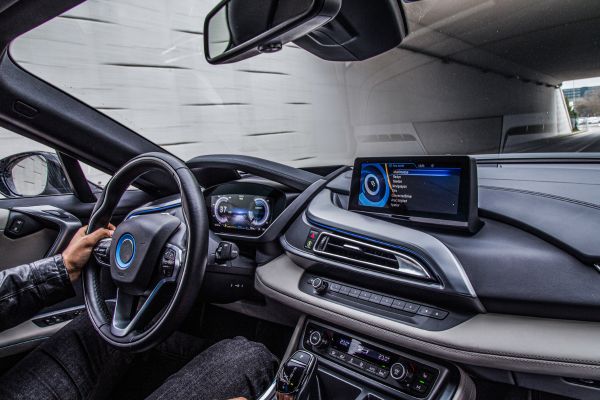
The eyes of the modern vehicle are no longer just a convenience they are a regulatory requirement, a safety imperative, and increasingly, an AI-powered intelligence layer. According to a new comprehensive study by Polaris Market Research, the global automotive camera market is valued at USD 8.44 billion in 2025 and is projected to reach USD 17.55 billion by 2034, expanding at a robust CAGR of 8.5% over the forecast period. For semiconductor manufacturers, imaging technology companies, and automotive OEMs alike, this trajectory represents one of the most compelling investment and innovation opportunities of the decade.
At the heart of automotive camera market growth lies a powerful dual engine: government-mandated safety requirements and the accelerating adoption of Advanced Driver Assistance Systems (ADAS). Regulations across the US, Europe, and Asia now require rear-view cameras and driver monitoring systems as standard features in newly manufactured vehicles. Europe’s General Safety Regulation (EU) 2019/2144, updated in 2024, extended mandatory integration of autonomous emergency braking, intelligent speed control, and driver monitoring systems to all new vehicles directly fueling demand for high-performance camera modules across the continent.
This regulatory tailwind isn’t slowing down. As autonomous vehicle development matures and governments tighten road safety frameworks globally, the compliance-driven procurement of automotive vision technology is expected to remain a structural growth driver throughout the forecast period.
Segment Breakdown: Where the Biggest Opportunities Are
Rear View Cameras Lead Surround View Surges
The rear-view camera segment commanded approximately 48.6% of the market share in 2025, underpinned by decades of regulatory mandates and their near-universal fitment in passenger vehicles. However, the fastest-growing camera type is the surround view segment, which provides a 360-degree bird’s-eye perspective around the vehicle a capability increasingly demanded in premium and mid-range vehicles for both parking safety and autonomous navigation readiness.
Parking Assist Dominates Applications, Driver Monitoring Rises Fast
By application, parking assist systems accounted for the largest share at ~39.5% in 2025, driven by the widespread adoption of rear and surround view systems. But the segment drawing the most forward-looking attention is driver monitoring systems (DMS) the fastest-growing application category. Automakers are aggressively integrating interior cameras to track driver attention, detect fatigue, and ensure alertness, particularly as semi-autonomous features place more cognitive responsibility on the system-driver handoff.
Commercial Vehicles: The Underrated Growth Frontier
While passenger vehicles hold the largest vehicle-type share, the commercial vehicles segment is projected to grow at a CAGR of 7.9%. The logistics boom, the push to reduce fleet accidents, and the expansion of last-mile delivery services are all driving camera adoption in trucks, vans, and buses at an accelerating pace.
Technology Spotlight: Infrared Cameras and AI Vision Systems
Among technologies, CMOS cameras currently dominate due to their cost-efficiency and high-resolution output. Yet the fastest-growing technology segment is infrared cameras, projected to expand at a CAGR of 8.7%. Rising demand for enhanced night vision, low-light pedestrian detection, and AI-based driver monitoring is positioning infrared imaging as the next frontier of automotive safety technology.
The integration of artificial intelligence into camera systems is a transformational development. AI-powered image processing enables real-time object detection, traffic sign recognition, and pedestrian identification with a level of precision that traditional optics cannot match. In March 2026, Nexar partnered with Vay to embed its BADAS predictive AI model into remotely driven vehicle fleets a clear indicator of where AI automotive camera systems are headed commercially.
Regional Landscape: North America Leads, Asia Pacific Accelerates
North America retained the largest regional share at 36.9% in 2025, powered by strong ADAS adoption, federal rear-view camera mandates, and rapid integration of thermal and infrared imaging. In January 2026, Teledyne FLIR OEM launched the Tura the industry’s first ASIL-B automotive-grade thermal infrared camera underscoring the region’s role as a technology incubator for next-generation imaging systems.
Asia Pacific, meanwhile, is the fastest-growing region at a projected CAGR of 8.2%. China’s dominance in EV production accounting for over 70% of global electric vehicle output in 2024 is rapidly accelerating ADAS camera integration across its domestic OEM base. Japan, South Korea, and India add further depth to the region’s growth profile.
Europe holds second-largest market status, driven by stringent regulatory requirements and innovation from OEM giants in Germany, France, and the UK.
Competitive Landscape: Industry Leaders Racing to Innovate
The automotive camera market features a robust competitive landscape with global semiconductor and automotive technology leaders including Robert Bosch GmbH, Continental AG, Mobileye Global Inc., Valeo SA, OMNIVISION Technologies Inc., Sony Semiconductor Solutions Group, Aptiv PLC, Denso Corporation, Magna International Inc., and ZF Friedrichshafen AG, among others.
Innovation cycles are compressing. In October 2025, OMNIVISION released an 8MP CMOS image sensor engineered for low-light, high-dynamic-range ADAS applications. In February 2026, MCNEX launched automotive-grade QHD front and rear cameras powered by Valens’ VA7000 chipsets, reducing vehicle wiring complexity a critical cost and engineering challenge for mass-market deployment.
Conclusion: The Automotive Camera Market Is a Semiconductor Industry Cornerstone
From regulatory mandates to AI-powered machine vision, the automotive camera industry sits at the intersection of the most powerful trends reshaping both transportation and electronics. For investors, OEM procurement teams, and semiconductor engineers, the data is unambiguous: this is a market doubling in value over the next decade, driven by structural, regulatory, and technological forces that are only strengthening.