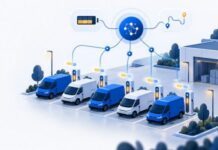
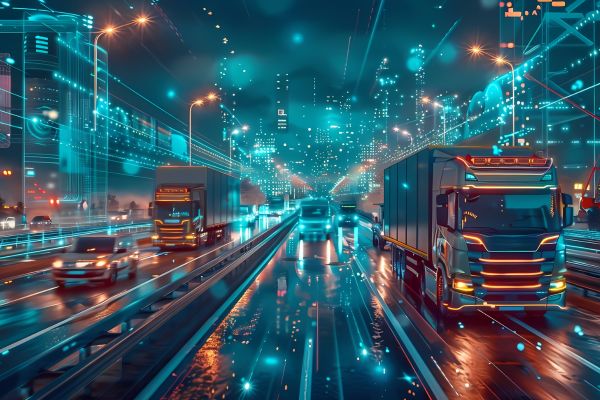
In the bustling urban corridors of 2026, the silence of an electric vehicle gliding through an intersection is deceptive. Beneath the sleek carbon-fiber frames and minimalist digital cockpits, a frantic, invisible conversation is taking place. Your car is no longer just a machine; it is a node in a global neural network. It is “talking” to the traffic light three blocks ahead, “listening” to a delivery van hidden around a blind corner, and “negotiating” space with a distracted pedestrian’s smartphone.
This is the era of Vehicle-to-Everything (V2X) communication—the technological backbone of a revolution that is quietly rendering the “dumb” roads of the past century obsolete.
Beyond the “Sensor Island”
For the last decade, the race toward autonomous driving was a battle of on-board hardware. Manufacturers loaded vehicles with high-fidelity LiDAR, ultrasonic sensors, and arrays of 4K cameras. While these tools are impressive, they suffer from a fundamental flaw: they are limited by line-of-sight. A camera cannot see through a concrete wall; radar cannot detect a child stepping out from behind a parked SUV until it is often too late.
V2X changes the game by creating a 360-degree awareness bubble that transcends physical obstacles. By utilizing the 5.9 GHz spectrum and high-speed 5G NR-V2X protocols, vehicles can share telemetry data—position, speed, and intent—in less than 10 milliseconds.
“We are moving from reactive safety to predictive harmony,” says one industry lead. “If a car three vehicles ahead slams on its brakes, your car knows it the instant the pedal is touched, not when your sensors finally see the brake lights.”
The Anatomy of a Connected Ecosystem
V2X isn’t a single technology; it’s a multifaceted language of survival and efficiency. To understand the 2026 landscape, we must look at the four pillars of this communication:
1. V2V (Vehicle-to-Vehicle)
The most mature segment of the market, V2V allows cars to form dynamic “platoons.” On highways, trucks can now travel inches apart, synchronized by a digital tether that manages braking and acceleration simultaneously. This reduces aerodynamic drag, slashing fuel consumption and emissions by up to 15%.
2. V2I (Vehicle-to-Infrastructure)
Your car is now a partner to the city. Smart intersections communicate “Signal Phase and Timing” (SPaT) data directly to the dashboard. Drivers are given a “Green Light Optimized Speed Advisory,” telling them exactly what speed to maintain to catch every green light—a phenomenon known as the “Green Wave.”
3. V2P (Vehicle-to-Pedestrian)
In the high-stakes environment of urban centers, V2P is the ultimate lifesaver. Using the same cellular protocols, vehicles can detect the “digital footprint” of pedestrians and cyclists via their smartphones or wearables. Even if a cyclist is in a driver’s blind spot, the car’s AI can trigger an emergency alert or pre-emptive braking.
4. V2N (Vehicle-to-Network)
This is the “brain” in the cloud. V2N links the car to the broader internet, providing real-time maps, weather updates, and—crucially—Over-the-Air (OTA) updates. Much like your smartphone, today’s “Software-Defined Vehicles” (SDVs) receive performance patches and new safety features while you sleep in your driveway.
The Economic Engine: A $13 Billion Milestone
The shift isn’t just social; it’s a massive economic pivot. In 2026, the global V2X market has reached a valuation of $13 billion, with projections suggesting a meteoric rise to over $300 billion by 2040.
Legacy automakers are no longer just selling hardware; they are becoming service providers. From “features-on-demand” (where you might subscribe to a high-performance driving mode for a weekend trip) to data-driven insurance models, the “sell-and-forget” era of car sales is dead. Your vehicle is now a “data center on wheels,” generating up to 19 terabytes of data per hour.
The Hurdles: Privacy and the “Tower of Babel”
Despite the momentum, the road to total connectivity isn’t without potholes. Two major challenges dominate the boardroom discussions of 2026:
Cybersecurity: As vehicles become more connected, they become more vulnerable. The industry has responded with “Security by Design,” utilizing Public Key Infrastructure (PKI) to ensure that every message sent between a car and a traffic light is encrypted and authenticated. A hacked traffic signal isn’t just a nuisance; it’s a weapon.
The Standards War: For years, the industry was split between DSRC (a Wi-Fi-based standard) and C-V2X (cellular-based). In 2026, C-V2X has emerged as the clear victor, backed by the global rollout of 5G. However, the legacy of this “standards war” means that older infrastructure in some regions still struggles to talk to the newest models.
The Road Ahead: 6G and the Sentient City
As we look toward the end of the decade, the integration of Edge AI is the next frontier. By processing data at the “edge” (inside the car or at the local 5G tower) rather than sending it to a distant cloud server, latency is being driven down to near-zero.
We are standing at the threshold of a world where traffic jams are a relic of the past, where “accidents” are viewed as systemic failures rather than human errors, and where the car is a seamless extension of our digital lives.
V2X is more than just a suite of sensors and radios. It is the realization that in a world of eight billion people and billions more machines, the only way to move forward is to move together—connected, coordinated, and constantly talking.