
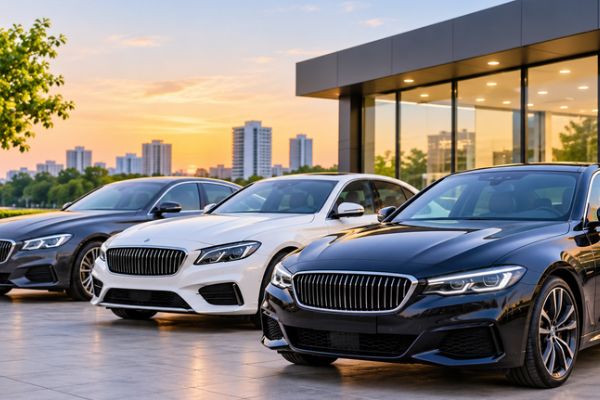
For a long time, buying a used car in India was a practical compromise: a buyer wanted a car, and a new one was too expensive. That is changing. More buyers now see pre-owned as a considered choice, and the shift is most visible in the luxury segment, where a premium car no longer requires a brand-new price tag.
The numbers support this. According to the seventh edition of the Indian Blue Book, India’s used-car market reached 5.9 million units in FY2024-25 and is projected to grow at about 10% a year to 9.5 million units by 2030. CRISIL Ratings’ August 2026 outlook expects used-car volumes to grow 7-9% in FY2026-27 and cross 7 million units. Used cars are now a core part of the country’s mobility ecosystem.
Less Badge, More Substance
Today’s luxury buyer looks beyond the logo. Engineering, comfort, technology and the overall ownership experience increasingly drive the decision.
Depreciation is central to this. Luxury cars tend to lose a significant share of their value in the first few years, which lets the next owner buy a premium model at a considerably lower cost. For buyers drawn to Mercedes-Benz, BMW, Audi or Jaguar, pre-owned can offer entry into a higher segment than a new-car budget would allow.
The Indian Blue Book FY25 reflects the same shift. SUVs and compact SUVs now account for over 50% of used-car sales, up from 23% four years earlier, while average selling prices have risen 36% over the period. Buyers are willing to spend more when the car delivers better quality, features and usability.
Buyers Do Their Homework
Online platforms, comparison tools and social media allow buyers to research specifications, compare prices and look into a car’s history before approaching a seller. Their questions have become more specific: service records, mileage, accident history and mechanical condition.
In the luxury category this scrutiny matters even more. A car’s maintenance record and technical condition can have a considerable bearing on the cost of ownership over the following years, and a recognisable badge is no longer enough to close a sale.
Trust Remains the Central Challenge
Despite the growth, trust is still the market’s biggest hurdle. CRISIL estimates that organised players account for only about 26% of India’s used-car sales this fiscal, up from 20-21% in FY2022. Most transactions still take place through fragmented, unorganised channels.
Buyers appear to recognise the gap. The Indian Blue Book FY25 found that over 70% of customers believe organised dealers offer better service and vehicle quality, and 66% of buyers rank warranty as the most important add-on service. For high-value purchases, this points to demand for structured inspection, verified paperwork and clear post-sale protection, rather than assurances alone. Transparent vehicle histories and price benchmarks are fast becoming baseline expectations in this segment.
Ownership Is More than the Price Tag
Today’s buyer weighs the whole ownership experience: maintenance costs, availability of genuine parts, warranty cover, after-sales support and resale value. Purchase price is only one part of the calculation.
Supply conditions are also improving. CRISIL’s August 2026 report puts the average age of used cars sold at around four years, down from over eight a decade ago, reflecting faster model refreshes and shorter ownership cycles. This gives buyers access to relatively recent models without paying new-car prices.
Demand at the top end remains firm. In the first half of 2026, Mercedes-Benz and BMW both reported record sales in India, up 9% and 17% respectively, while VAHAN data shows the wider luxury segment grew about 4%. A growing base of premium cars on the road should eventually feed the pre-owned market.
What Comes Next
India’s pre-owned luxury market is entering a phase where the quality of the buying experience will matter as much as the vehicle itself. Buyers want reliable inventory, transparent pricing, thorough inspections and dependable post-purchase support.
For organised dealerships, the opportunity lies less in selling more cars than in raising standards of accountability across the ownership journey. Choosing pre-owned no longer means settling for less luxury. It means buyers are finding a more considered way to access it.