
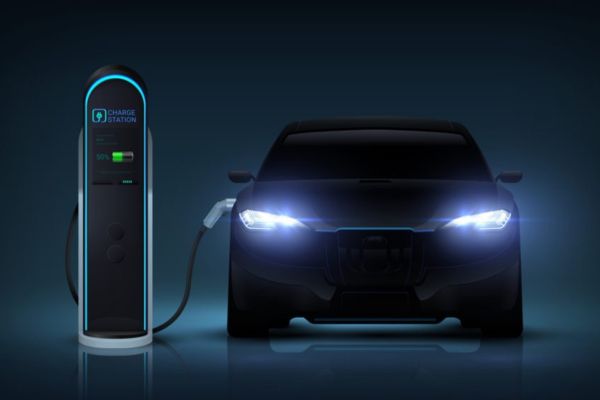
The time of shifting to electric vehicles (EVs) is here in India. Consumer interest is growing, fleet electrification is taking off and government policy is getting more ambitious. However, all momentum aside, one hurdle looms over the large-scale adoption: charging infrastructure.
With the government’s proposed investment of ₹12,000 crore in building EV infrastructure, it’s a clear indication that the government is seriously working to overcome this hurdle. The question, however, does not exist whether or not investment is required—it certainly is. The big question now is, can policy, funding and execution eventually align to provide a solution at scale to India’s charging gap?
Infrastructure Is the Foundation of EV Confidence
The public infrastructure needed to support EVs is a critical component of EV confidence.Public infrastructure is a key enabler of EV confidence.
A key ingredient to all successful EV markets, anywhere in the world, has been a reliable charging network. While consumers might enjoy lower running costs and environmental advantages of EVs, they need to be convenient and confident to adopt EVs.
In India, the apprehensions associated with EV adoption are not so much about the vehicle as much as it is about the after-sales. Will the charging stations be available? Will they behave as expected? Will long-distance travel be cumbersome? These are all concerns that affect purchasing.
In many ways, range anxiety is infrastructure anxiety. Until charging is as convenient and reliable as fueling of traditional vehicles, mass EV adoption will be limited.
Why the ₹12,000 Crore Push Matters
One of the reasons why the proposed infrastructure investment is so massive is because it’s a sign of a new policy shift in India’s EV policy. Focus is shifting from subsidies and vehicle incentives to creation of ecosystems. This is an important change.
Over the years, EV adoption policies have largely targeted lower vehicle acquisition costs by offering vehicles subsidies and tax breaks. This was a fast uptake but there was not a matching growth of infrastructure up to market expectations. With the number of EVs on the road continuing to grow, the lack of proper charging infrastructure can start to slow growth.
In addition, a dedicated infrastructure push is recognizing that EV growth is not going to happen through the sale of EVs. It needs a network of interconnected public charging stations, fast chargers, upgrading the grid and smart energy management systems.
Charging Infrastructure Is More Than Just Chargers.
Addressing India’s EV charging conundrum is more than just a matter of charging stations. It’s more about creating a network that is reliable, scalable and profitable.
Charging infrastructure needs to be effective on a number of levels – urban and highway connectivity, residential and commercial usability and interoperability between vehicle platforms. Reliability is also crucial. The absence of a charging station is a consumer deterrent but the destruction of a charging station is an even stronger deterrent.
Power distribution and grid readiness is also an integral part of the challenge. Electricity demand will shift markedly as the number of EVs grows. To make these investments in charging infrastructure, investments in smart grids, renewable energy integration and load management systems are important.
The Business Opportunity Behind the Gap
A business opportunity arises when a gap exists.When there is a gap, that is where a business opportunity exists.
India is not just facing the challenge of a charging gap, it’s also one of the biggest opportunities for businesses to emerge in the country. The infrastructure push will help facilitate investments in charging infrastructure, battery swapping, fleet management technologies, energy storage and software-based mobility solutions.
Reliable charging infrastructure affects businesses in the fleet electrification and commercial mobility sector in direct ways that have an impact on their profitability. Minimizing downtime, scheduling charging times and optimizing energy use can lead to higher operational efficiency.
This is especially true for industries with high use rates, like the logistics industry, ride-hailing and last-mile delivery. The growing economics of EVs continues to drive greater commercial uptake through the improvement of infrastructure.
After all, there is no magic formula for the solution when it comes to the problem of solving policy matters.
The government’s investment is crucial but the transformation of infrastructure is not possible without policy. Working together will be key.
Private operators offer the benefits of speed of execution, technological innovation and efficiency, while direction, incentives and regulatory support are offered by government policy. How these forces synergy will play out will be the key determinant in the success of India’s charging infrastructure.
Standardization is also very important. The lack of a consolidated charging system, a variety of payment methods and lack of interoperability can slow adoption. A shared consumer-friendly platform will be required for the establishment of wide credibility.
Shift from subsidy-led to ecosystem-led growth.
With the July 1st plan to phase out subsidies for electric vehicles, the country’s EV market is slowly moving away from subsidy-driven growth and towards ecosystem-driven growth. This is a more advanced stage of the industries’ life cycle. Today’s consumers are not just considering the price of an EV, they’re considering the ownership experience.
Wearability, including charging convenience and infrastructure visibility, charging speed and service reliability are becoming key driving factors for adoption. In this kind of setting, infrastructure isn’t a supporting factor; it’s the enabler for the market.
The Road Ahead
India’s push to invest ₹12,000 crore into the infrastructure push may be a turning point in the EV journey of the country. With its proper implementation, it can help decrease range anxiety, speed up commercialization and boost consumer trust throughout the ecosystem.
But expansion of infrastructure should not only aim at numbers but reliability, accessibility and long-term scalability as well. The actual measure of success won’t be the number of chargers that are installed, it’s how easily EV users can charge their vehicles into their daily routines.
This is a statement that the Government of India has already proved in the case of EVs. The next is to demonstrate the ability to create the necessary ecosystem to support policy.
The possibilities are huge. When India closes the charging gap it is not just going to speed up the transition towards electric mobility, it will shape the future of transportation, energy resilience and urban mobility for the coming decades.



 is here in India. Consumer interest is growing, fleet electrification is taking off and government policy.)