The automotive industry has always been a symbol of industrial progress. From Henry Ford’s moving assembly line to today’s smart factories, every decade has redefined how vehicles are built. Now, we are witnessing another major shift. Robotics and automation are no longer limited to welding arms on production lines. They are reshaping the entire manufacturing and supply chain ecosystem in auto assembly.
This transformation is not about replacing people with machines. It is about building faster, safer, smarter, and more resilient systems that can meet growing demand, handle complexity, and stay competitive in a rapidly evolving market.
Let’s explore how robotics and automation are changing auto assembly from the shop floor to the global supply chain.
The Evolution of Robotics in Auto Assembly
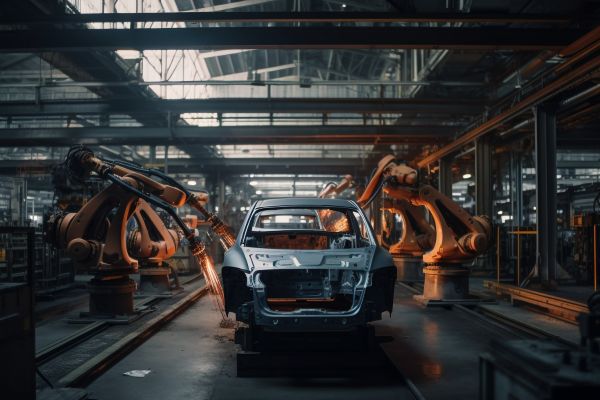
The automotive sector has been one of the earliest adopters of industrial robots. Tasks such as welding, painting, and heavy lifting were automated decades ago because they required high precision and involved safety risks.
Today’s robots are far more advanced. Modern robotic systems can:
- Perform precision welding and sealing
- Install windshields and dashboards
- Assemble battery packs in electric vehicles
- Conduct automated quality inspections
Unlike traditional rigid machines, current robotic systems use sensors, vision systems, and AI-powered controls to adjust in real time. This improves accuracy and reduces defects. According to insights from Capgemini, AI-driven robotics is playing a central role in transforming OEM operations by increasing flexibility and enabling smarter decision-making across manufacturing systems[1].
In short, robots are no longer just mechanical arms. They are intelligent collaborators within a connected production environment.
Smart Manufacturing: Beyond the Assembly Line
Automation in auto assembly now goes far beyond physical robots. It includes AI systems, digital twins, predictive analytics, and Manufacturing Execution Systems (MES).
Smart manufacturing integrates machines, data, and software into a unified ecosystem. For example, AI systems can analyze machine performance data and predict failures before they occur. This reduces downtime and increases productivity. According to McKinsey & Company, technology-enabled transformations in manufacturing can unlock significant productivity gains and operational efficiencies when digital tools are properly integrated[2].
Digital twins are another breakthrough. These are virtual replicas of physical production systems. Engineers can simulate changes in layout, workflow, or process parameters before applying them in real life. This reduces risk and speeds up innovation.
Companies like Rockwell Automation highlight that future robotics systems will rely heavily on connected data environments where machines communicate seamlessly with enterprise systems[4].
The result is not just automation, but intelligent automation.
Robotics in Electric Vehicle (EV) Assembly
The rise of electric vehicles has added new layers of complexity to automotive manufacturing. EV production involves battery assembly, power electronics integration, and lightweight material handling.
Battery pack assembly requires extreme precision and strict safety standards. Robotics ensures accurate placement of cells, thermal management components, and electrical connections. Automation also minimizes human exposure to high-voltage systems.
Additionally, lightweight materials such as aluminum and composites demand precise handling. Automated systems reduce errors and material waste. As discussed by JR Automation, advanced robotics solutions are critical for enabling innovation in modern automotive production, especially with the growth of EV platforms[3].
The shift to EVs has made automation not just beneficial but essential.
Automation in the Automotive Supply Chain
Auto assembly does not operate in isolation. It depends on a vast and complex supply chain involving thousands of components.
Automation now plays a critical role in:
- Warehouse management
- Inventory tracking
- Order picking
- Internal logistics
Automated Storage and Retrieval Systems (ASRS) allow manufacturers to store and retrieve parts efficiently with minimal human intervention. Robotic palletizers and autonomous mobile robots transport components between stations.
Research on supply chain robotics integration shows that automation improves visibility, reduces errors, and enhances responsiveness to disruptions[8].
For example, robotic ASRS systems from companies like Armstrong Ltd demonstrate how high-density storage and intelligent retrieval can significantly improve space utilization and order accuracy in manufacturing facilities[7].
In a world where supply chain disruptions can halt production, automation strengthens resilience.
Human–Robot Collaboration
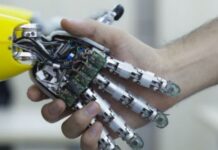
One common misconception is that robotics eliminates jobs. In reality, the automotive industry is moving toward collaborative robotics, often called cobots.
Cobots work alongside human operators. They assist with repetitive or physically demanding tasks while humans focus on supervision, customization, and quality assurance.
According to industry insights shared by Universal Technical Institute, robotics in manufacturing is shifting workforce demands toward programming, maintenance, and system optimization rather than manual assembly alone[9].
This shift requires reskilling and training. Workers need digital literacy, troubleshooting skills, and knowledge of automated systems. The factory of the future is not worker-free. It is worker-empowered.
Quality Control and Predictive Maintenance
Automation enhances product quality in several ways. Vision systems can inspect welds, paint finishes, and component alignment with microscopic precision. AI models detect patterns that indicate potential defects.
Predictive maintenance systems analyze vibration, temperature, and machine usage data. When abnormalities appear, maintenance teams are alerted before breakdowns occur.
Neural Concept explains that AI-driven automation enables faster optimization of engineering and manufacturing processes, reducing design cycles and improving product reliability[5].
This means fewer recalls, lower warranty costs, and higher customer satisfaction.
Cost, Efficiency, and Sustainability
Robotics and automation require high initial investment. However, the long-term benefits are substantial.
Automation reduces labor-intensive processes, improves throughput, and minimizes material waste. Energy-efficient robots and optimized workflows contribute to sustainability goals.
Automotive manufacturers are under increasing pressure to reduce carbon emissions. Automated systems help by:
- Optimizing energy usage
- Reducing scrap rates
- Enabling lean manufacturing practices
According to insights from Sandvik Coromant, automation combined with intelligent process control improves operational performance while supporting sustainability initiatives[6].
Efficiency and environmental responsibility now go hand in hand.
Challenges and Barriers
Despite the advantages, automation adoption comes with challenges.
First, capital investment can be significant. Small and mid-sized suppliers may struggle with upfront costs. Second, system integration can be complex, especially in legacy plants with outdated infrastructure.
Cybersecurity is another concern. As factories become more connected, they also become more vulnerable to digital threats.
Lastly, workforce resistance may arise due to fear of job displacement. Transparent communication and training programs are essential to ensure smooth transitions.
Automation is not simply a technology upgrade. It is an organizational transformation.
The Road Ahead
The future of auto assembly lies in fully connected, adaptive manufacturing ecosystems. Robotics, AI, IoT, and advanced analytics will continue to merge into unified platforms.
Factories will become more modular. Production lines will switch between vehicle models with minimal downtime. Supply chains will use predictive analytics to anticipate disruptions before they occur.
Industry reports suggest that automation will play a defining role in shaping next-generation manufacturing strategies[11].
As vehicles become smarter, factories must become smarter too.
Conclusion
Robotics and automation in auto assembly are no longer optional upgrades. They are strategic necessities. From robotic welding arms to AI-driven supply chain systems, automation enhances speed, precision, safety, and resilience.
The automotive industry stands at a critical intersection. Rising demand for electric vehicles, supply chain volatility, sustainability pressures, and customization trends require agile manufacturing systems.
By integrating robotics across assembly lines and supply chains, manufacturers are building intelligent ecosystems capable of adapting to change. The goal is not just higher output. It is smarter production, better quality, empowered workers, and sustainable growth.
The factory of the future is already here. It is connected, data-driven, and collaborative. And robotics is at the heart of it.