India’s narrative around the use of electric vehicles for transportation is entering a new phase. No longer is it about whether electric vehicles can displace any number of internal combustion engine-based vehicles in use. Instead, it is about whether electric vehicles will be able to fundamentally alter the economics of transportation in India.
This is an important difference because for any operator of logistics, a truck is much more than just a method of transportation. It is also a production factor that is responsible for how much it costs to move the product.
And when one considers that logistics cost in India, according to the government, amounts to around 13-14% of GDP, then the importance of making transport cheaper becomes clear.
From Fuel Savings to Fleet Economics
The best argument for electrification arises where vehicles are highly utilized, follow predictable routes and return to a familiar destination. Last-mile delivery, urban distribution, e-commerce, food service, FMCG and intracity logistics all qualify under this criterion.
The success of the Indian electric three-wheeler market illustrates the principle at play. According to the International Energy Agency, electric three-wheeler sales in India reached 800,000 units in 2025, up 15% from the previous year. India is the leading market for electric three-wheeler sales in the world.
Vahan data paints a parallel picture. In calendar 2025, electric vehicles made up 59% of three-wheeler sales. However, electric vehicles comprised just 1.6% of total commercial-vehicle sales, underscoring not only the traction achieved in smaller commercial vehicles but also the huge opportunity that exists in larger freight vehicles.
The distinction is educational. Electrification is not one market moving at one pace. It is an array of use cases where the economics must align first.
The next frontier is the truck
The Indian trucking industry offers another level of complexity altogether.
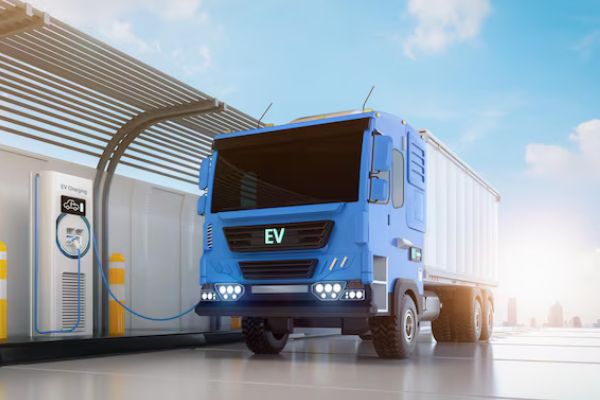
According to NITI Aayog, out of the 8.35 lakh trucks sold in India in 2024, only 6,220 were electric trucks and almost all of them below 3.5 tonnes. Long-distance electric trucking is still nascent due to the high initial cost of vehicles, need for charging, payload considerations and range issues.
That is why the development of commercial EVs should be seen from the perspective of total cost of ownership and not just purchase price.
Electric fleets may offer protection from fluctuations in the cost of fuels and reduce maintenance. When a vehicle is driving hundreds of kilometres each day, then the economics of operations do become relevant.
However, it cannot be as simple as swapping diesel trucks with electric ones. Everything from routing, charging times, payloads, battery management, financing and uptime have to be recalibrated.
Charging will be part of the supply chain
For logistics companies, charging infrastructure is no longer an auxiliary service. It is now becoming a component of the infrastructure itself.
A depot which sends out 100 vehicles every morning would need to factor in energy availability along with inventory, docks, and man-power considerations. Logistics company managers would have to know not only where their vehicles are but also when they need to charge, how much energy they need and whether charging can happen without disrupting delivery schedules.
The government’s PM E-DRIVE initiative recognizes this infrastructural challenge with ₹2,000 crore allocated towards building public charging stations for electric vehicles. The program has also made it clear that it includes charging infrastructure and e-trucks as its focus area.
This provides a new opportunity: that of energy-efficient logistics. Charging systems, fleet management software, route optimization and logistics management software can come together to plan the most efficient transport of goods and energy.
From Vehicles to Intelligent Logistics
Indeed, the true revolution will not result from the vehicle alone.
The electric truck and three-wheeler can be another source of operational transparency altogether. Battery health, route optimization, charging behaviour, vehicle utilization, and energy consumption could form the same digital fabric. With time, that could help fleet managers transition from reactive vehicle maintenance and fuel management into predictive and data-driven operations.
That makes the commercial EV more than a greener truck or three-wheeler. That can turn it into a logistics asset in its own right.
That’s especially important as the logistics infrastructure in India gets distributed. Fast commerce, e-commerce delivery, organized retailing, and hyperlocal deliveries are all leading to the need for faster and more frequent movement of goods.
The future of transport is electric, but it won’t happen instantly
The change won’t be even across sectors. The electric three-wheelers have already shown how quickly adoption can happen when economics work, vehicles are available and applications fit. More advances will be needed in battery technologies, charging infrastructures, financing and fleet management for heavy trucks.
Policymaking will continue to be a major enabler. The extension of PM E-DRIVE to include e-trucks and e-buses is a case in point and shows that the government is aware that commercial electrification needs a longer horizon.
But ultimately, the shift towards EVs will be made by logistics players based on economics.
The key question will always be very straightforward – Can an electric vehicle carry more cargo, more efficiently, at a competitive total cost of ownership?
The moment the answer becomes increasingly ‘yes’, India’s commercial EV revolution won’t be just an environmental issue. It will be a supply chain issue, a productivity issue, and a competitiveness issue.
The next big revolution in Indian logistics might not be about speed anymore.
It may well be about efficiency and intelligence powered by electricity.