

Market Summary
According to Research intelo, the global Battery Electric Vehicle (BEV) market size reached USD 227.6 billion in 2024, reflecting a robust demand surge as the world pivots toward sustainable mobility. The market is projected to expand at a CAGR of 17.8% from 2025 to 2033, reaching an estimated USD 765.2 billion by 2033. This remarkable growth is driven by a confluence of factors, including stringent emission regulations, technological advancements in battery technology, and increased investments in charging infrastructure worldwide.
What Is the Battery Electric Vehicle Market?
The Battery Electric Vehicle (BEV) Market represents the global ecosystem surrounding vehicles powered entirely by electricity stored in rechargeable batteries. Unlike conventional vehicles that depend on gasoline or diesel engines, BEVs use electric motors and battery packs to generate propulsion. The market includes passenger cars, commercial vehicles, buses, trucks, two-wheelers, charging infrastructure, battery technologies, power electronics, software, and associated services.
What makes BEVs particularly important is not simply the replacement of an internal combustion engine with an electric motor. The transition represents a broader transformation in how vehicles are designed, manufactured, powered, maintained, connected, and integrated with energy systems.
Why Is the Battery Electric Vehicle Market Growing?
The global BEV market is expanding because several major forces are moving in the same direction. Governments are tightening vehicle-emission regulations, automakers are investing heavily in electrification, battery technology is improving, charging networks are expanding, and consumers are becoming increasingly familiar with electric mobility.
Another important factor is the changing economics of vehicle ownership. Electric motors contain fewer mechanically complex moving components than traditional powertrains. This can reduce certain maintenance requirements and create opportunities for lower operating costs, although the total ownership experience varies significantly by vehicle, electricity prices, financing costs, battery size, and charging availability.
The market is therefore being shaped by both environmental priorities and commercial realities.
How Does a Battery Electric Vehicle Work?
A battery electric vehicle stores electrical energy in a high-voltage battery pack. When the driver accelerates, the battery sends electricity through power-electronic components to the electric motor. The motor converts electrical energy into mechanical motion, which turns the wheels.
During braking, many BEVs can recover a portion of the vehicle’s kinetic energy through regenerative braking. Instead of allowing all braking energy to dissipate as heat, the motor operates in a generator-like mode and sends some energy back into the battery.
This relatively direct energy pathway is one reason electric drivetrains can achieve high efficiency compared with conventional combustion powertrains.
What Are the Major Components of a BEV?
A modern BEV is essentially a sophisticated combination of electrical, mechanical, software, and thermal-management technologies.
Battery Pack
The battery pack is one of the most valuable components of an electric vehicle. It determines much of the vehicle’s driving range, weight, charging characteristics, and cost. Lithium-ion chemistry currently dominates many BEV applications, while lithium iron phosphate and other chemistries are gaining attention for applications where cost, durability, and safety characteristics are particularly important.
Electric Motor
Electric motors provide propulsion with rapid torque delivery. Depending on the vehicle design, manufacturers may use different motor architectures and configurations to balance efficiency, performance, cost, and packaging requirements.
Inverter and Power Electronics
The inverter converts electrical power between the battery and motor in a controlled manner. Along with onboard chargers, DC-DC converters, and other power-electronic systems, it plays a critical role in vehicle efficiency and performance.
Battery Management System
The battery management system monitors factors such as voltage, temperature, current, and state of charge. It helps maintain the battery within appropriate operating conditions and supports safety, performance, and battery-life management.
Thermal Management
Temperature strongly influences battery performance and durability. Advanced thermal-management systems regulate battery and powertrain temperatures, particularly during fast charging, high-load driving, and extreme weather.
Which Factors Are Influencing BEV Market Development?
The BEV market is influenced by a combination of technological, economic, regulatory, and consumer factors.
Battery Technology
Battery energy density, charging speed, cycle life, safety, and manufacturing cost remain central competitive variables. Improvements in these areas can directly influence vehicle range, affordability, charging convenience, and design flexibility.
Charging Infrastructure
A vehicle is only as convenient as the ecosystem supporting it. Home charging can provide an attractive ownership experience for consumers with suitable parking and electricity access, while public fast-charging infrastructure is increasingly important for long-distance travel and users without private charging facilities.
Government Policies
Governments around the world are using different approaches to encourage vehicle electrification. These include emissions standards, purchase incentives, tax measures, fleet regulations, charging investments, and industrial policies. Policy environments differ considerably between countries, making regional analysis essential.
Consumer Expectations
Consumers increasingly evaluate electric vehicles according to range, charging time, price, reliability, technology, comfort, performance, and resale expectations. The conversation has consequently moved beyond simply asking whether a vehicle is electric.
What Are the Major Opportunities in the Battery Electric Vehicle Market?
One of the most interesting aspects of the BEV market is that opportunities extend far beyond vehicle manufacturing.
Battery recycling and second-life applications can create additional value from batteries after their automotive service. Charging operators can build businesses around public charging networks, fleet charging, payment systems, and energy management. Software companies can develop connected-vehicle platforms, charging applications, predictive maintenance systems, and energy optimization solutions.
There are also opportunities in battery materials, semiconductor technologies, thermal management, lightweight materials, charging hardware, fleet electrification, and renewable-energy integration.
This means the BEV transition is creating an interconnected industrial ecosystem rather than a single automotive product category.
How Is the Commercial Vehicle Segment Changing?
Electrification is increasingly relevant to commercial transportation because fleet operators typically evaluate vehicles through measurable operating economics.
Urban buses, delivery vans, municipal vehicles, and other predictable-route applications can be attractive candidates for electrification because their daily routes and charging schedules can often be planned in advance. Fleet operators can potentially optimize charging around vehicle utilization and electricity pricing.
Heavy-duty trucking presents a more complicated challenge because long-distance operations can require large battery capacities, high-power charging, extensive infrastructure, and careful payload management. Nevertheless, advances in batteries, charging systems, vehicle efficiency, and fleet software are gradually expanding the potential applications of electric commercial vehicles.
What Challenges Could Limit Market Expansion?
Despite strong technological progress, the BEV industry faces important challenges.
Battery material supply chains remain strategically significant. Manufacturing capacity must continue expanding while companies work to improve resource efficiency and recycling. Charging infrastructure also needs to grow in locations where private home charging is difficult.
Upfront vehicle prices can remain a barrier for some consumers, even when operating economics are favorable over the vehicle’s lifetime. Charging time, apartment-based charging limitations, grid capacity, extreme-weather performance, and uncertainty around used-vehicle values can also influence purchasing decisions.
Another challenge is that the BEV market is not developing uniformly. A technology or business model that works well in a densely populated urban market may not be equally suitable for a rural region with long travel distances and limited charging infrastructure.
What Role Does Artificial Intelligence Play in Electric Vehicles?
Artificial intelligence is becoming an increasingly important layer of the electric mobility ecosystem.
AI can support battery-health prediction, energy-consumption optimization, predictive maintenance, intelligent route planning, charging recommendations, manufacturing quality control, and driver-assistance technologies.
For example, an intelligent vehicle system can analyze driving conditions, traffic, terrain, temperature, and battery state to estimate energy consumption more dynamically. Fleet operators can also use data analytics to determine when vehicles should charge, which routes are most energy-efficient, and when maintenance may be required.
The future BEV may therefore be defined as much by software intelligence as by its battery capacity.
How Is Charging Infrastructure Evolving?
Charging infrastructure is progressing from simple electricity delivery toward intelligent energy management.
Home chargers remain important for private vehicle owners, while workplace and destination charging can complement residential charging. High-power public chargers are particularly valuable for highway travel and commercial fleets.
The next stage involves smarter charging networks capable of coordinating vehicles, chargers, electricity prices, renewable generation, and grid conditions. Technologies associated with vehicle-to-grid and bidirectional charging could eventually allow compatible vehicles to interact more dynamically with electrical systems.
This creates an important conceptual shift: an electric vehicle can potentially become not only a transportation asset but also a flexible energy-storage resource.
What Is the Future of the Battery Electric Vehicle Market?
The future of the BEV market will likely be determined by convergence rather than by a single breakthrough.
Better batteries can improve range and reduce weight. Larger charging networks can reduce range anxiety. Smarter software can optimize energy consumption. Improved manufacturing can reduce costs. Recycling can strengthen material security. Renewable electricity can further improve the environmental profile of electric transportation.
The most successful companies are therefore likely to compete across multiple layers of the ecosystem rather than relying on vehicle hardware alone.
What Should Businesses Watch in the BEV Market?
Businesses should monitor more than vehicle sales. Battery chemistry, charging standards, semiconductor availability, raw-material sourcing, recycling capacity, charging utilization, electricity pricing, fleet electrification, software development, and regulatory changes can all influence competitive positioning.
Companies entering the ecosystem should also consider interoperability. The electric-mobility experience depends on multiple systems communicating effectively, including vehicles, chargers, payment platforms, utilities, navigation services, and energy-management software.
Battery Electric Vehicle Market: Key Knowledge Takeaways
According to Research intelo, The BEV market is fundamentally an energy, transportation, technology, and software convergence story. Its growth depends on more than producing electric cars.
The most important long-term developments include improving battery economics, expanding charging access, strengthening supply chains, developing intelligent energy systems, increasing recycling capabilities, and creating vehicles that satisfy consumers on price and convenience as well as sustainability.
Perhaps the most significant insight is that electrification changes the definition of an automobile. A conventional vehicle is primarily a mechanical transportation machine. A modern BEV increasingly resembles a connected computing platform on wheels, powered by a sophisticated energy-storage system.

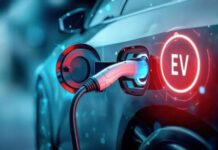

 market size reached USD 227.6 billion in 2024.)