
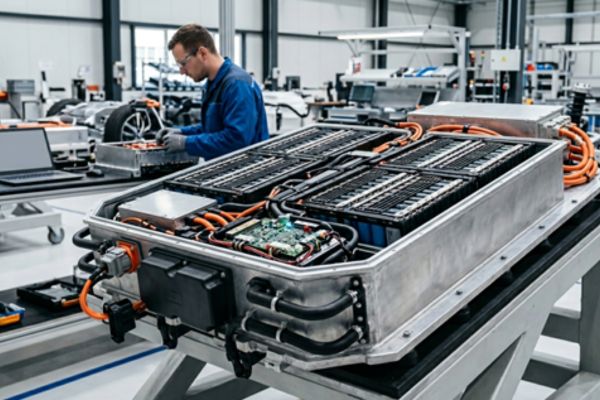
As per latest research by Growth Market Reports, the global market size for Battery Systems for Electric Vehicle in 2024 stands at USD 47.5 billion, with a robust compound annual growth rate (CAGR) of 18.7% projected during the forecast period from 2025 to 2033. This dynamic growth trajectory is primarily fueled by the accelerating transition towards sustainable transportation solutions, supportive government policies, and continuous advancements in battery technologies. By 2033, the market is forecasted to reach a substantial USD 241.9 billion, underscoring the transformative impact of electric vehicle (EV) adoption worldwide and the critical role of battery systems in this evolution.
The Battery Systems for Electric Vehicle (EV) Market has become one of the most influential sectors in the global transportation and energy landscape. As nations strive to reduce greenhouse gas emissions and accelerate the transition toward cleaner mobility solutions, electric vehicles have emerged as a critical component of sustainable transportation strategies. At the core of every electric vehicle lies a sophisticated battery system that determines vehicle performance, energy efficiency, safety, driving range, and overall reliability.
Over the past decade, rapid advancements in battery technology have transformed the electric vehicle industry from a niche market into a mainstream transportation segment. Battery systems have evolved significantly in terms of energy density, charging capabilities, thermal management, and lifespan. With increasing investments from automakers, battery manufacturers, governments, and technology companies, the market is experiencing unprecedented growth and innovation.
Market Evolution and Industry Transformation
The Battery Systems for Electric Vehicle Market has undergone remarkable transformation in recent years. Initially, high battery costs and limited energy density restricted the widespread adoption of electric vehicles. However, continuous research and development efforts have significantly improved battery performance while reducing manufacturing costs.
Battery prices have steadily declined due to advancements in production techniques, economies of scale, and increasing competition among manufacturers. As a result, electric vehicles have become more affordable and accessible to consumers worldwide.
Automotive manufacturers are now integrating advanced battery systems into a wide range of vehicle categories, including passenger cars, commercial trucks, buses, delivery vans, and two-wheelers. This expansion has created a robust ecosystem of battery suppliers, raw material providers, technology firms, and charging infrastructure developers.
The growing emphasis on electrification has also encouraged strategic partnerships between automakers and battery manufacturers to secure supply chains and accelerate innovation.
Market Dynamics and Growth Factors
The Battery Systems for Electric Vehicle Market is experiencing rapid transformation as technological innovation, changing consumer preferences, and global sustainability initiatives reshape the automotive industry. Battery systems have become a strategic component in the electrification journey, influencing vehicle performance, range, safety, and cost-effectiveness. As manufacturers strive to improve battery efficiency and reduce production costs, the market continues to attract significant investments from both public and private sectors.
A major factor contributing to market growth is the increasing emphasis on energy independence and reduced reliance on fossil fuels. Governments and businesses are investing heavily in clean transportation solutions to achieve long-term environmental goals. This shift is encouraging the development of advanced battery technologies capable of supporting large-scale electric vehicle deployment while meeting evolving consumer expectations.
The market is also benefiting from the growing collaboration between automotive manufacturers, battery producers, technology firms, and energy companies. Strategic partnerships are helping accelerate innovation, optimize supply chains, and expand production capacity. These collaborations are enabling companies to address challenges related to battery performance, raw material sourcing, and manufacturing efficiency.
Another important growth factor is the rising demand for high-performance electric vehicles across both passenger and commercial transportation segments. Consumers increasingly expect electric vehicles to deliver longer driving ranges, faster charging capabilities, and enhanced reliability. This demand is pushing battery manufacturers to develop more sophisticated energy storage solutions that can support next-generation mobility requirements.
Furthermore, digital technologies are playing an increasingly important role in battery system development. Advanced analytics, artificial intelligence, and predictive maintenance solutions are helping manufacturers improve battery monitoring, performance optimization, and lifecycle management. These innovations are enhancing battery reliability and creating additional value for vehicle owners.
The transition toward smart cities and sustainable urban transportation systems is also supporting market expansion. Municipal authorities are investing in electric buses, fleet electrification programs, and green mobility initiatives, creating sustained demand for efficient battery systems. As urban populations continue to grow, the need for cleaner and more energy-efficient transportation solutions is expected to further strengthen the market outlook.
In addition, growing investments in renewable energy projects are creating synergies between energy storage systems and electric vehicle batteries. The convergence of transportation electrification and clean energy infrastructure is opening new avenues for innovation and long-term market growth. As battery technologies continue to evolve, they are expected to play a central role in both mobility and energy transition strategies worldwide.
Key Drivers Fueling Market Growth
Rising Global Adoption of Electric Vehicles
One of the primary factors driving the Battery Systems for Electric Vehicle Market is the increasing adoption of electric vehicles across developed and emerging economies. Consumers are becoming more environmentally conscious and are seeking alternatives to traditional fuel-powered vehicles.
Governments worldwide are supporting EV adoption through tax incentives, subsidies, registration benefits, and investments in charging infrastructure. These initiatives are encouraging consumers and businesses to transition toward electric mobility solutions.
As EV sales continue to rise, demand for high-performance battery systems is expected to grow substantially.
Stringent Environmental Regulations
Environmental regulations aimed at reducing carbon emissions are significantly influencing market growth. Governments are implementing stricter fuel economy standards and emission reduction targets to combat climate change and improve air quality.
Many countries have announced plans to phase out internal combustion engine vehicles over the coming decades. These policies are accelerating investments in electric vehicle production and creating sustained demand for advanced battery systems.
Expansion of Charging Infrastructure
The rapid development of charging networks is making electric vehicles more practical for everyday use. Public and private investments in fast-charging stations are helping address concerns related to range anxiety and charging accessibility.
Improved charging infrastructure enhances consumer confidence and supports broader EV adoption, ultimately driving demand for battery systems capable of supporting fast and efficient charging.
Challenges Impacting Market Development
Raw Material Supply Constraints
The production of EV batteries depends heavily on critical minerals such as lithium, cobalt, nickel, and graphite. Increasing demand for these materials has raised concerns regarding supply security and price volatility.
Mining operations face environmental, geopolitical, and regulatory challenges that can affect the availability of essential battery materials. Addressing these issues is vital for maintaining stable production and supporting market expansion.
High Manufacturing Costs
Despite significant cost reductions over the years, battery production remains capital intensive. Establishing battery manufacturing facilities requires substantial investments in equipment, technology, and workforce development.
Manufacturers must continue improving production efficiency and scaling operations to further reduce costs and enhance profitability.
Safety and Performance Concerns
Battery safety remains an important consideration for both manufacturers and consumers. Issues such as thermal runaway, overheating, and degradation can impact battery performance and reliability.
Continuous innovation in battery design, thermal management systems, and safety monitoring technologies is necessary to address these concerns and maintain consumer confidence.
Thermal Management Issues
Battery performance and safety depend heavily on temperature control. Developing advanced thermal management systems is essential for maintaining reliability and preventing overheating.
Charging Limitations
Despite significant progress, charging times remain longer than traditional vehicle refueling. Continued innovation is necessary to improve charging speed and convenience.
Technological Advancements Shaping the Market
Improvements in Lithium-Ion Technology
Lithium-ion batteries currently dominate the EV battery market due to their high energy density, long cycle life, and relatively low maintenance requirements.
Manufacturers continue to improve lithium-ion chemistry by increasing energy storage capacity, reducing charging times, and enhancing safety characteristics. These improvements are enabling electric vehicles to travel longer distances on a single charge while maintaining reliability and efficiency.
Development of Solid-State Batteries
Solid-state batteries represent one of the most promising innovations in the electric vehicle industry. Unlike conventional batteries that use liquid electrolytes, solid-state batteries utilize solid materials to conduct ions.
This technology offers several advantages, including higher energy density, improved safety, faster charging, and longer operational life. While commercial deployment remains in development, solid-state batteries have the potential to revolutionize EV performance and accelerate market growth.
Advanced Battery Management Systems
Modern battery management systems are becoming increasingly intelligent through the integration of artificial intelligence, machine learning, and predictive analytics.
These technologies enable real-time monitoring of battery conditions, optimize charging cycles, and predict maintenance requirements. Advanced BMS solutions improve battery efficiency, extend lifespan, and enhance vehicle safety, making them an essential component of next-generation EV battery systems.
Opportunities in the Battery Systems Market
Expansion of Battery Recycling Infrastructure
The growing volume of electric vehicle batteries reaching the end of their lifecycle presents a significant opportunity for recycling companies and battery manufacturers. Recovering valuable materials such as lithium, cobalt, nickel, and manganese can reduce dependence on newly mined resources and lower production costs.
As governments introduce stricter sustainability regulations, investments in advanced battery recycling technologies are expected to increase. The development of a circular battery economy can enhance resource efficiency while creating new revenue streams for industry participants.
Growth of Second-Life Battery Applications
Electric vehicle batteries often retain a substantial portion of their energy storage capacity even after they are no longer suitable for automotive use. These batteries can be repurposed for stationary energy storage systems, renewable energy integration projects, and backup power applications.
The expanding adoption of renewable energy sources is creating demand for cost-effective energy storage solutions. Second-life battery applications provide an environmentally sustainable opportunity to extend battery lifespan and maximize asset value.
Commercialization of Solid-State Batteries
Solid-state battery technology represents one of the most promising growth opportunities in the Battery Systems for Electric Vehicle Market. These batteries offer higher energy density, improved safety, faster charging capabilities, and longer operational life compared to traditional lithium-ion batteries.
As research and development efforts continue to advance, the commercialization of solid-state batteries could significantly improve EV performance and accelerate consumer adoption. Manufacturers that successfully scale this technology are expected to gain a strong competitive advantage.
Expansion into Emerging Electric Vehicle Markets
Emerging economies across Asia, Latin America, the Middle East, and Africa are increasingly investing in electric mobility solutions. Rising urbanization, supportive government initiatives, and growing environmental awareness are driving EV adoption in these regions.
Battery manufacturers have an opportunity to establish production facilities, develop localized supply chains, and introduce affordable battery solutions tailored to regional requirements. This expansion can unlock substantial long-term growth potential.
Development of Fast-Charging Technologies
The demand for faster and more convenient charging experiences is encouraging innovation in battery systems and charging infrastructure. Advanced fast-charging technologies can significantly reduce charging times, making electric vehicles more attractive to consumers.
Battery manufacturers that develop systems capable of supporting ultra-fast charging without compromising battery health can capitalize on growing market demand. These advancements are expected to enhance user convenience and support broader EV adoption.
Vehicle-to-Grid (V2G) Integration
Vehicle-to-grid technology enables electric vehicle batteries to store electricity and return excess energy to power grids when needed. This capability creates opportunities for EV owners to generate additional income while supporting grid stability and renewable energy integration.
As smart grid infrastructure expands globally, V2G-compatible battery systems are expected to become increasingly valuable. This emerging application can transform EV batteries from transportation assets into active participants in energy management systems.
Alternative Battery Chemistries and Material Innovation
Research into sodium-ion, lithium-sulfur, and other next-generation battery chemistries offers significant opportunities for reducing costs and addressing raw material supply concerns. These alternatives can help diversify battery technology options while improving sustainability.
Innovations in battery materials and cell design may also lead to enhanced energy density, improved safety, and lower manufacturing expenses. Companies investing in alternative chemistries are well-positioned to benefit from future market shifts and evolving consumer demands.
Emerging Trends in the Battery Systems Market
Shift Toward High-Energy-Density Batteries
Automakers are focusing on batteries that offer greater energy density without significantly increasing size or weight. High-energy-density batteries enable longer driving ranges and improved vehicle performance, addressing one of the key concerns among EV buyers.
The pursuit of enhanced energy density continues to drive innovation across battery materials, cell designs, and manufacturing processes.
Growing Focus on Battery Recycling
As the number of electric vehicles increases, battery recycling is becoming a critical industry priority. Recycling initiatives aim to recover valuable materials such as lithium, cobalt, nickel, and manganese from used batteries.
These efforts help reduce environmental impact, minimize raw material dependency, and create a more sustainable battery supply chain. Companies are investing heavily in recycling technologies to support the long-term growth of the EV ecosystem.
Second-Life Battery Applications
Used EV batteries often retain substantial energy storage capacity even after they are no longer suitable for vehicle applications. These batteries can be repurposed for stationary energy storage systems, renewable energy integration, and backup power solutions.
The development of second-life battery markets is creating additional value streams while supporting circular economy initiatives.
Competitive Landscape
- Panasonic Corporation
- LG Energy Solution
- Contemporary Amperex Technology Co. Limited (CATL)
- Samsung SDI Co. Ltd.
- BYD Company Limited
- Toshiba Corporation
- A123 Systems LLC
- GS Yuasa Corporation
- SK Innovation Co. Ltd.
- Hitachi Chemical Co. Ltd.
- Johnson Controls International plc
- Envision AESC Group Ltd.
- Saft Groupe S.A.
- Farasis Energy Inc.
- Northvolt AB
- EVE Energy Co. Ltd.
Future Outlook
The future of the Battery Systems for Electric Vehicle Market appears exceptionally promising. Continued advancements in battery chemistry, manufacturing technologies, and energy management systems are expected to drive significant improvements in performance and affordability.
The growing adoption of renewable energy sources, increasing investments in charging infrastructure, and supportive government policies will further accelerate market expansion. Emerging technologies such as solid-state batteries, silicon anodes, and advanced recycling solutions are likely to reshape the competitive landscape and unlock new growth opportunities.
As electric vehicles become a mainstream transportation choice, battery systems will remain the foundation of the global e-mobility revolution. Their continued evolution will play a decisive role in shaping the future of sustainable transportation, energy storage, and environmental stewardship.