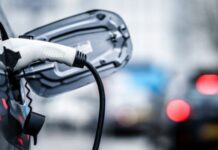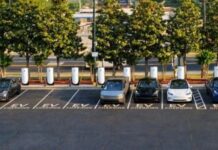

In a significant move to boost electric mobility across the state, the Bangalore Electricity Supply Company Limited (BESCOM) has announced plans to establish 40 electric-vehicle charging stations along national and state highways in Karnataka. This initiative is part of the state government’s broader push to become a leader in sustainable transportation and to reduce range anxiety for EV users travelling inter-city.
According to BESCOM Managing Director N. Shivashankar, the charging stations will be placed at key toll plazas and strategic junctions, including on the Bengaluru–Belagavi stretch of National Highway 48 and other major routes. The plan envisages setting up 20 stations across 10 national highways (pending approval from the National Highways Authority of India) and an additional 30 stations on state highways (awaiting clearance from the Karnataka Road Development Corporation Limited).
Karnataka already ranks among India’s top states in EV-charging infrastructure, boasting over 5,960 operational public charging stations. The upcoming highway-charger network is expected to strengthen inter-city connectivity for EVs, enabling smoother travel between cities like Bengaluru, Belagavi, Mysuru, Hubballi and Mangaluru. A BESCOM spokesperson stated: “EV adoption is no longer confined to cities… By enabling highway charging infrastructure, we are ensuring that electric mobility becomes practical for all—fleet operators, tourists, and long-distance travellers alike.”
This initiative aligns with the central government’s PM E‑Drive scheme, aimed at promoting the widespread installation of EV chargers in urban centers and along highways nationwide. Karnataka’s proactive move thus supports the Centre’s goal of reaching 30 per cent EV penetration by 2030. In tandem, BESCOM is also expanding its real-time app platform (the EV Mitra app) to help users locate nearby charging stations, monitor availability and plan longer EV trips. Solar-powered charging hubs are also under development, including one near the Kempegowda International Airport in Bengaluru, to integrate renewable-energy usage into the EV-charging network.
Industry analysts say that Karnataka’s consistent efforts—from policy reforms to private-sector partnerships—have positioned it as a model for other states in India. They believe that once operational, these 40 highway chargers will mark a major turning point in India’s clean-mobility transformation by reducing range anxiety and supporting the growth of electric taxis, logistics fleets and inter-city travel.
In conclusion, the rollout of these highway-charging stations by BESCOM signals a green and practical road ahead for EV travel in Karnataka. For drivers and fleet operators alike, the enhanced infrastructure could turn what once was a limiting factor—long-distance charging—into a reliable enabler of sustainable mobility.