

The Indian electric vehicle (EV) market is undergoing a profound transformation, driven not only by government policy and infrastructure development but also by a significant shift in consumer behavior. Traditional automotive purchasing decisions, historically guided by factors such as purchase price, fuel efficiency, and brand loyalty, are increasingly being influenced by a more nuanced set of parameters in the EV domain. Industry experts have observed that range capability, embedded technological features, and status signaling are emerging as critical determinants in the adoption of EVs across India’s diverse consumer segments. Understanding these factors is essential for OEMs, mobility solution providers, and policymakers seeking to accelerate EV penetration in the country.
Range Anxiety and the Evolution of Battery Technology:
Range has historically been one of the most cited concerns among Indian consumers when evaluating EVs. Unlike traditional internal combustion engine (ICE) vehicles, which benefit from an extensive fuel distribution network, EV buyers face uncertainties regarding battery endurance, charging infrastructure, and energy density. Early-generation EVs in India typically offered ranges below 200 kilometres per full charge, limiting their appeal to urban-centric short-trip applications. However, the landscape is rapidly evolving due to improvements in lithium-ion battery chemistry, energy density optimization, and battery management systems (BMS).
Modern EVs now feature modular battery packs with capacities exceeding 50 kWh, capable of delivering ranges upward of 400 kilometres under standardized driving conditions. Advanced BMS algorithms ensure consistent cell balancing, temperature regulation, and state-of-charge optimization, thereby mitigating performance degradation over lifecycle usage. Furthermore, the integration of high-voltage DC fast-charging interfaces (up to 350 kW) has reduced charging times to under 30 minutes for 80% battery replenishment, directly addressing range anxiety concerns. Market research indicates that consumers are increasingly prioritizing vehicles with higher usable range and fast-charging compatibility, even when this entails a higher upfront cost, reflecting a shift toward long-term operational efficiency considerations.
The impact of range on consumer preference is further amplified by data-driven route optimization and predictive energy consumption features embedded within next-generation EV platforms. These software-driven functionalities allow drivers to estimate energy requirements for complex multi-stop trips, assess regenerative braking contributions, and select energy-efficient driving modes. As a result, range is no longer a static metric but a dynamic parameter that interacts with usage patterns, route profiles, and vehicle intelligence, elevating it as a critical determinant in purchase decision-making.
Technological Features and Smart Mobility Integration:
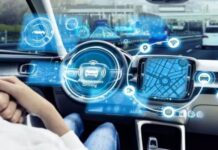
Alongside range, technological sophistication has become a primary factor influencing EV adoption in India. Consumers are increasingly evaluating vehicles based on the suite of connected, automated, and user-centric features integrated into EV platforms. Advanced driver assistance systems (ADAS), over-the-air (OTA) software update capabilities, predictive maintenance alerts, and telematics-enabled fleet management solutions are now key differentiators.
For instance, vehicles equipped with AI-powered energy management systems can optimize battery discharge rates, modulate regenerative braking, and provide route-specific range forecasts, enhancing both convenience and efficiency. Smart infotainment integration, voice-enabled interfaces, and app-based vehicle monitoring are also increasingly expected, particularly among urban professionals and tech-savvy buyers. In the context of commercial fleet operations, features such as vehicle-to-grid (V2G) compatibility, telematics-driven utilization analytics, and predictive battery health monitoring are becoming critical for operational decision-making. OEMs that fail to embed these intelligent features risk losing market share to competitors offering a holistic ecosystem rather than a standalone mobility solution.
The proliferation of these capabilities has led to a segmentation of consumer preference, where some buyers prioritize autonomous-driving readiness and advanced human-machine interfaces, while others focus on energy efficiency, connectivity, and fleet integration. This divergence emphasizes the need for modular EV platforms that allow customization of features based on target demographics, usage patterns, and willingness-to-pay thresholds.
Status Signaling and Lifestyle Perception:
Beyond functional attributes, EV adoption in India is increasingly influenced by aspirational and status-driven considerations. Ownership of a premium EV conveys environmental consciousness, technological literacy, and socio-economic positioning, particularly in urban and semi-urban centers. High-end EV models such as Tesla, Mercedes-Benz EQ series, and MG ZS EV are not merely evaluated for performance metrics but for brand prestige, design sophistication, and the symbolic value of pioneering mobility adoption.
Research indicates that the aspirational factor has tangible implications for market strategy. Manufacturers are now leveraging exclusive design cues, limited-edition variants, and curated digital experiences to enhance perceived status and desirability. Marketing strategies have shifted from highlighting fuel savings alone to emphasizing lifestyle alignment, connectivity, and digital integration. Notably, status signalling interacts with feature preference; consumers in higher income brackets are more likely to prioritize advanced technology features alongside brand prestige, whereas mid-tier consumers may weigh range and cost-effectiveness more heavily, yet still seek aspirational elements in vehicle design and branding.
Furthermore, peer influence and social proof are accelerating this phenomenon. Social media exposure, EV-centric communities, and experiential events amplify the visibility of premium and high-performance EVs, indirectly influencing adoption patterns even among price-sensitive buyers. OEMs targeting mass-market penetration are increasingly segmenting offerings to balance affordability with perceived status, integrating selective luxury cues and connectivity features in mid-range models to broaden appeal.
Conclusion:
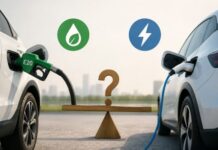
The Indian EV market is no longer defined solely by affordability or government incentives. Range capability, embedded technological sophistication, and status signalling are now primary drivers of consumer preference, reflecting a maturation of both market understanding and buyer expectations. Battery technology advancements and smart vehicle integration address functional concerns, while lifestyle-oriented branding and feature-rich platforms cater to aspirational motivations. For OEMs, fleet operators, and policy planners, the key to accelerating adoption lies in a multidimensional strategy that harmonizes performance, intelligence, and consumer perception.
As India moves toward a projected EV penetration rate exceeding 30% in urban passenger vehicles by 2030, understanding these preference shifts will be critical for designing vehicles, infrastructure, and marketing approaches that align with nuanced consumer expectations. In essence, EV adoption in India is no longer a binary choice between fossil fuel and electric propulsion – it is a complex interplay of efficiency, technology, and societal positioning shaping the country’s mobility future.
 market is undergoing a profound transformation, driven not only by government policy and infrastructure development.)