Delhi will need to significantly expand renewable energy storage and distributed clean energy systems to meet its rapidly increasing electricity demand while maintaining a reliable and low-carbon power supply, according to a new joint study by the Institute for Energy Economics and Financial Analysis (IEEFA) and Ember. The report highlights that battery energy storage, rooftop solar, and demand-side flexibility will play a crucial role in the capital’s energy transition.
The study notes that Delhi faces unique challenges because it has limited land available for large-scale renewable energy projects and depends heavily on electricity imported from neighbouring states. Rising demand driven by air conditioning, commercial activities, and the growing adoption of electric vehicles is expected to place additional pressure on the city’s power system, making energy storage increasingly important for balancing supply and demand.
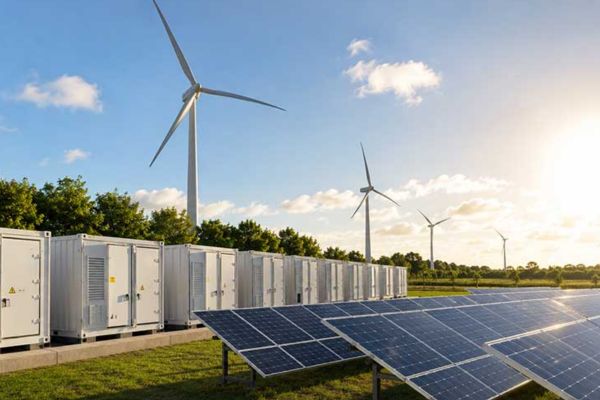
Researchers found that Delhi has successfully managed record peak electricity demand in recent years, but the emergence of higher night-time electricity peaks requires greater investment in battery energy storage systems. These systems can store excess renewable energy generated during the day and supply it during evening and night hours, improving grid reliability while reducing dependence on fossil fuel-based power generation.
The report also highlights rooftop solar as one of Delhi’s biggest opportunities for clean energy expansion. As of June 2026, the city had installed around 446 MW of rooftop solar capacity, which remains below the 750 MW target outlined in the Delhi Solar Energy Policy 2023. Accelerating rooftop solar deployment, along with wider use of smart meters and time-of-day electricity tariffs, could encourage consumers to shift power consumption to periods when renewable energy generation is highest.
According to the study, Delhi’s clean energy transition will differ from many other Indian states. Instead of relying on large utility-scale renewable projects within the city, the capital should focus on improving clean power procurement, expanding rooftop solar and battery storage, strengthening energy efficiency measures, and increasing demand-side flexibility. These steps would help optimise available resources while supporting long-term energy security and decarbonisation goals.
The IEEFA-Ember study concludes that combining renewable energy storage with smarter electricity management will enable Delhi to meet future electricity demand in a sustainable manner. The researchers believe that investments in battery storage, digital grid technologies, and distributed renewable energy will be essential for ensuring reliable electricity supply, reducing emissions, and supporting the city’s transition towards a cleaner and more resilient power system.