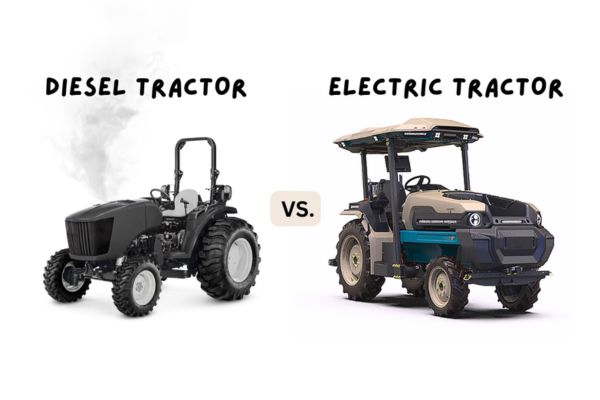
For decades, diesel tractors have been the backbone of Indian agriculture, powering everything from land preparation and sowing to transportation and harvesting. However, as fuel prices continue to fluctuate, labour costs rise, and sustainability becomes a growing priority, electric tractors are beginning to emerge as a viable alternative. While diesel tractors remain the dominant choice, the question many farmers are asking today is no longer whether electric tractors can work but whether they offer a better return on investment (ROI).
The answer depends on more than just the purchase price. Farmers today are evaluating the total cost of ownership, including fuel, maintenance, operating efficiency, and long-term savings. In many cases, electric tractors are proving that lower operating costs can outweigh higher upfront investments over the equipment’s lifetime.
Looking Beyond the Initial Cost
A diesel tractor often appears to be the more affordable option when considering the initial purchase alone. However, operating expenses quickly add up. Diesel prices remain volatile, and fuel accounts for a significant share of annual farm machinery costs. Routine servicing including engine oil changes, filter replacements, clutch repairs, and transmission maintenance further increases lifetime ownership expenses.
Electric tractors, by contrast, operate with far fewer moving parts. Without a conventional engine, gearbox, or fuel system, maintenance requirements are considerably lower. Electricity also costs significantly less than diesel on a per-hour operating basis, allowing farmers to reduce recurring expenses year after year.
For farmers using tractors regularly for tilling, spraying, hauling, and inter-cultivation, these savings can become substantial over the life of the machine.
Lower Operating Costs Improve Profitability
Fuel is one of the largest variable expenses in mechanised farming. Rising diesel prices directly affect cultivation costs, reducing profit margins for farmers already dealing with unpredictable weather and fluctuating market prices.
Electric tractors offer a more predictable cost structure. Charging batteries is generally much cheaper than refuelling with diesel, particularly when electricity is sourced from on-farm solar installations. Farmers adopting renewable energy can further reduce operating costs while improving energy independence.
Lower maintenance requirements also translate into fewer service visits, reduced downtime, and higher machine availability during peak farming seasons when every working hour matters.
Ideal for Small and Medium Farms
India’s agricultural landscape is dominated by small and marginal farmers, many of whom cultivate less than two hectares of land. Their daily tractor usage often involves shorter operating hours and lighter applications such as orchard management, vegetable cultivation, dairy operations, and transportation within villages.
Electric tractors are particularly well suited for these use cases. Their compact size, instant torque, quieter operation, and lower running costs make them an attractive option for small and medium farms where heavy-duty continuous operations are less common.
As battery technology continues to improve, electric tractors are becoming increasingly capable of handling a wider range of agricultural activities without compromising performance.
Sustainability Is Becoming an Economic Advantage
Environmental sustainability is no longer viewed solely as a social responsibility. Increasingly, it is becoming an economic consideration for farmers and agribusinesses alike.
Diesel-powered equipment contributes to greenhouse gas emissions and local air pollution, while electric tractors produce zero tailpipe emissions during operation. As governments continue promoting clean-energy adoption through incentives and supportive policies, early adopters may benefit from subsidies, lower financing costs, and preferential support programmes.
In addition, food processors, exporters, and organised retailers are placing greater emphasis on sustainable supply chains. Mechanisation powered by clean energy could eventually become a competitive advantage for producers serving environmentally conscious markets.
Challenges That Still Need Attention
Despite their promise, electric tractors are not yet a universal replacement for diesel models. Battery capacity remains a consideration for farms requiring long operating hours or heavy fieldwork without opportunities for recharging. Charging infrastructure is also still developing across many rural regions.
The higher upfront purchase price may discourage some farmers, particularly those with limited access to institutional finance. Wider adoption will depend on continued improvements in battery technology, faster charging solutions, stronger rural infrastructure, and greater awareness among farmers.
However, these barriers are gradually diminishing as manufacturers introduce new models designed specifically for Indian farming conditions.
A Long-Term Investment Perspective
When evaluating ROI, farmers should consider the tractor’s total lifetime cost rather than focusing only on the purchase price. Fuel savings, reduced maintenance, improved operational efficiency, and potential government incentives can significantly improve long-term returns from electric tractors.
Diesel tractors will continue to play a vital role, especially in large-scale and high-power farming applications. Yet for many small and medium farmers, electric tractors are increasingly presenting a compelling financial case.
The future of farm mechanisation is unlikely to be an overnight shift from diesel to electric. Instead, it will be a gradual transition driven by economics, technology, and sustainability. For farmers seeking to lower operating costs while preparing for a cleaner and more efficient future, electric tractors are no longer just an emerging innovation—they are becoming a practical business decision with the potential to deliver stronger returns over time.