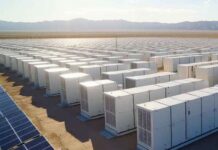

ENGIE has strengthened its position in Poland’s growing battery energy storage market with the acquisition of a 438 MW / 876 MWh battery storage project in the Lodz region. The acquisition is part of the company’s broader expansion of battery energy storage systems (BESS) across Europe as energy storage becomes increasingly important for power-system flexibility and renewable energy integration.
The latest acquisition adds to ENGIE’s newly established battery storage portfolio in Poland. According to the company, ENGIE has built a 758 MW / 2,156 MWh portfolio in the country over the past two months, marking a significant entry into Poland’s battery storage segment. The company is developing this portfolio through selected investments in large-scale storage projects.
The 438 MW / 876 MWh project is scheduled for commissioning between 2028 and 2029. ENGIE said the projects in its Polish portfolio benefit from direct connections to substations, which can help optimise energy flows and reduce congestion on the regional electricity network.
The Lodz project follows ENGIE’s acquisition of the 250 MW / 1,000 MWh Tursko Wielkie battery storage project in Osiek, Staszów County. The company has also advanced an adjacent 70 MW / 280 MWh development project. Together, the two sites can be integrated into a single 320 MW / 1,280 MWh storage facility.
ENGIE’s expansion in Poland comes as battery storage plays a growing role in balancing electricity systems with increasing renewable generation. Battery energy storage systems can store electricity when supply is available and release it when demand rises, helping improve grid flexibility, stability and the integration of renewable power.
The latest Polish acquisition forms part of ENGIE’s wider strategy to expand its global energy storage footprint. The company said its global storage portfolio had reached 10.7 GW in operation and under construction, covering battery storage and pumped-storage hydropower. ENGIE is also targeting 95 GW of installed renewable and storage capacity by 2030, highlighting the strategic importance of energy storage in its growth plans.