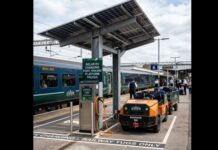
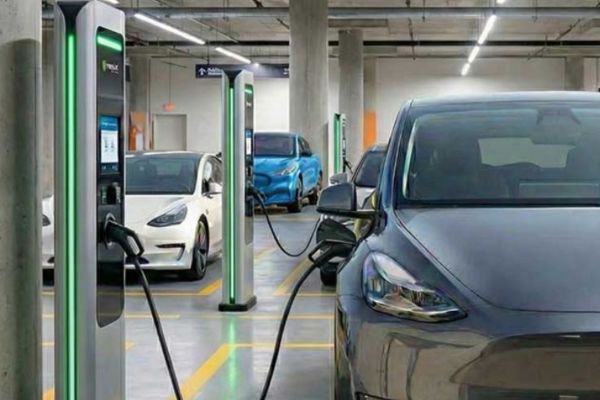
In a major development for India’s electric vehicle (EV) ecosystem, Esyasoft e-Mobility and Park+ have announced a strategic partnership to install 10,000 EV charging stations across the country over the next three years, backed by a ₹100 crore investment aimed at strengthening clean mobility infrastructure.
The collaboration brings together Esyasoft e-Mobility’s advanced charging technology with Park+’s extensive network footprint. Park+ operates across thousands of residential societies, corporate campuses, malls, and mobility installations, while Esyasoft’s platform includes AC and DC chargers, real-time charger monitoring, seamless cashless payments, automated diagnostics, predictive maintenance, smart energy management, and carbon savings analytics.
This initiative comes at a crucial time when India’s EV market is rapidly expanding, but charging infrastructure growth is struggling to keep pace. From just around 1,800 charging stations in early 2022 to more than 29,000 by 2025, the network has grown significantly—yet analysts project that millions more chargers will be needed to support an expected surge in EV adoption by 2030.
Under the deployment plan, charging stations will be rolled out initially in key metropolitan areas, starting with Bengaluru, followed by Delhi NCR, Mumbai, Pune, Hyderabad, Chennai, and Kolkata, before expanding further into other urban and peri-urban regions. The aim is to integrate charging points into everyday locations where people live, work, and shop, making EV charging more accessible and convenient for users nationwide.
A K Sawan, CEO of Esyasoft e-Mobility, stressed that the partnership’s combined strengths offer an opportunity to build one of India’s most reliable and future-ready charging networks embedded within daily life. Meanwhile, Amit Lakhotia, CEO of Park+, highlighted that dependable charging infrastructure is essential as more Indians transition to electric mobility.
The two companies believe this initiative will play a key role in accelerating the country’s shift to cleaner transportation by addressing current infrastructure bottlenecks, supporting EV adoption, and contributing to more sustainable urban ecosystems across India.