
Introduction to the Automotive ECU Market
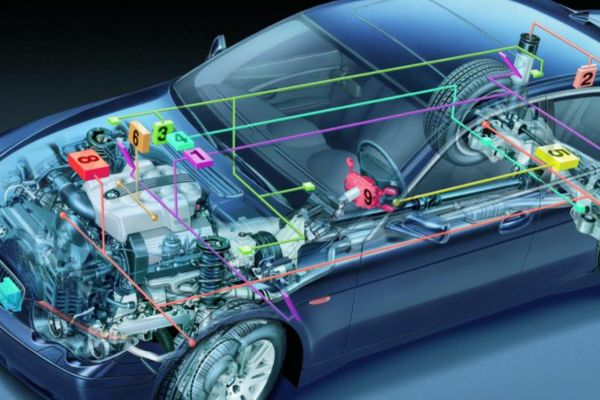
The automotive electronic control unit (ECU) market is rapidly transforming into a cornerstone of the modern automotive industry. With vehicles becoming more intelligent, connected, and automated, ECUs have emerged as the brain behind numerous automotive functions—from controlling the powertrain and braking systems to managing safety features, infotainment, and ADAS (Advanced Driver Assistance Systems).
In 2025, the global automotive ECU market is projected at USD 118.23 billion, with expectations to reach USD 198.90 billion by 2034, growing at a CAGR of 5.95%. This expansion reflects the strong demand for enhanced vehicle safety, electrification, and intelligent mobility solutions.
Market Overview and Growth Forecast (2025–2034)
Market Size Projections and CAGR Insights
The decade between 2025 and 2034 will mark a period of robust ECU demand. The push for ADAS integration in passenger cars, along with the global shift toward electric mobility, has set the stage for exponential ECU adoption.
- 2025 Market Size: USD 118.23 billion
- 2034 Market Size: USD 198.90 billion
- CAGR: 5.95%
These numbers highlight both organic demand growth and the influence of government EV initiatives, particularly in Asia Pacific, Europe, and North America.
Key Market Drivers and Opportunities
- Rising EV Adoption: EVs require advanced ECUs for battery management, propulsion control, and system integration.
- Safety Regulations: Governments are mandating safety systems, fueling ECU integration in vehicles.
- Digital Transformation: Development of virtual ECUs (vECUs) for simulation and testing.
- Consumer Demand: Luxury cars and connected vehicles require more advanced ECUs.
Major Challenges in the ECU Industry
- High Development Costs due to complexity of design and testing.
- Cybersecurity Threats as vehicles become more connected.
- Supply Chain Disruptions impacting semiconductor and chip availability.
Market Segmentation Insights
By Capacity Type: 16-bit, 32-bit, 64-bit and Others
Why 32-bit ECUs Led the Market in 2025
The 32-bit segment dominated due to its balance of speed, data processing, and affordability. These ECUs power critical applications like ABS, airbags, and transmission systems.
Growing Significance of 64-bit ECUs
The 64-bit ECUs are projected to rise at the highest CAGR, driven by autonomous driving, EVs, and high-performance systems. They enable real-time data handling, critical for ADAS and self-driving technologies.
By Vehicle Type: Passenger Cars vs Commercial Vehicles
Passenger Cars Dominance Explained
Passenger cars accounted for the largest market share in 2025. Growth was driven by:
- Increasing luxury car demand
- ADAS integration in mid-range vehicles
- Rapid sales in China, the U.S., and Germany
Commercial Vehicles and Future Growth
Commercial vehicles are expected to see the fastest CAGR, supported by:
- ADAS-based ECUs in buses and trucks
- Growth in fleet electrification and logistics automation
By Application: Powertrain, ADAS & Safety, Infotainment and More
Powertrain Segment Leadership
The powertrain ECU segment led in 2025, as OEMs focused on improving fuel efficiency, emissions control, and EV performance.
ADAS & Safety Systems on the Rise
The ADAS ECU segment is expected to grow significantly, driven by regulatory mandates for lane assist, collision warning, and autonomous emergency braking.
By Propulsion Type: ICE vs Battery-Powered Propulsion
ICE Segment Leading the Market
Internal combustion engine (ICE) vehicles still dominate, with ECUs controlling combustion, emissions, and power delivery.
Growth of Battery-Powered Propulsion ECUs
Battery-powered ECUs are expanding rapidly due to global EV adoption, government subsidies, and charging infrastructure development.
Regional Market Analysis
Asia Pacific – Market Leader
Asia Pacific dominated the ECU market in 2025, led by China, Japan, India, and South Korea.
Key growth factors:
- EV infrastructure investments
- Strong presence of global OEMs like Denso, Hitachi, and Panasonic
- Increasing vehicle production
North America – Emerging Opportunities
North America is projected to grow significantly due to:
- High EV adoption in the U.S. and Canada
- Investments in ECU production facilities
- Strong R&D ecosystem for autonomous driving technologies
Europe – Strong Automotive Base
Europe remains a critical region, fueled by:
- Presence of luxury carmakers (BMW, Mercedes, Audi)
- Strong EV policies and incentives
- Growing adoption of ADAS in passenger cars
Key Market Trends in 2025
Partnerships and Collaborations
- Tata Elxsi & Synopsys (July 2025): Developing virtual ECU solutions.
Expansion of Manufacturing Facilities
- VVDN Technologies (Aug 2025): Opened a new facility in the UAE for automotive electronics.
Rising Sales of Passenger Cars
According to OICA, 15.6 million passenger vehicles were sold in Europe in 2024, fueling ECU demand.
Competitive Landscape
Leading Market Players
- Denso Corporation
- Panasonic Holdings Corporation
- BorgWarner Inc.
- Lear Corporation
- Magna International Inc.
Technological Advancements in ECU Development
- Development of vECUs for simulations
- Integration of AI and machine learning into ECU functions
- Focus on cybersecurity-enhanced ECUs
Future Outlook and Opportunities
Role of Virtual ECUs (vECUs)
Virtual ECUs will allow faster prototyping and testing, reducing costs and time-to-market.
Impact of Autonomous and Electric Vehicles
The rise of autonomous driving and EV adoption will push demand for 64-bit ECUs capable of managing complex, real-time data.
Frequently Asked Questions (FAQs)
Q1. What is the market size of the automotive ECU industry in 2025?
The market size is estimated at USD 118.23 billion in 2025.
Q2. What is the projected CAGR of the ECU market between 2025–2034?
The market is expected to grow at a CAGR of 5.95%.
Q3. Which region dominates the automotive ECU market?
Asia Pacific leads the market, driven by China, Japan, and India.
Q4. What factors are driving ECU market growth?
Key drivers include ADAS integration, EV adoption, partnerships, and safety mandates.
Q5. Which ECU segment is growing the fastest?
The 64-bit ECU segment is growing at the highest CAGR due to its use in autonomous driving and EVs.
Q6. How are government policies impacting the ECU market?
Government incentives for EV adoption and stricter safety regulations are accelerating ECU demand.
Conclusion
The automotive electronic control unit market is at the heart of the digital automotive revolution. With demand fueled by EV adoption, ADAS integration, and safety regulations, the market is set for strong growth through 2034. Companies investing in virtual ECUs, autonomous vehicle systems, and high-performance computing will emerge as leaders in this dynamic industry.



 market is rapidly transforming into a cornerstone of the modern automotive industry.)