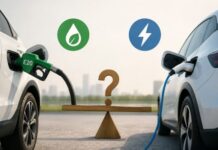

Electric fleets produce more operating data than almost any other vehicle group, and most of it goes unused. That gap is where AI agents for EV fleet management earn their place. A dashboard shows you the data. An agent reads it, decides, and acts: it moves a charge, flags a weak battery, or reroutes a van before the driver notices.
This article covers where agents already work, where a person must stay in charge, and what a real rollout looks like. Teams that plan to hire AI engineers for this work should know that the hard part is rarely the model. It is the operating rules around it.
Why are EV fleets a natural fit for AI agents?
An electric vehicle reports state of charge, battery temperature, location and energy use all day. Every one of those signals feeds a decision that repeats daily: when to charge, which charger to use, which vehicle takes which job.
The market is growing fast enough to make this urgent. Electric car sales exceeded 17 million globally in 2024, reaching a sales share of more than 20%, according to the International Energy Agency. The same report notes that public charging stations have doubled in the past two years to keep up. More vehicles on the road means more fleets, and more charging decisions per day.
Three jobs suit agents best. Predictive maintenance spots failing parts early. Charge scheduling matches vehicles to chargers and tariffs. Route optimization fits each trip to the battery that is actually left.
Where do AI agents genuinely help today?
Battery health monitoring. An agent tracks temperature, fast-charge frequency and capacity drift for every pack. When a pattern looks like early degradation, it opens a service ticket and moves that vehicle to lighter duty.
Dynamic charging-slot allocation. This is the clearest win in EV charging operations. The agent assigns each vehicle to a charger using departure time, state of charge, depot power limits and electricity price. Bluedot’s work for Vay’s remote-driven fleet shows the direction, with automated routing, billing and fraud prevention across public and depot chargers.
Pricing and utilization. For charging networks, smart charging also means pricing. Noodoe’s AI Advisor recommends prices for individual stations, and an AWS case study reportedly saw a 10 to 25 percent revenue increase per site within months.
Route and range planning. A route that looks short on a map can still strand a vehicle in cold weather or with a heavy load. An agent that sees live battery data can re-plan a trip, add a charging stop, or swap in a vehicle with more range before a delivery runs late.
Driver behavior flagging. Harsh braking, idling and aggressive acceleration all drain range. An agent can surface the pattern and suggest coaching. It should not issue penalties on its own.
Where does a human still need to stay in the loop?
Some decisions should never be fully automatic. Keeping a human in the loop is a design choice, not a weakness.
Safety-critical overrides. A thermal warning, a damaged pack or an unsafe charging temperature needs a hard-coded safety system and a person, not a language model deciding alone. The agent can recommend. It should not override.
Edge-case routing. Road closures, severe weather, an emergency delivery or a promise made to a customer are exactly the cases where an agent lacks context. Let it propose a plan and let a dispatcher approve.
Spend and policy changes. Any change to tariffs, contracts or customer-facing prices needs sign-off.
Driver data and privacy. Fleet telemetry is also data about people. Decide up front what the agent may see, how long it is kept, and who can review it, and tell drivers plainly.
A simple rule works well: the agent acts alone on decisions that are cheap and reversible. It asks first when a decision is costly, irreversible or touches safety.
What does a production rollout actually look like?
A pilot proves the idea on clean data. Production has to survive messy data, offline chargers and busy dispatchers. A rollout that holds up usually follows five steps.
- Pick one depot and one decision. Charge scheduling is a good first target because the result is easy to measure.
- Run in shadow mode. The agent recommends, humans act, and the team compares both for a few weeks.
- Add limited autonomy with guardrails. Cap charge rates, allowed time windows and spend per action.
- Log everything. Keep an audit trail, an alert on unusual actions and a one-click rollback.
- Expand carefully. Add predictive maintenance next, then routing.
Plan for integration early. The agent needs reliable access to telematics, charger status and the scheduling system, and it needs sensible alert limits. Too many notifications and dispatchers learn to ignore them, which defeats the purpose.
Measure outcomes that matter to operations: missed departures, energy cost per kilometer and vehicle downtime. Name one owner on the operations side who can switch the agent off.
What is the bottom line for fleet operators?
Agentic fleet management works when the scope is narrow, the data is trusted and a person owns the result. Start with one depot and one repeatable decision, keep safety decisions with people, and let the results decide how far the agents go. Teams that treat AI agents in EV fleet operations as an operating discipline, not a gadget, tend to get value sooner.
FAQ
What are AI agents for EV fleet management?
They are software systems that read fleet and charger data, decide what to do, and take actions such as scheduling charges or opening maintenance tickets, within limits you set.
Which EV fleet task should AI agents handle first?
Charge scheduling. It repeats every day, the data is available, and the result is easy to measure.
Can AI agents manage EV charging without a human?
For routine, reversible decisions, yes. Safety-critical overrides and costly changes should still need a person.
What data do AI agents need?
Vehicle telematics, charger status, vehicle schedules and electricity tariffs. Clean, timely data matters more than volume.
How long does a rollout take?
It depends on data access. A one-depot pilot can run in weeks, while production hardening and wider expansion take longer.