
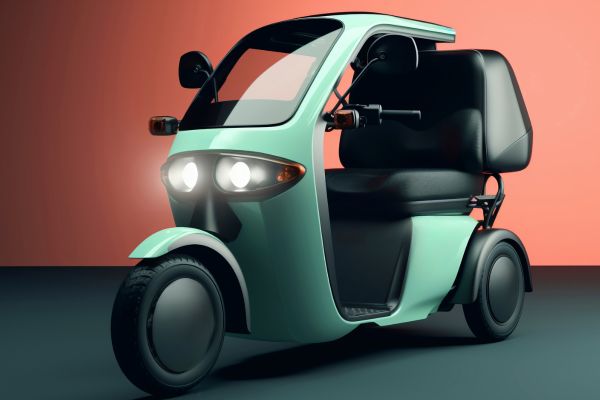
Rising Urbanization, Smart City Development, and Growing Demand for Last-Mile Mobility Solutions Propel Global Market Expansion
According to Precedence Research, the global micro electric vehicle market size was valued at USD 10.21 billion in 2025 and is projected to grow to USD 31.67 billion by 2035, expanding at a robust CAGR of 11.99% from 2026 to 2035.

The market’s strong momentum is being fueled by increasing urban congestion, rising environmental concerns, government incentives for electric mobility, and growing demand for affordable short-distance transportation. Micro electric vehicles are rapidly becoming a preferred choice for urban commuters, commercial fleets, and last-mile delivery operators seeking cost-effective and sustainable mobility alternatives.
What Are Micro Electric Vehicles and Why Are They Gaining Popularity?
Micro electric vehicles are compact, lightweight electric-powered vehicles designed primarily for urban and short-distance transportation. Typically offering driving ranges of up to 200 kilometers and operating at speeds between 60 km/h and 100 km/h, these vehicles provide a practical solution for navigating crowded city environments.
Unlike traditional electric vehicles, micro EVs feature smaller battery systems and lightweight composite materials that reduce energy consumption while maintaining efficiency. Their compact design makes them ideal for congested urban centers where parking space is limited and transportation efficiency is critical.
The growing need for eco-friendly transportation, combined with rising fuel costs and increasing traffic congestion, continues to accelerate adoption across both developed and emerging economies.
Artificial Intelligence Enhances the Future of Micro Mobility
Artificial intelligence is playing an increasingly important role in shaping the next generation of micro electric vehicles. AI-powered technologies are improving vehicle performance, battery efficiency, safety, and user experience.
Advanced AI-driven battery management systems optimize charging cycles, monitor energy consumption, and extend battery lifespan through real-time analysis of driving patterns and environmental conditions. These innovations are helping address one of the industry’s biggest challenges range optimization.
In addition, AI-enabled predictive maintenance systems can identify potential mechanical and electrical issues before failures occur, reducing downtime and lowering maintenance costs. Smart navigation systems, collision avoidance technologies, adaptive cruise control, and autonomous driving features are also expanding the capabilities of micro EVs for urban transportation and commercial applications.
Fleet operators are increasingly adopting AI-based route optimization and energy management systems to improve efficiency and reduce operational expenses, particularly in last-mile delivery services.
Key Factors Driving Market Growth
The micro electric vehicle market is benefiting from several powerful growth drivers that continue to reshape urban transportation landscapes globally.
Rapid Urbanization and Traffic Congestion
As cities become more densely populated, demand for compact and maneuverable transportation solutions continues to rise. Micro EVs provide an effective alternative to conventional vehicles by offering easier navigation through crowded streets and significantly lower operating costs.
Government Support for Electric Mobility
Governments worldwide are implementing favorable policies, including tax incentives, subsidies, and stricter emission regulations, to accelerate electric vehicle adoption. Low-emission zones and sustainability initiatives are further encouraging consumers and businesses to transition toward micro electric transportation.
Advances in Battery Technology
Continuous improvements in lithium-ion battery technology have enhanced vehicle range, charging efficiency, and overall performance. Declining battery costs are also making micro EVs increasingly affordable for a broader consumer base.
Growth of Last-Mile Delivery Services
The rapid expansion of e-commerce and urban logistics has created substantial demand for efficient delivery vehicles. Micro EVs offer fleet operators reduced fuel expenses, lower emissions, and greater mobility in densely populated areas, making them ideal for last-mile delivery operations.
Market Challenges Remain
Despite strong growth prospects, the industry continues to face several challenges.
Limited driving range and insufficient charging infrastructure remain significant barriers, particularly in developing regions. While battery technology continues to improve, many consumers still express concerns regarding charging accessibility and vehicle usability for longer trips.
Expanding charging networks and investments in fast-charging solutions will be critical for sustaining long-term market growth.
Commercial Applications Lead Market Demand
The commercial use segment accounted for 55% of total market revenue in 2025, establishing itself as the leading application category.
Businesses are increasingly deploying micro electric vehicles for urban logistics, facility transportation, airport operations, municipal services, and fleet management. Their low operational costs, environmental benefits, and ease of use make them attractive assets for commercial operators.
Meanwhile, the personal-use segment is expected to experience rapid growth over the coming decade as consumers seek affordable and environmentally responsible transportation alternatives for daily commuting.
Golf Carts Continue to Dominate Vehicle Types
Among vehicle categories, golf carts maintained the largest market share in 2025. Their widespread utilization across golf courses, resorts, airports, industrial facilities, and residential communities continues to support strong demand.
The segment has expanded significantly beyond recreational applications, with increasing adoption in hospitality, tourism, and commercial transportation sectors.
However, quadricycles are anticipated to record substantial growth throughout the forecast period. Rising fuel prices, urban congestion, and demand for compact city vehicles are driving increased adoption of electric quadricycles across global markets.
Lithium-Ion Batteries Maintain Market Leadership
The lithium-ion battery segment dominated the market in 2025 due to its superior energy density, faster charging capabilities, longer operational life, and lower maintenance requirements.
Ongoing technological advancements and large-scale investments in battery manufacturing continue to strengthen the position of lithium-ion technology within the micro EV ecosystem.
At the same time, lead-acid batteries remain attractive in cost-sensitive markets where affordability remains a key purchasing factor.
North America Leads While Asia Pacific Emerges as Growth Engine
North America accounted for the largest market share of 41% in 2025, supported by favorable government policies, advanced charging infrastructure, strong consumer awareness, and increasing adoption of electric transportation solutions.
The United States remains the region’s largest contributor, with cities integrating micro EVs into ride-sharing networks, commercial fleets, and urban transportation programs.
Meanwhile, Asia Pacific is expected to register the fastest growth through 2035. Rapid urbanization, expanding EV manufacturing capabilities, government incentives, and growing demand for affordable transportation are driving market expansion across countries such as China, Japan, and India.
China continues to dominate regional production and consumption, supported by extensive EV infrastructure investments and strong governmental support for electric mobility initiatives.
Competitive Landscape
The global micro electric vehicle industry remains highly dynamic, with manufacturers focusing on product innovation, battery improvements, smart mobility integration, and commercial fleet expansion.
Key companies operating in the market include:
Yamaha Golf Car Company
Estimated 2025 revenue of Yamaha Motor Co., Ltd. was approximately US$17–18 billion. Through its golf car division, the company manufactures electric golf carts, personal transportation vehicles, neighborhood electric vehicles (NEVs), and utility vehicles used across golf courses, resorts, residential communities, airports, and commercial facilities.
Club Car LLC
Club Car LLC generated an estimated US$1.0–1.3 billion in revenue during 2025. The company offers a broad portfolio of electric golf carts, low-speed vehicles (LSVs), commercial utility vehicles, and campus transportation solutions designed for recreational, industrial, and institutional applications.
Textron Inc.
Textron Inc. reported approximately US$14.8 billion in revenue in 2025. Through its Cushman and E-Z-GO brands, the company provides electric golf carts, utility vehicles, burden carriers, municipal service vehicles, and industrial micro electric vehicles for commercial and recreational use.
Renault Group
Renault Group recorded approximately €57.9 billion in revenue in 2025. The company develops compact electric mobility solutions, including the Renault Twizy legacy platform and Mobilize Duo, which are designed to support urban transportation, shared mobility, and short-distance commuting.
Toyota Motor Corporation
Toyota Motor Corporation generated approximately ¥48 trillion (over US$320 billion) in revenue during fiscal year 2025. The company offers ultra-compact electric vehicles, including the C+pod and other micro-mobility solutions, targeting urban transportation, elderly mobility, and low-speed city travel.
Italcar Industrial S.r.l.
Italcar Industrial S.r.l. achieved an estimated US$40–60 million in revenue in 2025. The company specializes in electric golf carts, utility vehicles, personnel carriers, and neighborhood electric vehicles used in hospitality, tourism, industrial, and recreational environments.
PMV Electric Pvt. Ltd.
PMV Electric Pvt. Ltd. generated an estimated US$5–15 million in revenue during 2025. The company is known for its EaS-E micro electric car, which is designed to provide affordable, compact, and energy-efficient mobility for urban commuters and last-mile transportation users.
Alke
Alke reported estimated 2025 revenue of approximately US$20–40 million. The company manufactures electric utility vehicles, compact electric trucks, cargo carriers, and municipal service vehicles that support industrial operations, logistics, and off-road transportation needs.
Polaris Inc.
Polaris Inc. generated approximately US$7.1 billion in revenue in 2025. The company offers electric utility and recreational vehicles, including the Ranger XP Kinetic and GEM neighborhood electric vehicles, serving commercial, municipal, campus, and personal transportation markets.
Suzhou Eagle Electric Vehicle Manufacturing Co., Ltd.
Suzhou Eagle Electric Vehicle Manufacturing Co., Ltd. recorded estimated revenue of approximately US$50–100 million in 2025. The company produces micro electric cars, neighborhood electric vehicles, golf carts, sightseeing vehicles, and last-mile transportation solutions designed for urban and community mobility applications.
Industry Developments Signal Strong Future Growth
Recent industry announcements highlight growing momentum within the sector.
In March 2026, VinFast announced plans to strengthen its Indian market presence through the introduction of multiple mass-market electric vehicles, including the VF3 micro SUV.
In April 2025, MicroVolt launched a compact three-wheel electric utility vehicle specifically designed for last-mile logistics operations, offering swappable battery technology and enhanced payload capacity.
Hyundai and TVS also partnered to develop micro three-wheel and four-wheel electric vehicles for passenger transportation, logistics, and emergency response applications, reflecting increasing industry focus on urban mobility innovation.
As governments, businesses, and consumers continue prioritizing sustainable transportation, micro electric vehicles are expected to play an increasingly important role in reshaping urban mobility ecosystems worldwide.
With technological advancements, supportive regulations, and expanding commercial applications, the global micro electric vehicle market is well-positioned for sustained double-digit growth throughout the next decade.