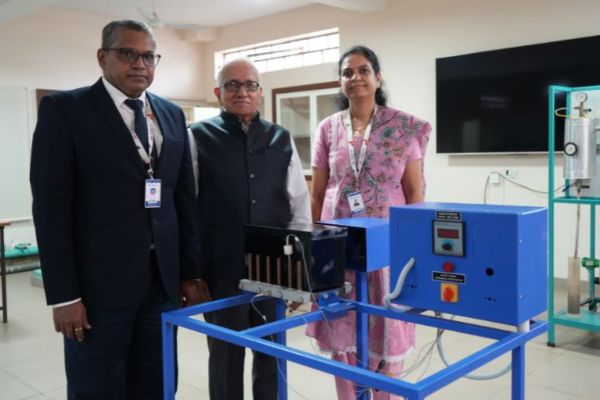
Researchers at MIT-WPU have unveiled a new patented cooling innovation — a fully passive hybrid cooling system — specifically designed to improve the safety, reliability and thermal performance of electric vehicle battery packs.
Unlike conventional EV battery cooling systems that rely on pumps, fans or active liquid circulation, this new system uses a combination of high-efficiency heat pipes and a specially engineered nanofluid. The design removes the need for any external power or active mechanical components.
The cooling happens through natural convection and phase-change mechanisms: as the nanofluid absorbs heat from battery hotspots, it changes phase or circulates naturally, transferring heat through the heat pipes and keeping the battery temperature stable — even under heavy load or extreme ambient heat.
This passive approach makes the system particularly well suited for India and other hot-climate regions, where high ambient temperatures and growing EV usage raise serious safety concerns like overheating and thermal runaway.
According to the developers — including Dr. Vaibhav Deshmukh, Dr. S. Radhakrishnan and Dr. Vaidehi Deshmukh — the key goal was to eliminate active cooling components that may fail or consume additional energy. By doing so, the system aims to increase battery lifespan, improve charging efficiency and reduce maintenance costs, while enhancing overall safety and reliability.
With EV adoption accelerating rapidly in India and globally, and concerns about battery safety driving demand for better thermal management, the MIT-WPU passive hybrid cooling system represents a timely and potentially game-changing innovation. The team envisions collaboration with industry partners for real-world testing and eventual commercialization to support safer, more efficient electric mobility.