
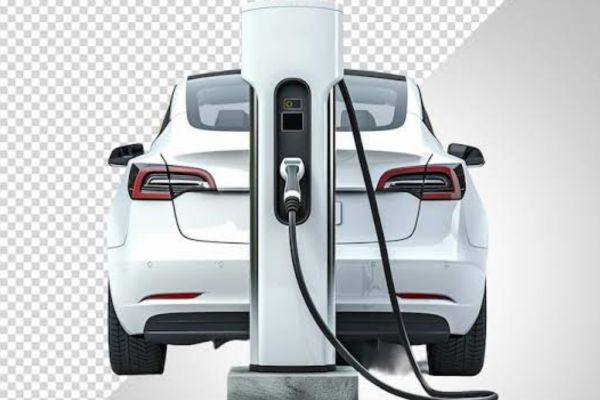
Electric vehicles (EVs) have emerged as one of the most promising solutions for reducing greenhouse gas emissions, lowering dependence on fossil fuels, and creating cleaner urban transportation systems. Governments across the world are encouraging EV adoption through incentives, stricter emission norms, and investments in charging infrastructure. However, while EVs produce zero tailpipe emissions, the sustainability of electric mobility ultimately depends on how the electricity used for charging is generated.
If EV charging stations continue to rely heavily on electricity produced from coal or other fossil fuels, the environmental benefits of electric mobility become less significant. This challenge has shifted the global conversation from merely expanding EV charging infrastructure to making it smarter, greener, and more energy efficient. One of the most promising approaches is integrating renewable energy sources such as solar and wind with Battery Energy Storage Systems (BESS), enabling charging stations to utilize clean energy even when renewable generation fluctuates[1].
Renewable-powered EV charging supported by battery storage is increasingly viewed as a critical building block for the future energy ecosystem. Instead of treating EV charging stations as isolated electricity consumers, they are evolving into intelligent energy hubs capable of generating, storing, managing, and even supplying electricity back to the grid.
Why Renewable Energy Alone Isn’t Enough
Solar panels produce electricity only during daylight hours, while wind generation depends entirely on weather conditions. These intermittent generation patterns rarely align with the charging requirements of EV users.
For example, many urban commuters return home during the evening—the exact time when solar generation has already stopped. Similarly, commercial fleets often require overnight charging to prepare vehicles for the following day.
Without energy storage, charging stations must rely heavily on the electricity grid whenever renewable generation falls short. In regions where grid electricity is primarily fossil-fuel based, this increases both carbon emissions and operating costs[3].
Battery Energy Storage Systems bridge this gap by storing surplus renewable electricity generated during periods of high production and making it available whenever charging demand increases.
This simple yet transformative capability significantly improves renewable energy utilization while enhancing the reliability of charging infrastructure.
Understanding BESS
Battery Energy Storage Systems are essentially large-scale rechargeable batteries that store electrical energy for later use. Modern BESS installations commonly employ lithium-ion technology because of its high energy density, fast response time, and long operational life, although emerging chemistries such as sodium-ion and solid-state batteries are gradually attracting attention.
In an integrated charging ecosystem, electricity generated from rooftop solar arrays or nearby wind turbines is first used to meet immediate charging demand. Any surplus energy is stored within the battery system instead of being wasted. During peak charging hours or cloudy weather, the stored electricity supplies EV chargers without placing excessive stress on the electrical grid.
Advanced Energy Management Systems continuously monitor electricity prices, renewable generation, battery state-of-charge, weather forecasts, and charging demand. Using intelligent optimization algorithms, these systems determine the most economical and sustainable way to distribute available electricity[4].
The result is an efficient charging station capable of balancing energy production, storage, and consumption in real time.
Creating Smart Charging Ecosystems
The future EV charging station will resemble a miniature power plant rather than a simple electricity outlet.
Imagine a commercial office building equipped with rooftop solar panels, a battery storage system, and multiple fast chargers. During the afternoon, excess solar electricity charges the battery. Employees returning to their vehicles in the evening charge using stored renewable energy rather than drawing expensive peak-hour electricity from the utility grid.
Similarly, highway charging stations located in remote regions can integrate solar farms with battery storage to reduce dependence on expensive transmission infrastructure.
These decentralized charging ecosystems increase energy independence while reducing transmission losses and improving resilience during power outages[5, 7].
Supporting Grid Stability
The rapid growth of fast-charging stations introduces new challenges for electricity utilities.
Ultra-fast chargers can demand anywhere between 150 kW and 350 kW per vehicle. When multiple vehicles charge simultaneously, sudden spikes in electricity demand can strain transformers, increase voltage fluctuations, and accelerate infrastructure wear.
Battery storage acts as a buffer between charging stations and the utility grid.
Instead of drawing enormous amounts of electricity instantaneously, charging stations gradually recharge their batteries during periods of lower demand. When EVs arrive for fast charging, electricity is supplied primarily from stored energy, significantly reducing peak demand on the grid.
This process, commonly known as peak shaving, helps utilities avoid expensive infrastructure upgrades while maintaining grid reliability[6].
As renewable energy penetration increases, battery storage also helps balance frequency fluctuations and stabilize electricity supply.
Economic Advantages Beyond Sustainability
Although installing renewable energy systems and battery storage requires substantial upfront investment, long-term economic benefits often outweigh initial costs.
Charging station operators can purchase electricity when market prices are low, store it, and utilize the stored energy during expensive peak pricing periods. This strategy lowers operational costs while improving profitability.
Battery storage also reduces demand charges imposed by utilities—fees that often represent a significant portion of commercial electricity bills.
Businesses operating EV charging stations therefore benefit not only from environmental sustainability but also from improved financial performance.
For fleet operators, logistics companies, shopping malls, universities, airports, and industrial campuses, renewable-powered charging infrastructure can provide both energy security and predictable operating costs[8].
Artificial Intelligence Makes Charging Smarter
Artificial Intelligence (AI) is becoming an essential component of integrated charging systems.
Machine learning models can forecast solar energy production using weather predictions, estimate charging demand based on historical traffic patterns, and optimize battery charging schedules to maximize renewable energy utilization.
AI-powered Energy Management Systems continuously evaluate thousands of operational variables, ensuring batteries operate within safe limits while maximizing efficiency and extending battery lifespan.
Predictive maintenance algorithms also identify potential equipment failures before they occur, reducing downtime and maintenance expenses.
As AI capabilities continue advancing, future charging infrastructure will become increasingly autonomous, requiring minimal human intervention.
Vehicle-to-Grid: Turning EVs into Energy Assets
One of the most exciting developments in electric mobility is Vehicle-to-Grid (V2G) technology.
Instead of functioning solely as electricity consumers, parked electric vehicles can temporarily supply electricity back to the grid during periods of high demand.
Collectively, millions of EV batteries could function as a massive distributed energy storage network.
When renewable generation declines or electricity demand suddenly increases, connected EVs can discharge small amounts of stored energy to support grid stability. Later, when renewable generation improves, vehicles recharge automatically.
Although large-scale commercial deployment remains limited, several pilot projects have demonstrated the enormous potential of V2G in improving renewable energy integration and strengthening electricity networks[2].
Challenges That Still Need Attention
Despite remarkable technological progress, several barriers remain.
Battery storage systems continue to represent a significant capital investment, particularly for small charging operators.
Battery degradation over time gradually reduces storage capacity, requiring careful operational management and eventual replacement.
Integrating renewable generation, storage systems, grid infrastructure, communication networks, and charging hardware demands sophisticated system engineering.
Cybersecurity is another growing concern as charging infrastructure becomes increasingly connected through cloud platforms and Internet of Things (IoT) technologies.
Finally, supportive government policies, standardized regulations, and financial incentives remain essential to accelerate widespread deployment.
Addressing these challenges will require collaboration among policymakers, utilities, technology providers, automotive manufacturers, researchers, and charging network operators.
The Road Ahead
The convergence of renewable energy, battery storage, artificial intelligence, and electric mobility is reshaping the global energy landscape.
Rather than simply replacing gasoline vehicles with electric alternatives, societies now have an opportunity to redesign transportation around clean, decentralized, and intelligent energy systems.
Future charging stations are expected to evolve into integrated energy hubs capable of generating renewable electricity, storing surplus power, intelligently managing demand, supporting grid operations, and enabling bidirectional energy exchange with electric vehicles.
Countries investing today in renewable-powered charging infrastructure will not only reduce carbon emissions but also strengthen energy security, improve grid resilience, and create more sustainable urban environments.
The transition to electric mobility is therefore about far more than replacing engines—it represents the transformation of the entire energy ecosystem.
Integrating renewable energy with Battery Energy Storage Systems is no longer an emerging concept. It is rapidly becoming the foundation upon which the next generation of sustainable transportation will be built.
Conclusion
Electric mobility and renewable energy are natural partners, but battery storage is the critical link that allows both technologies to work together effectively. By capturing clean energy when it is available and delivering it when it is needed, Battery Energy Storage Systems overcome one of renewable energy’s biggest limitations—its intermittency.
As charging infrastructure becomes smarter through AI, digital energy management, and Vehicle-to-Grid capabilities, EV charging stations will evolve into intelligent energy ecosystems rather than simple charging points. Although challenges related to cost, policy, battery life, and infrastructure integration remain, continuous innovation and supportive regulations are accelerating progress.
Ultimately, integrating renewables and battery storage into EV charging is about much more than powering vehicles. It is about creating a cleaner, more resilient, and economically sustainable energy future where transportation and electricity systems work together to support global climate goals.
References
- International Energy Agency (IEA). Global EV Outlook 2024.
- Frontiers in Energy Research (2024). Renewable Energy Integration with Electric Vehicle Charging Systems.
- MDPI. World Electric Vehicle Journal (2025). “Integrating Renewable Energy and Battery Storage for EV Charging.”
- ScienceDirect (2025). Battery Energy Storage and Renewable-Powered EV Charging Infrastructure.
- ResearchGate (2025). Integrating Battery Energy Storage Systems for Sustainable EV Charging Infrastructure.
- IEEE Xplore (2014). Battery Energy Storage Systems and Grid Integration.
- ResearchGate (2025). Integration of Renewable Energy Sources with Electric Vehicle Battery Storage: Challenges and Future Directions.
- Mordor Intelligence. Battery Energy Storage System Market Report.
- STM Journals (2024). Journal of Power Electronics and Power Systems.
- National Library of Medicine (PMC). Recent Advances in Renewable-Powered Electric Vehicle Charging Infrastructure.


 have emerged as one of the most promising solutions for reducing greenhouse gas emissions, lowering dependence on fossil fuels.)