The Indian automotive sector is no longer merely a participant in the global supply chain; it is becoming its heartbeat. As we navigate through 2026, the transition from internal combustion engines (ICE) to electrified, autonomous, and connected platforms has moved beyond the theoretical “lab phase” into hard-core pavement reality. For those of us who have spent decades analyzing torque curves and chassis rigidity, the current shift represents a fundamental re-engineering of the Indian “mobility DNA.”
This isn’t just a change in powertrain; it’s a systemic overhaul of how we build, power, and move. From the high-energy physics of solid-state cells to the logistical ballet of battery swapping, India is creating a unique template for the world.
Solid-State Batteries: The Transition from Lab to Road
For years, the “holy grail” of EV engineering has been the transition from liquid-electrolyte Lithium-ion cells to Solid-State Batteries (SSB). As an industry, we’ve grappled with the limitations of current chemistries: thermal runaway risks, dendrite formation at high C-rates, and energy density plateaus.
In the Indian backdrop, where ambient temperatures frequently breach 45°C, thermal stability isn’t a luxury; it’s a prerequisite. We are finally seeing SSBs move into pilot production cycles. By replacing the flammable liquid electrolyte with a solid ceramic or polymer separator, we are looking at energy densities exceeding 400 Wh/kg .
What does this mean for the Indian driver? It means a “compact sedan” can finally achieve a real-world range of 600-800 km, effectively killing “range anxiety.” More importantly, from a mechanical standpoint, the reduced need for complex active cooling systems allows us to optimize the “Body-in-White” (BiW) weight, improving overall vehicle dynamics and efficiency.
Urban Mobility: The Rise of the Compact EV
Indian cities are unique—our “lanes” are narrower, our traffic is denser, and our parking is a premium. The future of urban mobility isn’t a 5-meter SUV; it’s the Compact EV. We are seeing a surge in “category-defying” micro-EVs designed specifically for the Indian commute.
These vehicles are engineered for high utility-per-square-foot. By utilizing modular skateboard platforms, manufacturers are maximizing cabin space despite a tiny footprint. For the Indian middle class, these are becoming the “primary” city cars—easy to maneuver in Chandni Chowk or T. Nagar, yet technologically at par with global standards.
Battery Swapping: The Pragmatic Alternative
While private car owners might prefer home charging, the “lifeline” of Indian commerce—our 2-wheelers, 3-wheelers, and last-mile delivery fleets—cannot afford the downtime of a 45-minute fast charge. This is where Battery Swapping has emerged as the definitive Indian solution.
By decoupling the battery from the vehicle, we have addressed the two biggest hurdles: upfront cost and charging time. A delivery partner can swap a depleted 2 kWh pack for a fresh one in under 90 seconds—faster than a petrol refill. At ICIB, we are advocating for a “Standardized Interoperable Battery” protocol. If we can achieve “Form-Factor Standardization” across OEMs, the swapping station becomes the “New Age Fuel Pump,” providing a seamless energy network across the subcontinent.
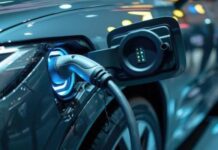
Infrastructure: The DC Fast-Charging Backbone
To support the inter-city travel of heavier EVs and luxury segments, the deployment of DC Fast Charging (DCFC) and Ultra-Rapid Systems is critical. We are now seeing 150 kW and 350 kW chargers being installed along the Golden Quadrilateral.
Technically, this requires a massive upgrade of our grid-side power electronics. We aren’t just installing “plugs”; we are installing high-power transformers and liquid-cooled charging cables. For a mechanical engineer, the challenge here is Thermal Management. Managing the heat generated during a 350 kW “handshake” between the charger and the vehicle’s BMS (Battery Management System) is where the real engineering “jugaad” meets global science.
Sensor Fusion: The Eyes of the Indian Autonomous Vehicle
Autonomous tech in India is often met with skepticism—”How will it handle a stray cow or an unmapped pothole?” The answer lies in Sensor Fusion. We are moving away from “Camera-only” approaches toward a robust triad of Lidar, Radar, and High-Res Cameras.
By fusing the depth-perception of Lidar, the all-weather reliability of Radar, and the semantic understanding of Cameras, we are building ADAS (Advanced Driver Assistance Systems) tuned for “Indian Chaos.” These systems don’t just “see” the road; they predict the erratic movement of an auto-rickshaw or a pedestrian through machine learning models trained on millions of kilometers of Indian road data.
Manufacturing & Supply Chain: The Era of the Gigafactory
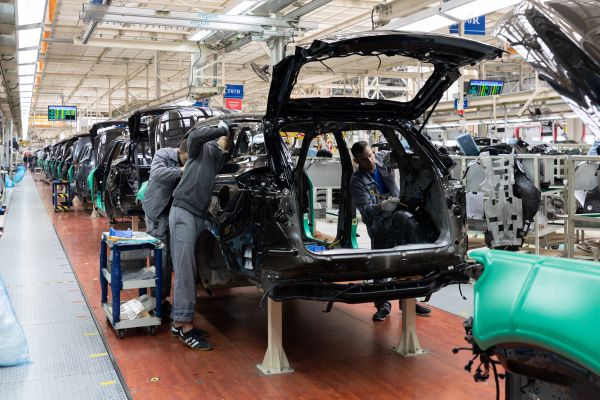
The “Make in India” initiative has matured. We are no longer just assembling “CKD” (Completely Knocked Down) kits. We are entering the era of the Gigafactory. With the PLI (Production Linked Incentive) schemes, global and domestic giants are setting up end-to-end cell manufacturing in states like Tamil Nadu, Gujarat, and Karnataka.
Localized production is the only way to achieve Price Parity with ICE vehicles. By vertically integrating—from chemical processing to cell fabrication to pack assembly—we are insulating the Indian market from global geopolitical shocks and supply chain “whiplash.”
Startup Spotlight: The Great Disruption
Perhaps the most exciting part of my role at ICIB is interacting with the “Deep Tech” startups. These aren’t just “app-builders”; they are hardware innovators. We have Indian startups developing:
- Indigenous BMS: Algorithms that can extend battery life by 20% in tropical climates.
- Axial Flux Motors: Delivering higher torque-to-weight ratios for performance EVs.
- Recycling Tech: “Urban Mining” startups that can recover 95% of Lithium and Cobalt from dead cells.
These startups are the agile “Special Forces” of the Indian auto sector, pushing legacy OEMs to innovate faster.
A Continuous Road Ahead
The growth of the Indian auto industry is not a linear graph; it’s an exponential curve. We are at a juncture where the “Mechanical” and “Digital” have finally merged. As we move forward, the focus must remain on Human-Centric Engineering. Technology should serve the Indian commuter, making their journey safer, cheaper, and cleaner.
At the Indian Chamber of International Business, we remain committed to bridging the gap between Indian innovation and global markets. The road is long, but for the first time in history, India is the one setting the pace.